
Do you encounter error code 0xc1900101 on Windows 11/10? Example includes 0xc1900101 – 0x20017, 0xc1900101 – 0x2000c, 0xc1900101 – 0x30018, etc. If you’re suffering from one of the errors, you can refer to this article, which provides effective solutions to help you solve the problem.
Quick Answer
Error code 0xc1900101 while upgrading Windows 10/11 is usually related to an incompatible or outdated driver, insufficient disk space, security software, and faulty hardware.
To fix this error:
- Disconnect unnecessary external devices
- Check for disk space
- Remove third-party antivirus software
- Update or roll back drivers
- Run DISM & SFC
What Is Error 0xc1900101?
Error code 0xc1900101 on Windows 10/11 may occur during the installation or update of the operating system.
It usually indicates problems with drivers, storage, or hardware compatibility.
The error may appear with an extended code that indicates different stages of the Windows upgrade process, including:
- 0xc1900101 – 0x20017
- 0xc1900101 – 0x2000c
- 0xc1900101 – 0x30018
- 0xc1900101 – 0x3000D
- 0xc1900101 – 0x4000D
- 0xc1900101 – 0x40017
Common Causes of the 0xc1900101 Error
When you experience an error that begins with 0xc1900101-, it might be attributed to one of the causes below:
- Incompatible or Outdated Drivers
- Faulty Hardware (RAM, Hard Drives, Peripherals, etc.)
- Antivirus or Other Security Software
- Applications That Interfere with System Updates
- Insufficient Disk Space
- Corrupted System Files
- Firmware Issues, like BIOS/UEFI
Back up Important Data Before Fixing
Before starting the repair process, it’s highly recommended to make a complete backup of your data or system on the computer to prevent unexpected data loss.
MiniTool ShadowMaker, a PC backup software supports backing up various items on your computer, including personal files & folders, selected partitions, the whole disk, or the operating system.
Step 1. Download and install MiniTool ShadowMaker Trial Edition. After installation, launch this freeware to enter its main interface.
MiniTool ShadowMaker TrialClick to Download100%Clean & Safe
Step 2. Click SOURCE > Folders and Files and choose the files you want to back up.
Step 3. Select a storage path for the backup image in DESTINATION. Usually, it’s suggested to choose an external hard drive or a USB flash drive.

Step 4. After making your choices, click on Back Up Now to start the process at once.
At any time, backup is a crucial remedial measure to deal with disasters such as system crashes, virus infections, hardware failures, etc. Therefore, it is of utmost importance for computer users to develop the habit of regular backups.
How to Fix 0xc1900101-Related Errors
Solution 1: Disconnect Unnecessary External Devices
External devices may be incompatible with Windows 11/10, resulting in error code 0xc1900101.
Disconnect your unnecessary USB devices, printers, external drives, and other peripherals before retrying the Windows update.
Solution 2: Check Disk Space
A lack of storage space might be the culprit of the 0xc1900101 error. First of all, you need to check if your system meets the minimum requirements of Windows 10 or 11.
- When updating or upgrading Windows 11, at least 20GB of free space is required.
- For Windows 10, to perform an upgrade operation, at least 16GB of available space is required to install the 32-bit version of Windows 10, while the 64-bit version requires 20GB of space.
You can use the following steps to confirm if your device has enough space:
#In Windows 11
Step 1. Press Win + I to fire up Settings.
Step 2. Go to System > Storage > check the free space of your main hard drive.
Step 3. If the available space is less than 20GB, click Clean recommendations > choose the files to delete > hit Clean up.

#In Windows 10
Step 1. Press Win + I to open Settings > head to System > Storage.
Step 2. Then confirm the free space on the system hard drive.
Step 3. Select Temporary files below and choose the files to delete.

Step 4. Click on Remove files to free up space.
Not only that, there are multiple methods to increase or free up storage space for your system partitions. For example,
- Extend your system partition
- Delete temporary files and the Windows.old folder
- Turn off Hibernation
- Uninstall useless applications
- Change the Virtual Memory size in Windows 11/10
- Migrate your operating system to a larger SSD or HDD
Solution 3: Temporarily Disable Third-Party Security Software
Third-party antivirus software may interfere with the Windows update, causing the 0xc1900101 error. Temporarily disabling it can help.
Step 1. Press Win + R to launch the Run dialog.
Step 2. Type appwiz.cpl and hit Enter to open the Programs and Features window.

Step 3. Look for third-party antivirus, firewall, or VPN software installed on your device > right-click on them > choose Uninstall.
Step 4. Restart your computer and retry the upgrade or update.
Solution 4: Update or Roll Back Drivers
Outdated or incompatible drivers are the most common cause of Windows update failure error 0xc1900101. Updating or reverting your drivers, such as display, network, storage controller, and other devices marked with a warning icon can solve the issue.
#Update Your Drivers to the Latest Version
Step 1. Press Win + X and select Device Manager from the Start menu.
Step 2. Expand categories below > right-click the device > choose Update driver > Search automatically for drivers.
- Display adapters
- Network adapters
- Storage controllers
- Any device under Other devices with warning icons

Step 3. Follow its instructions on the screen to perform the update.
#Roll back a Device Driver in Windows 10/11
If issues began after a recent update, then you need to revert the specific driver to the previous version. To do that:
Step 1. In Device Manager, right-click on the driver that needs to be rolled back and select Properties from the pop-up menu.
Step 2. Go to the Driver tab > hit the Roll Back Driver button > choose the reason why you need to revert the device > tap on OK to start the rollback process.

Step 3. Upon the rollback, the Roll Back Driver button will be disabled in gray. Now, exit the window and click Yes to restart your computer when prompted.
During rebooting, Windows will automatically load the older driver version to your computer.
Solution 5: Run DISM and SFC
To resolve the 0xc1900101 error, you can run DISM and SFC scans. It is a built-in Windows tool that checks for and repairs any corrupt or missing system files.
#Run DISM
Step 1. Press Win + S to open Windows Search > type cmd > select Run as administrator.
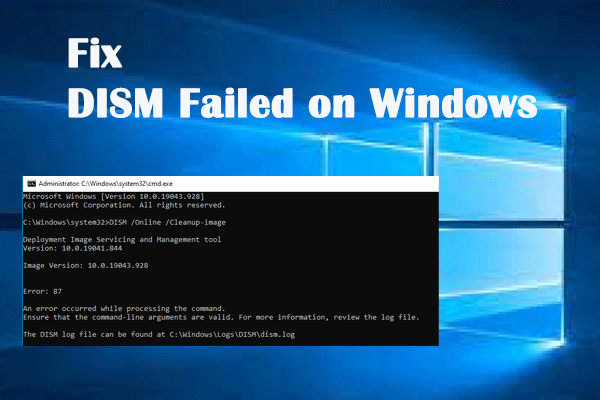
Step 2. In the command window, type DISM.exe /Online /Cleanup-image /Restorehealth and hit Enter to run it.

#Run SFC (System Files Check)
Step 1. In the Command Prompt window, input sfc /scannow and press Enter to execute it.

Step 2. Wait for the check to finish scanning your computer. In the case of any issues, the utility will restore system files and fix all errors related to them.
Upon completion, close Command Prompt and restart your PC to check if the 0xc1900101 error has gone.
Solution 6: Check and Update BIOS/UEFI
An outdated BIOS may cause compatibility issues and result in the 0xc1900101 error on a Windows PC. Check your BIOS/UEFI if driver and software fixes do not resolve the error.
Step 1. Check the current BIOS version of your computer.
Open Command Prompt and run the following commands to check your BIOS version:
wmic bios get smbiosbiosversion
wmic bios get biosversion
wmic bios get version

Step 2. Then check your computer’s model name.
Open the Run window (Win + R) > type msinfo32 > hit Enter to bring up the System Information window > find & record your System Model from the right pane.
Step 3. Next up, please visit the website of your motherboard manufacturer, download and install the latest version suitable for your specific model.
Solution 7: Perform a Clean Install
If the upgrade error still appears after trying all previous solutions, consider performing a clean installation of Windows 11/10.
Here’s a detailed breakdown:
Step 1. Create a bootable USB drive.
Step 2. Power off your computer and boot it into BIOS.
Step 3. Insert the created USB drive and start your computer from the drive.
Step 4. When seeing the Windows Setup interface, set your language, keyboard, and time and currency format, and then hit Next to continue.
Step 5. Hit Install now > choose I don’t have a product key > select the Windows version you should install > click Next.

Step 6. Check I accept the license terms > hit Next > choose Custom: Install Windows only (Advanced).
Step 7. Select the partition where the system is installed (usually Drive 0) > click Delete to remove it > hit OK to confirm the deletion.

Step 8. Then select Drive 0 Unallocated Space > click Next.
When finishing all the steps, Windows Setup begins to install a fresh copy of Windows on your PC.
Wrapping It Up
This guide illustrates the meaning of the 0xc1900101 error and how to solve it in 7 effective ways. Most importantly, be sure to back up your data before performing the solutions.
Do you have any questions about our product? Welcome to share them with us via [email protected]. We will reply to you as soon as possible.
0xc1900101 FAQ
About The Author

Position: Columnist
Vera has been working at the MiniTool Team for over 10 years as a technical editor and content writer. She mainly focuses on disk and partition management, data recovery, Windows backup and restore, and PC troubleshooting. Through in-depth software testing and hands-on experience, she has helped users solve a wide range of computer problems and better protect their data on Windows devices.
User Comments :