
Ghosting Windows means creating a system image so that you can restore the PC after a system failure. This post explains how to ghost Windows 10/11 with MiniTool ShadowMaker or the built-in tool, Backup and Restore (Windows 7).
Key Takeaways
- Ghosting Windows means creating a compressed image of your system, including the OS, settings, applications, and personal files, for quick recovery.
- You can use the third-party backup software, MiniTool ShadowMaker, to ghost Windows 10/11.
- Windows also offers the Backup and Restore (Windows 7) tool to create a system image.
What Is Ghost Imaging
Ghost imaging (namely backup) refers to a software-driven data backup process that copies the data of a computer hard drive to an individual compressed file, which is called an image. The ghost image copies all the contents – including configuration, applications, settings, etc – to another hard disk drive or server for storage.
The purpose of the ghost image is to enable a quick restore of a system or offer data restoration support. In a nutshell, the ghost can include two aspects: system ghost and data ghost.
How to Ghost Windows 10/11
To create a ghost image of the Windows operating system, you need to choose a piece of free ghost backup software, including:
- MiniTool ShadowMaker, professional backup software
- Backup and Restore (Windows 7), the built-in Windows tool
Method 1: Ghost Windows Using MiniTool ShadowMaker (Recommended)
As a reliable and free backup software for Windows 10/11, it can automatically and periodically create full backups of your computer, which saves your time from reinstalling Windows & application or data recovery after data loss. MiniTool ShadowMaker is also available on Windows Servers and Workstation.
Being powerful and flexible, MiniTool ShadowMaker is your best choice for Windows backup & restore. Furthermore, this ghost image software can even allow you to restore the system image to a different computer with different hardware by fixing the compatibility issue with Universal Restore.
MiniTool ShadowMaker TrialClick to Download100%Clean & Safe
See how to create a ghost image of Windows 11/10:
Step 1: Install MiniTool ShadowMaker on your computer
Step 2: Launch this software
1. Double-click this ghost image software.
2. Continue to use Trial Edition by clicking the Keep Trial button.
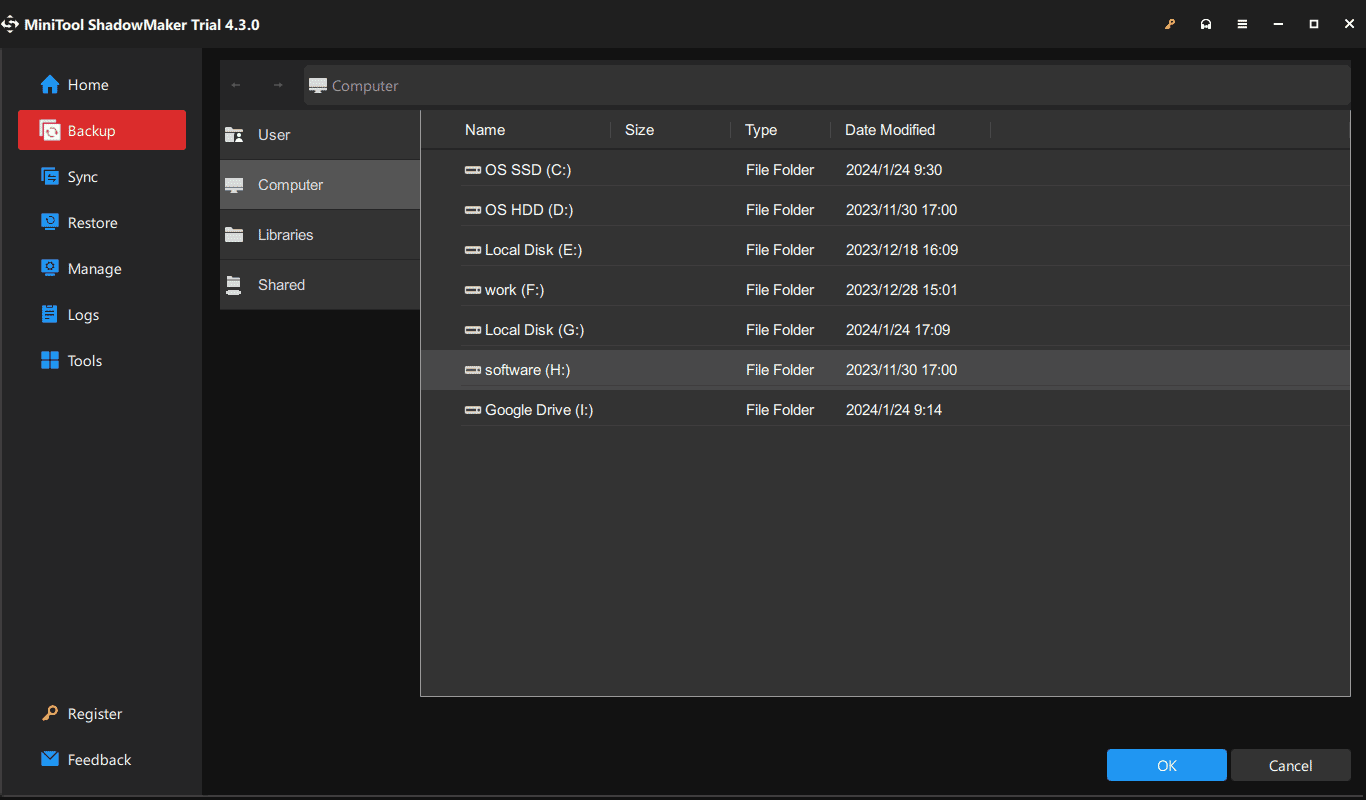
Step 3: Choose the backup source and destination in the Backup page
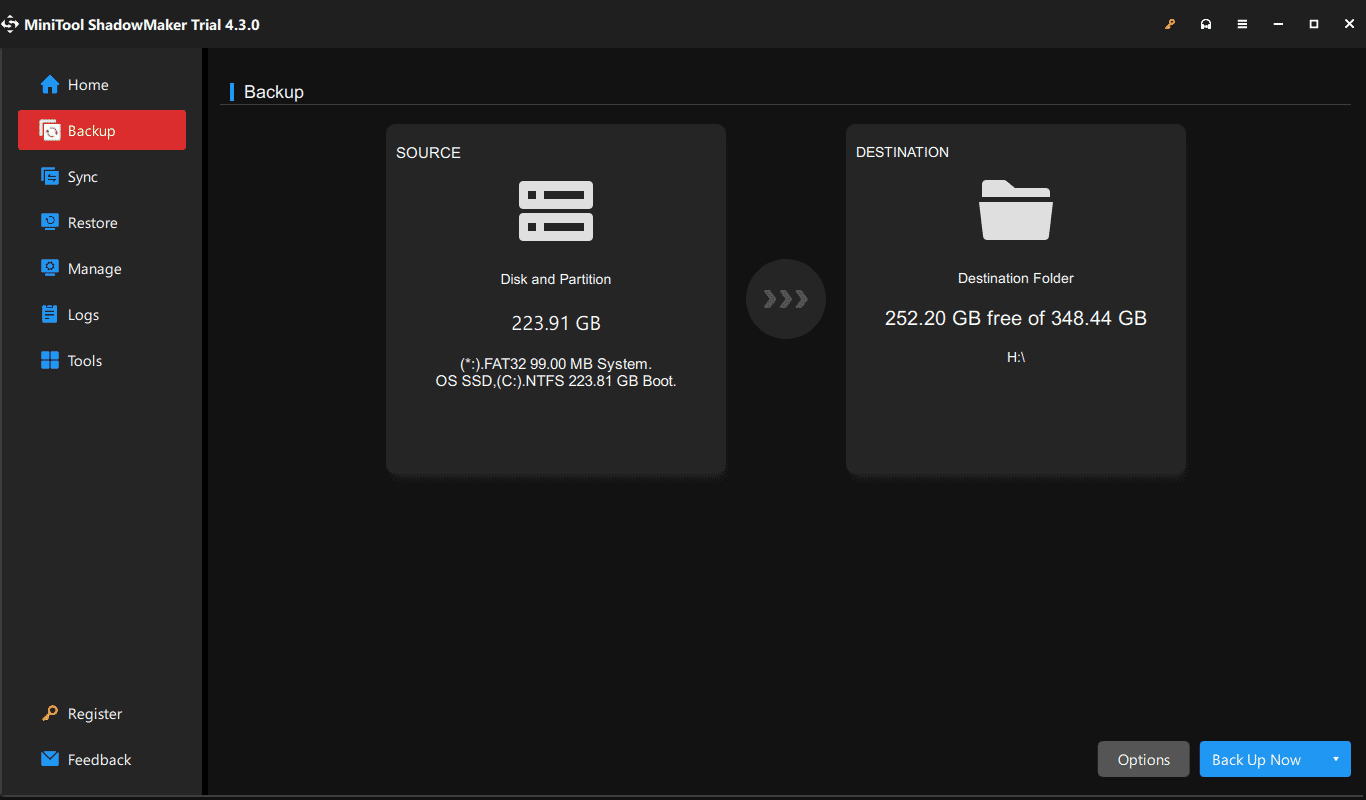
1. MiniTool ShadowMaker has selected all OS partitions that Windows requires to run. So, you don’t need to choose them again.
2. An external hard disk, USB flash drive, Pen drive, SSD, HDD, and NAS (Network Attached Storage) are all available to save the ghost image file.
- Just choose a partition on that disk.
- Click OK to go back to the Backup page.
Step 4: Start a backup
At last, execute all the settings by tapping the Back Up Now button.
How to Use Best Ghost Image Software to Ghost Windows 11/10Click to Tweet
In addition to using the professional and free ghost program, some of you may use Windows built-in tool, Backup and Restore, to ghost your operating system to an image. Of course, it can help you to create a system image when Norton Ghost 15 cannot activate on Windows 10.
Take Windows 10 as an example. How to ghost Windows 10 with this tool? Follow these steps:
Step 1: Choose the backup feature
- Type Control Panel in Search and press Enter.
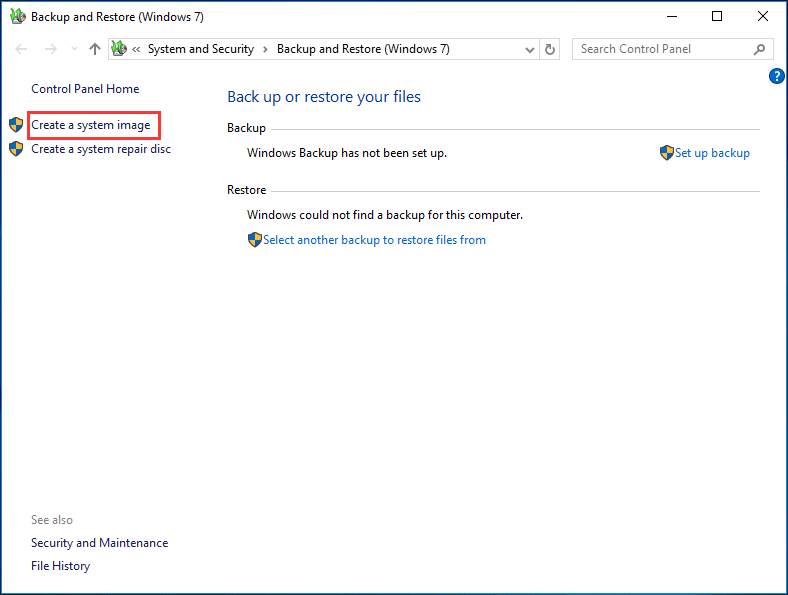
- Select Backup and Restore (Windows 7).
- Click the Create a system image option to ghost Windows 10.
Step 2: Decide where to save the backup
You need to choose a destination for the system image. An external storage device, network location, etc. is available. Here, we make a ghost image of Windows 10 on an external disk.
Step 3: Start to make Windows 10 ghost image
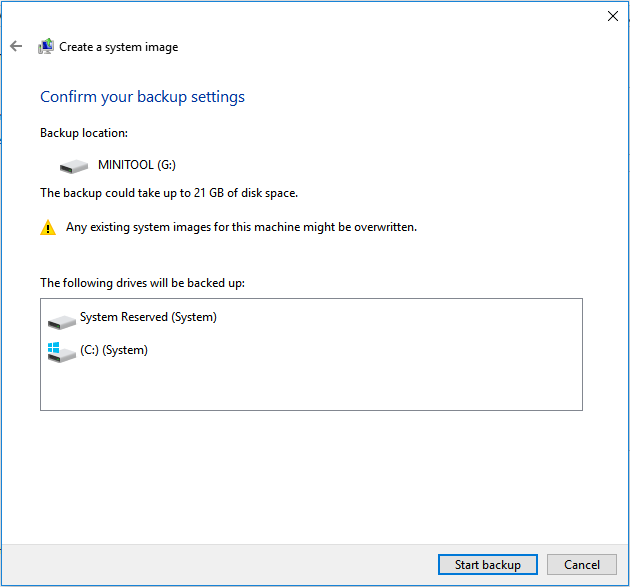
- Decide which partitions to be included in the backup. By default, all system-related partitions for Windows to run are included. Here, don’t check other partitions since you intend to ghost Windows 10.
- Confirm the backup settings.
- Click the Start backup button to create a system image.
Now, all the operations on system image creation are introduced. Reading here, you might be wondering: can I ghost Windows 10 automatically with Backup and Restore (Windows 7)?
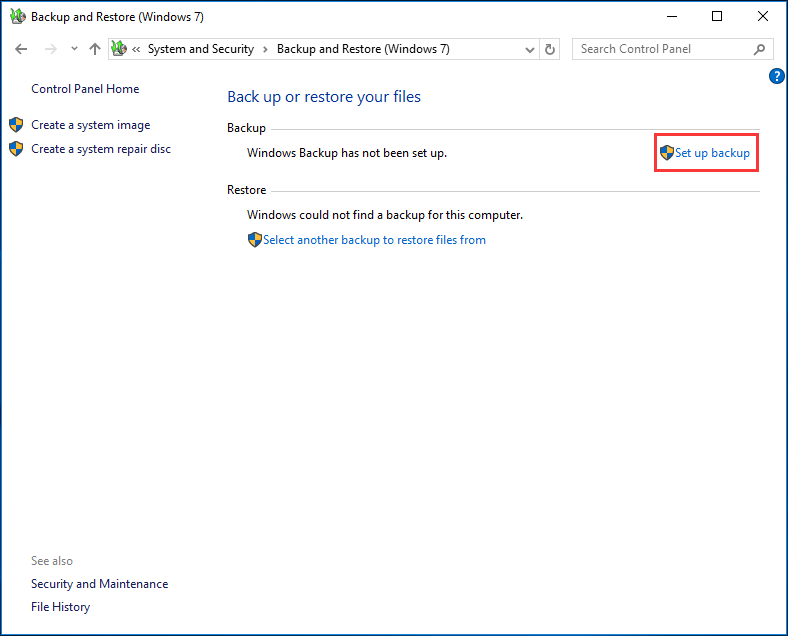
Of course, you can. You need to use another option – Set up backup which is located on the right side. This function enables you to create a system image and back up files automatically. Just make Windows 10 ghost image file according to your needs.
MiniTool ShadowMaker vs Backup and Restore
Check the comparison table to understand the differences between these two tools.
| Feature | MiniTool ShadowMaker | Backup and Restore |
| Ease of use | Begginer-friendly | Basic |
| Incremental/differential backup | Supported | Not supported |
| Automatic backup | Yes | Yes (limited) |
| Universal restore (different PC) | Yes | No |
| Speed & compression | High | Medium |
Ghost Hard Drive Windows 10/11 with MiniTool ShadowMaker
Some of you may be interested in this question: how to ghost a hard disk? When you google ghost Windows 10, you will find this topic.
Actually, MiniTool ShadowMaker, ghost image backup software, can also help you. In addition to ghost Windows 10 operating system, it allows you to create a ghost image for the entire hard disk. Just get its Trial Edition to try it out.
MiniTool ShadowMaker TrialClick to Download100%Clean & Safe
Step 1: Run this ghost disk utility in Windows 10/11.
Step 2: In the Backup interface, choose a disk (system disk is recommended) and check all the disk partitions to back up.
Step 3: Specify a path for the hard drive image.
Step 4: Run the backup immediately.
For more information on disk backup, refer to this post- Hard Drive Image Software – The Best Way to Image a Hard Drive.
Additionally, MiniTool ShadowMaker has another feature – Clone Disk, which has the ability to ghost hard drive for disk backup or disk upgrade. It can also be used for laptop disk drive upgrade. Here is the step-by-step guide:
Step 1: Run the software
- Open MiniTool ShadowMaker.
- Click Keep Trial.
Step 2: Choose the Clone Tool
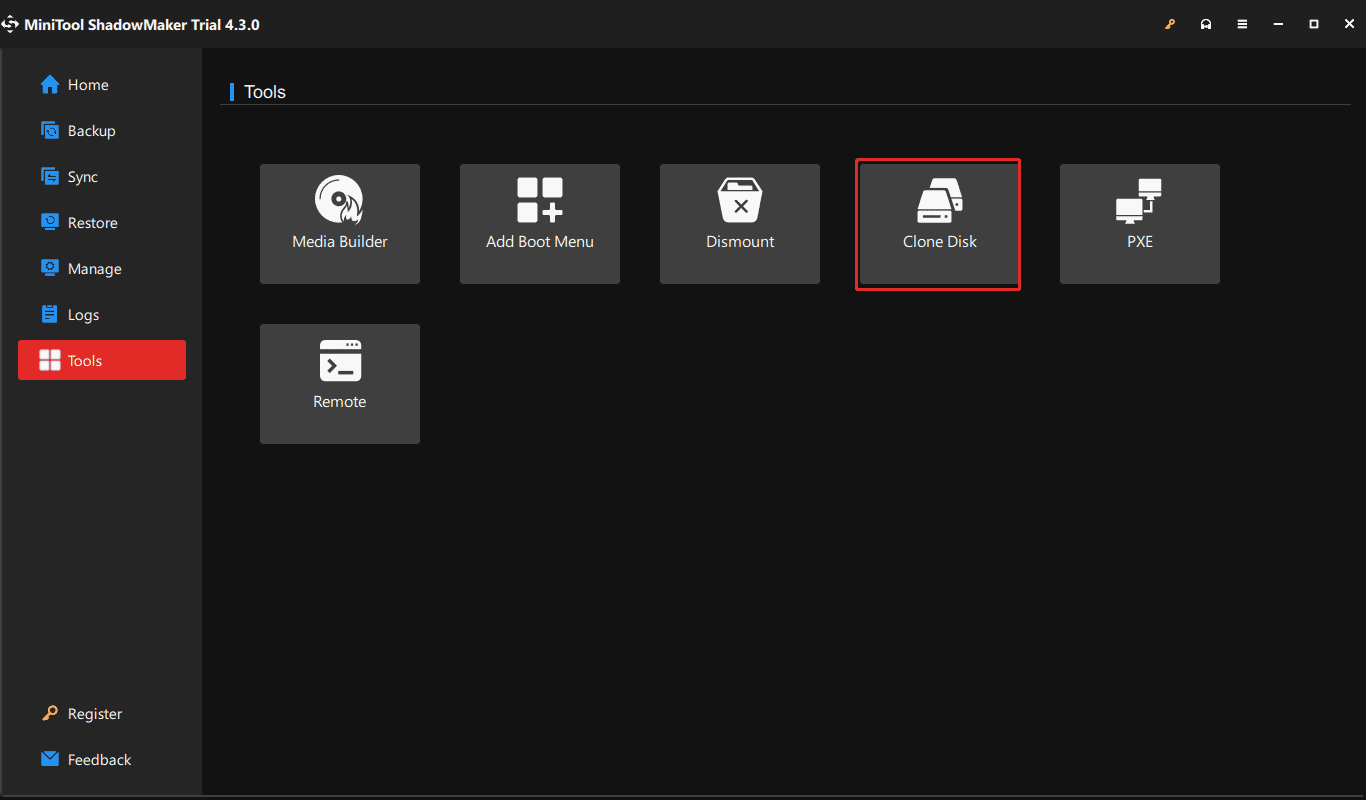
- Go to the Tools page.
- Choose Clone Disk.
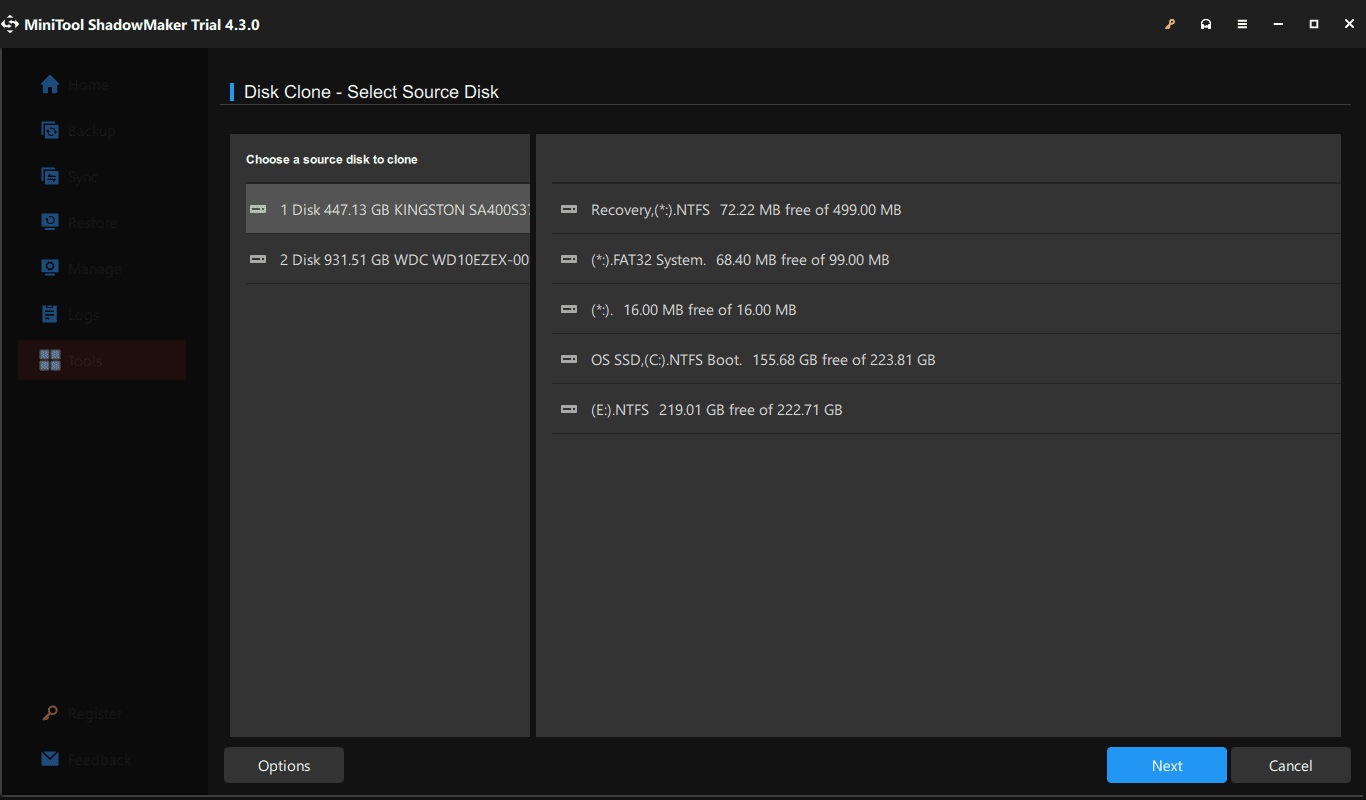
Step 3: Select Source Disk and Target Disk
- Choose a disk you want to clone.
- Select a target disk that should be large enough to hold all the contents of the source disk.
- Click OK to continue.
Related article: MiniTool Programs Help Cloning Hard Drive to Smaller SSD.
Step 4: Perform the Cloning Process
- To clone a system disk, you are required to register this cloning software before the last step.
- After ghosting hard disk in Windows 10, shut down your PC.
Want to ghost Windows 10 or ghost hard drive Windows 10? Take it easy! MiniTool ShadowMaker can help you realize these two goals. Just get this free ghost software on Windows 10, 8 or 7 to run a computer backup. Also, share it to your Twitter to let more people know its powerful features.
Ghost Imaging vs Disk Cloning: What’s the Difference
After knowing so much solutions about ghost Windows 7/8/10 via imaging or ghost hard drive via cloning, perhaps you are curious about the differences between image and clone.
Check the table for a quick overview.
| Method | What it creates | Best for | Windows restoration support |
| Ghost imaging | A compressed image file | System backup and recovery | Yes |
| Disk cloning | An exact copy on another disk | Disk upgrade and system migration | Yes, if the clone is bootable |
1. Imaging
It refers to backing up your Windows, files, disk or partition to an image file. During the backup process, the backup source is compressed by the ghost image software. Once an accident happens to your computer such as system crash, Windows unable to boot after updates, drive failure, etc. you can only restore the image through the original software.
2. Disk Cloning
Disk cloning is a method to create an exact copy of a hard drive to another disk. That is to say, all the contents on the source disk including settings, files, programs, etc. are transferred. If you clone a system disk, the target disk can be used to boot the PC in case of system breakdown.
For more information, refer to this post Clone VS Image
Conclusion
Ghosting Windows 10 or 11 is easy and necessary with MiniTool ShadowMaker or Windows’ built-in Backup and Restore feature. If Windows fails to start, you can quickly perform a disaster recovery from an external hard drive.
If you have any issues with MiniTool software, contact [email protected].
Ghost Windows 10 FAQ
About The Author

Position: Columnist
Vera has been working at the MiniTool Team for over 10 years as a technical editor and content writer. She mainly focuses on disk and partition management, data recovery, Windows backup and restore, and PC troubleshooting. Through in-depth software testing and hands-on experience, she has helped users solve a wide range of computer problems and better protect their data on Windows devices.
User Comments :