
What Causes Kernel Power Event 41 Error?
When Windows detects that the previous shutdown was not completed properly, the kernel power 41 error may appear. In Event Viewer, the Event ID is 41. It indicates your computer has restarted without cleanly shutting down first.
This error usually stems from:
- Power Supply Unit (PSU) issues, such as insufficient power or a failing PSU
- Hardware like CPU or GPU overheating
- Outdated graphics drivers
- Faulty RAM sticks
- Failing storage drives
Back Up Data Before Fixing Kernel Power 41
Since kernel power 41 may be related to hardware or system instability, back up your important files before troubleshooting to avoid data loss. MiniTool ShadowMaker can back up files, folders, disks, or the entire system.
It is reliable and comprehensive backup software that supports various backup types, including automatic, incremental, differential, and full backups.
MiniTool ShadowMaker TrialClick to Download100%Clean & Safe
Follow these steps to back up your important files:
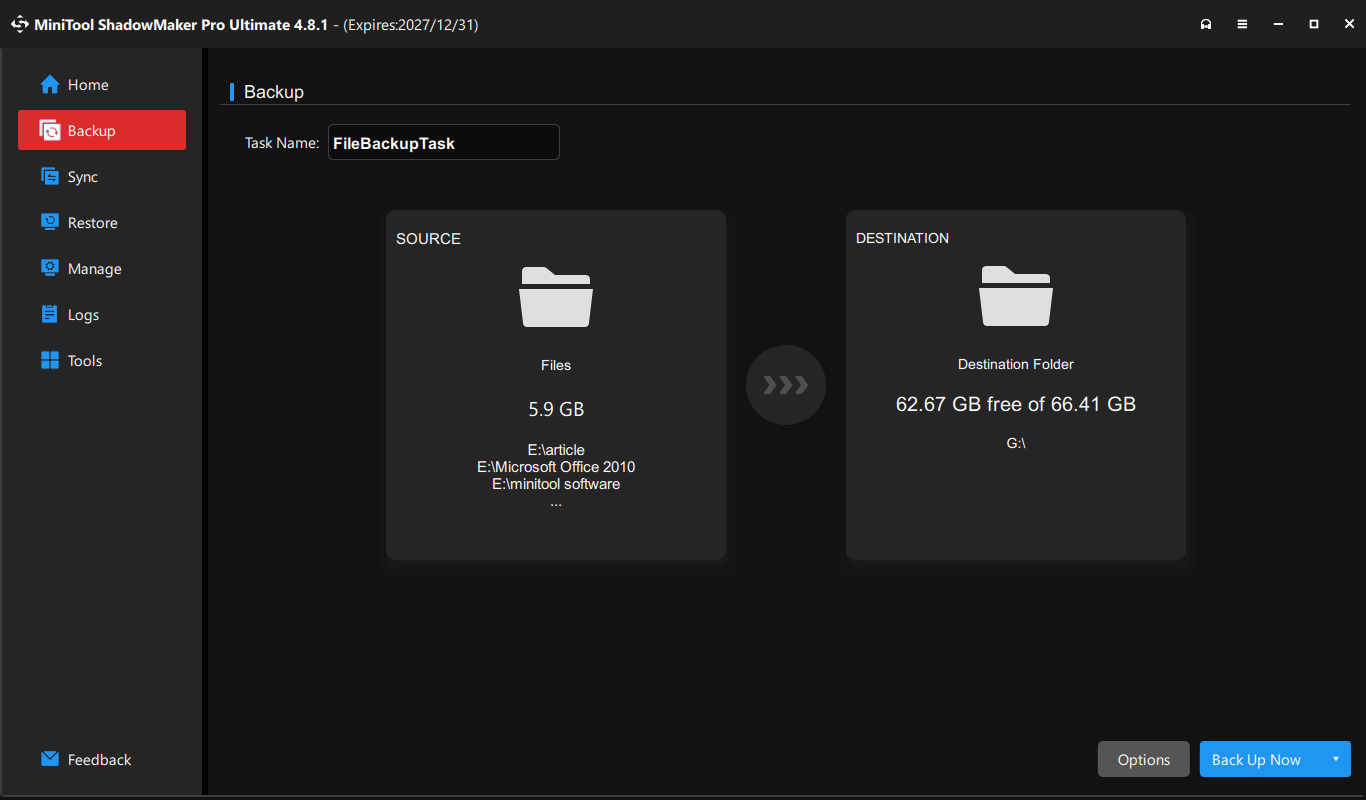
Step 1: Download and launch MiniTool ShadowMaker.
Step 2: Go to Backup > SOURCE > Folders and Files and choose the files you want to back up.
Step 3: Navigate to DESTINATION and select the drive where you want to save the image file.
Step 4: Click Back Up Now to begin the backup.
How to Fix the Kernel Power 41 Error?
Method 1: Disable Fast Startup
Fast startup is a feature in Windows that helps your computer boot up faster after a shutdown. However, it can prevent Windows from properly initializing or closing core kernel sessions during shutdown, triggering the error 41.
To fix this issue, disable this feature:
Step 1: Open Power Options and then click Choose what the power button does in the left panel.
Step 2: Click Change settings that are currently unavailable. Scroll down to the Shutdown settings section and then uncheck Turn on fast startup (recommended). Click Save changes.
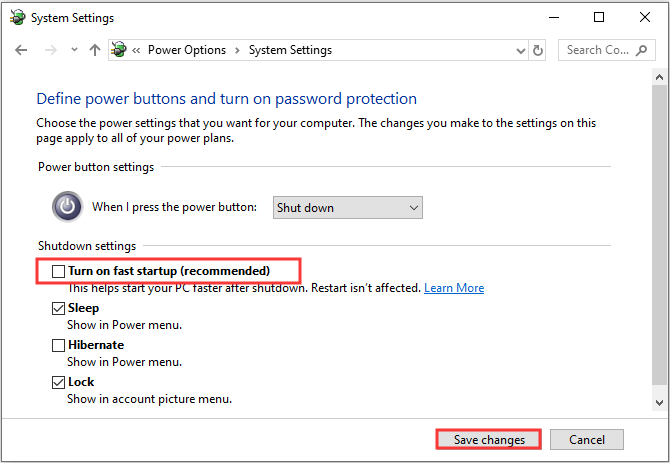
After you have turned off Fast startup, then the error should be fixed. But you should know that it may take a little longer time to boot your computer.
Method 2: Update GPU Driver
Outdated or unstable drivers (especially for your GPU) can trigger critical kernel power halts, resulting in event error 41. Try updating them to fix this issue.
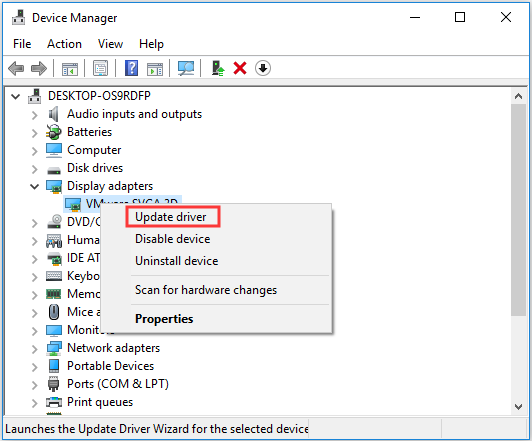
Step 1: Right-click the Start button to choose Device Manager.
Step 2: Expand Display adapters, right-click your graphics driver, and choose Update driver.
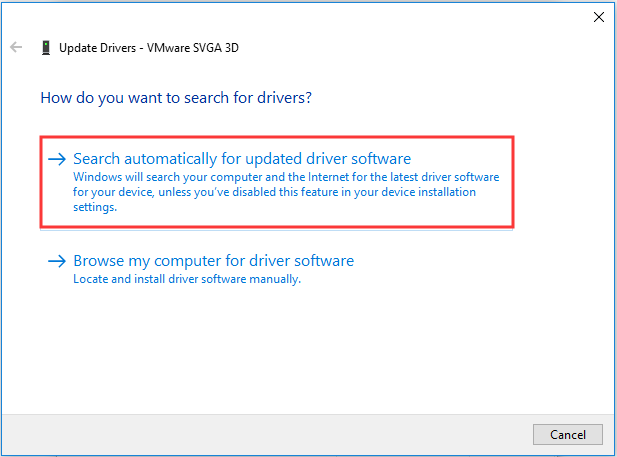
Step 3: There are two choices for you, but it is recommended to choose Search automatically for updated driver software. Then follow the prompts showing on the screen to finish updating your driver.
Step 4: After updating the GPU driver, restart your computer to see if the kernel power 41 Windows 10 error still exists.
If the problem persists, expand the Sound, video and game controllers section in the Device Manager to check if there are duplicate audio drivers. If there are, then you should right-click one of them to choose Disable device.
And if there is only one audio device, then you can also try to disable it to fix the event ID 41 error.
Method 3: Change Power Options
Power Options is responsible for managing how your computer uses power, but some of the settings could trigger the kernel power 41 error.
Then changing Power Options could help you to get rid of the kernel power 41 error. Here is the tutorial:
Step 1: Type control panel in the Search bar and then click Control Panel.
Step 2: Set View by: Large icons and then click Power Options.
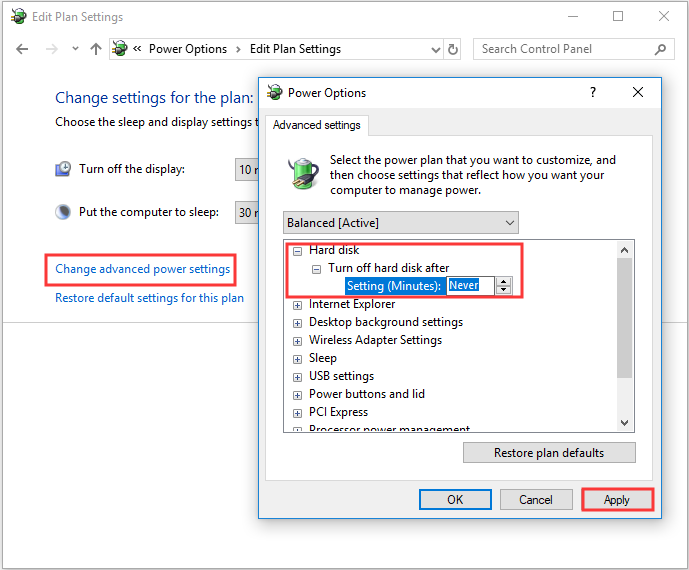
Step 3: Click Change plan settings next to your current plan and then click Change advanced power settings.
Step 4: Expand Hard disk and then expand Turn off hard disk after. Then set it to Never or input 0 as a value. Click Apply to save changes.
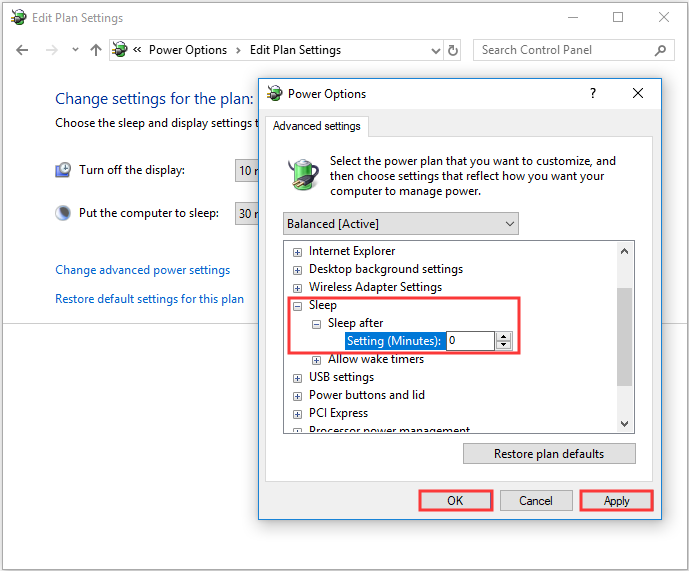
Step 5: Expand Sleep and then expand Sleep after. Then set it to Never or input 0 as a value. Click Apply and OK to exit Power Options.
Step 6: Reboot your computer to check if the kernel power event 41 error still appears.
Method 4: Run System File and Disk Checks
Corrupted system files or disk errors can trigger Kernel Power 41. To resolve this error, follow these steps to run system file and disk checks.
Step 1: Type cmd in the Search box and press Enter to launch Command Prompt with admin rights.
Step 2: Run DISM and SFC to check system files and repair the corruption. The commands are:
- DISM /Online /Cleanup-Image /RestoreHealth
- sfc /scannow
Step 3: Execute the following command to check for disk issues:
chkdsk /f /r
Step 4: Press Y to schedule a scan on your next restart.
Step 5: Restart your computer.
Method 5: Check Your Hardware
Sometimes, hardware issues can trigger the kernel power 41 error. Thus, you should check your hardware when you meet a random restart on Windows 10/11. There are several things you need to check:
- Check if your hardware is overheating or overlocking.
- Check if there is any dust on the RAM.
- Check if the RAM and wires are connected correctly.
- Check if the power connectors are connected for both GPU and motherboard correctly.
If you have found any problems with your hardware, then solve them. After you have made sure that all your hardware is in the normal state, then restart your computer to see whether the kernel power 41 error still persists.
Method 6: Update BIOS
If none of the methods can fix the kernel power 41 error, then you should update the BIOS. BIOS is responsible for waking up all your computer’s hardware components. And you should know that it is very complicated to update your BIOS.
If the process isn’t performed correctly, it may cause permanent damage to your computer, so you’d better check your motherboard manual to update your BIOS.
And if you are worried about causing damage to your computer, then it is recommended to find an expert to do that.
Conclusion
Kernel power 41 indicates an unexpected shutdown. By disabling fast startup, updating drivers, adjusting power settings, and checking hardware, you can resolve this problem easily.
To prevent data loss, back up your data before fixing the issue. If you encounter issues with our software, send an email to [email protected].
Kernel Power 41 FAQ
About The Author

Position: Columnist
Vera has been working at the MiniTool Team for over 10 years as a technical editor and content writer. She mainly focuses on disk and partition management, data recovery, Windows backup and restore, and PC troubleshooting. Through in-depth software testing and hands-on experience, she has helped users solve a wide range of computer problems and better protect their data on Windows devices.
User Comments :