
Windows Defender may stop working in Windows 11/10 because of third-party antivirus conflicts, stopped services, and corrupted system files. To fix it, disable another antivirus software, restart related services, run DISM & SFC, reset Windows Security, and check Group Policy settings.
Symptoms of Windows Defender Not Working
Windows Defender, also known as Windows Security, is a built-in antivirus program in Windows 11 and 10 to protect your computer from malware and other threats.
However, sometimes you may find this tool doesn’t work properly. The following are common symptoms:
- The Windows Security app shows a blank screen or closes immediately upon opening.
- Virus & threat protection is turned off or missing.
- Device Security displays the page not available error.
- Virus & threat protection is managed by your organization.
How to Fix Windows Defender Not Working in Windows 11/10?
Check the following table that lists some common fixes. Then, you can quickly find the right solution for your situation.
| Situation | Recommended Fix |
| Another antivirus software is installed. | Uninstall or disable the conflicting antivirus tool |
| Windows Security won’t open. | Reset the Windows Security app |
| Real-time protection won’t open. | Check antivirus conflicts and security settings |
| Security services are stopped. | Restart Windows Security-related services |
| Defender is disabled by system policy. | Check Group Policy settings |
| Windows Security stops working after a Windows update. | Check for Windows updates |
Fix 1. Check for Third-Party Antivirus Conflicts
Another antivirus program may cause Windows to disable Windows Defender to prevent software conflicts.
Follow these steps:
- Open Settings.
- Go to Apps > Installed apps.
- Find your antivirus software.
- Uninstall it if you no longer need it.
- Restart your computer.
Then open Windows Security again and check whether Windows Defender works.

Fix 2. Restart Security Center Service
Windows Defender relies on various Windows services. If these services are stopped or disabled, Windows Security may not function properly.
Follow these steps:
Step 1: To get the Run dialog, press Win + R.
Step 2: Type services.msc into the textbox and click OK to open Services.
Step 3: Go to find the Security Center service from the right pane, right-click it and choose Restart.
Besides, you should also check these services – Windows Defender Advanced Threat Protection, Windows Defender Firewall, Windows Defender Antivirus Network Inspection Service, and Windows Defender Antivirus Service and make sure they are running.
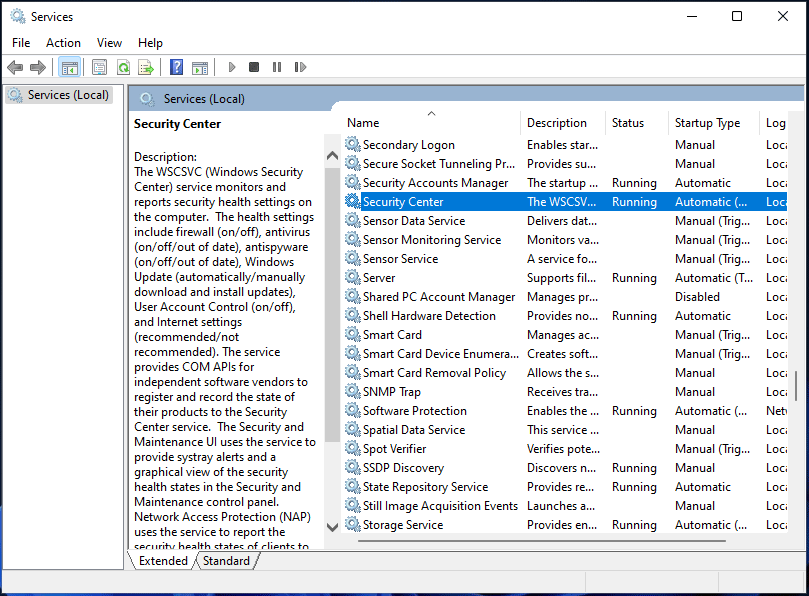
Step 4: Double-click each service to open the Properties window and set the Startup type to Automatic.
After that, go to check if Windows Defender can work. If it is still not working as normal, try other methods below.
Fix 3. Set Date and Time Correctly
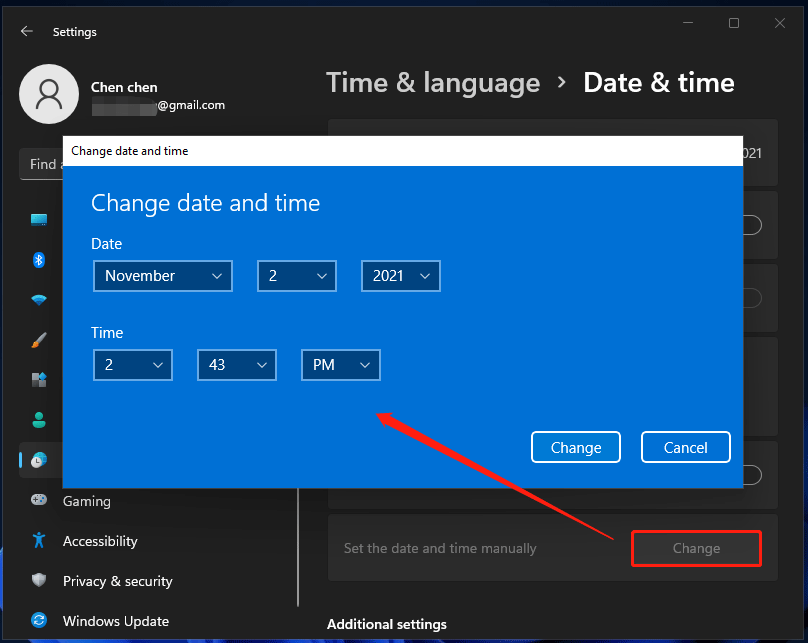
A common reason why Windows Defender won’t start/work is an incorrect time and date since most system features depend on time and date. So, make sure your date and time are set correctly.
Step 1: Click the Start icon from the Taskbar in Windows 11 and choose Settings to open this app.
Step 2: Move to the Time & language tab on the left side and click Date & time in the right pane.
Step 3: Click the Change button to set the correct time and date.
Fix 4. Update Windows to the Latest Version
Sometimes Windows Defender Windows 11 missing or Windows 11 Security not working appears due to the bugs in the certain Windows versions. To fix it, you can update it to the latest version to see if the issue is resolved.
Step 1: Click Start > Settings to get Windows 11 Settings interface.
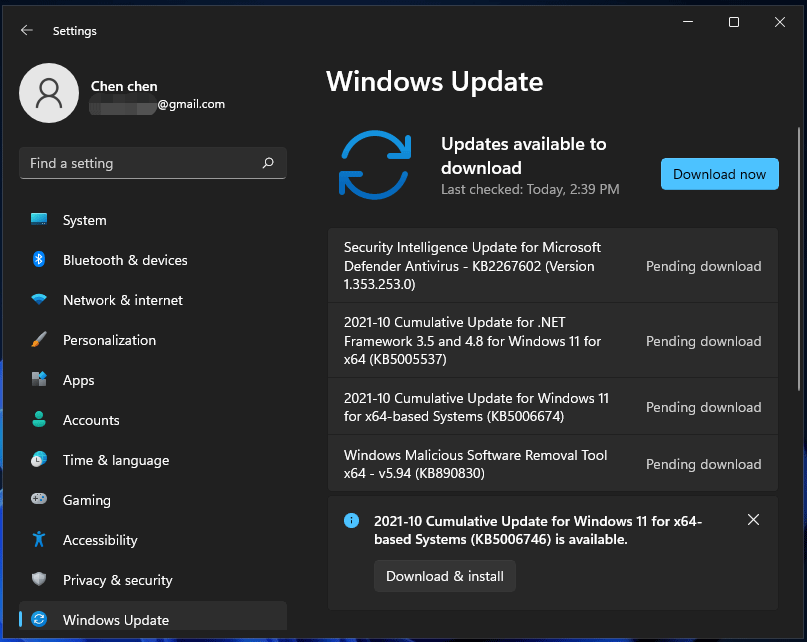
Step 2: Go to Windows Update in the left sidebar and click Check for updates.
Step 3: If the system checks for some available updates, download and install them on your Windows 11 PC. Then, you may be able to run Windows Defender for PC protection against viruses and threats.
Fix 5. Run SFC and DISM
Corrupted system files can disrupt Windows Defender. Use the System File Checker (SFC) and DISM tools to repair Windows.
Step 1. Run SFC Scan.
Open Command Prompt as administrator and run sfc /scannow.
Wait until the scan finishes. If SFC repairs corrupted files, restart your PC and check Windows Defender.
Step 2. Run DISM to Repair the Windows Image
If SFC cannot repair all corrupted files, execute the following command:
DISM /Online /Cleanup-Image /RestoreHealth
Wait until the process completes.
Step 3. Run SFC Again.
After DISM finishes, run sfc /scannow again to verify that Windows system files are repaired.
Fix 6. Check Group Policy Settings
Group Policy settings can disable Microsoft Defender, especially on Windows Pro and Enterprise editions.
Follow these steps:
Step 1: Open Run, type: gpedit.msc, and press Enter.
Step 2: Go to Computer Configuration > Administrative Templates > Windows Components > Microsoft Defender Antivirus.
Step 3: Make sure Defender is not disabled.
Restart your PC and check Windows Security.
Fix 7. Reset Windows Security App
If Windows Security does not open or shows errors, resetting the app may solve the problem.
- Open Settings.
- Go to: Apps > Installed apps.
- Find Windows Security.
- Click Advanced options.
- Select Reset.
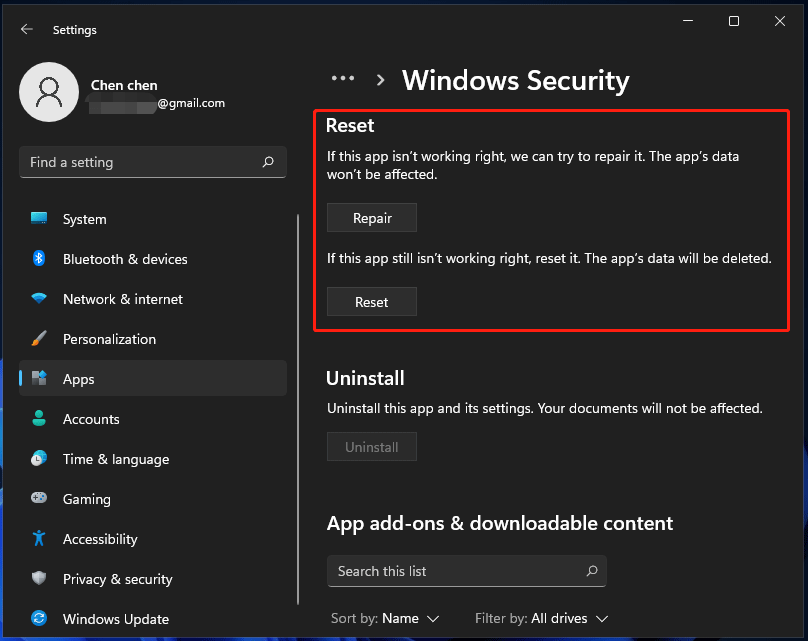
Restart Windows and open Windows Security again.
Fxi 8. Perform a Clean Boot
The running third-party services and programs may interrupt Windows, leading to Windows 11 Windows Defender not working. To get rid of the trouble, you can try to perform a clean boot.
Step 1: Open the Run window by pressing Win + R, type msconfig, and click OK.
Step 2: Under the Services tab, tick the checkbox of Hide all Microsoft Services.
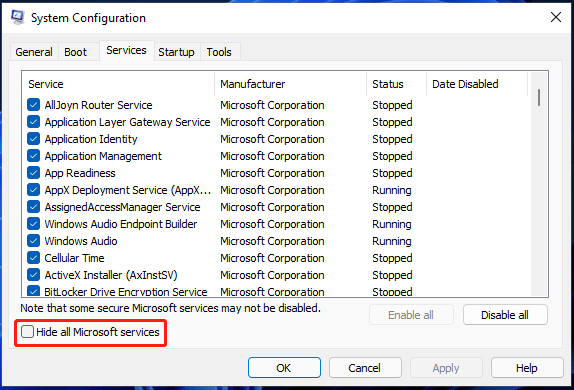
Step 3: After that, click Disable all to disable all the services except Microsoft services.
Step 4: Go to the Startup tab and click Open Task Manager.
Step 5: Choose programs individually and click Disable.
If Windows Defender can work normally in the clean boot environment, identify which third-party app or service is causing the issue. Then, disable the service or uninstall the app.
Fix 9. Make Changes in Your Registry
If Windows Defender won’t start or work after trying many solutions, you can try to change Registry settings. Before you do, you had better back up your registry keys in Windows 11 to avoid system corruption due to mistaken operations.
Step 1: Type regedit to the search box and click Registry Editor.
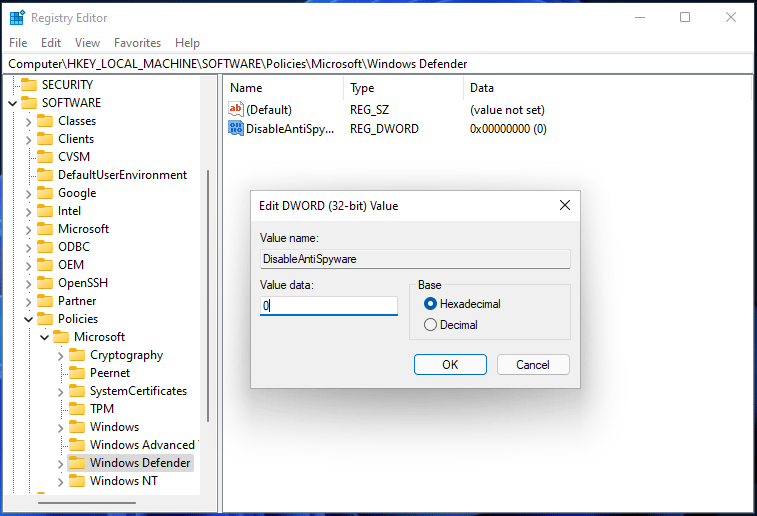
Step 2: Go to this path: Computer\HKEY_LOCAL_MACHINE\SOFTWARE\Policies\Microsoft\Windows Defender.
Step 3: Locate DisableAntiSpyware in the right pane. If it is not here, right-click Windows Defender and choose New > DWORD (32-bit) Value to create it.
Step 4: Double-click this key and set its value data to 0.
Fix 10. Reset This PC
If all of these methods cannot fix Windows 11 Windows Defender not working, the last solution you can try is to reset your PC to its factory settings.
Resetting may erase your personal files even though you choose to keep them. Back up important data before proceeding.
For data backup, use MiniTool ShadowMaker. As a professional backup software, it enables you to easily back up files, folders, disks, partitions, and the entire system to an external hard drive.
MiniTool ShadowMaker TrialClick to Download100%Clean & Safe
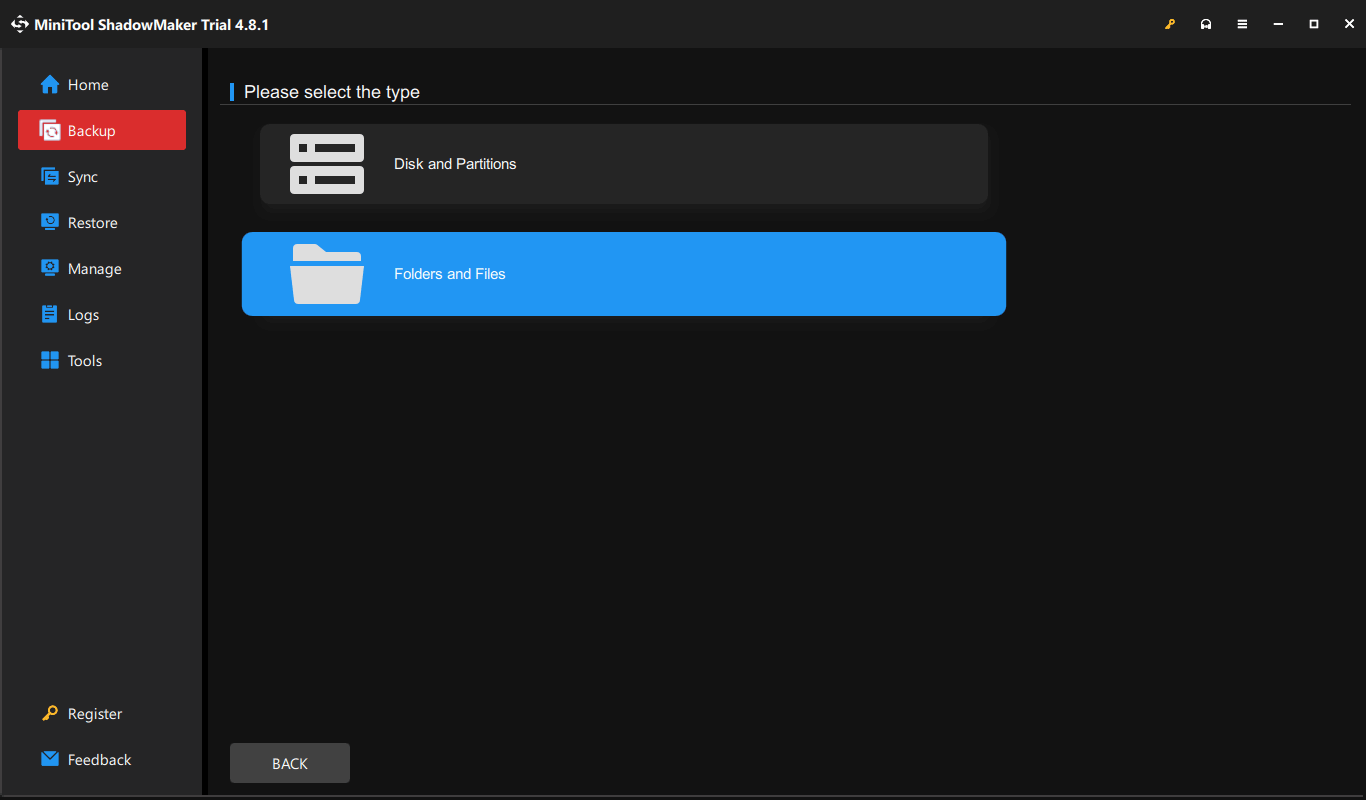
Step 1: Launch MiniTool ShadowMaker and access its Backup tab.
Step 2: Choose the files you want to back up by going to SOURCE > Folders and Files.
Step 3: Select a drive under DESTINATION to save the image file.
Step 4: Click Back Up Now.
After the backup, reset your PC.
Step 1: Go to Settings > System > Recovery > Recovery options > Reset this PC.
Step 2: Choose an option based on your need.
Step 3: Finish the resetting operation by following the instructions on the screen.
How to Prevent Windows Defender from Not Working Again
To ensure Windows Defender functions effectively:
- Keep Windows updated regularly.
- Avoid using multiple antivirus solutions simultaneously.
- Do not disable Windows Security features.
- Download software only from reputable sources.
- Perform regular malware scans.
Windows 11 Windows Defender Not Working FAQ
You can also verify this by going to Settings > Update & Security > Windows Security and checking the “Virus & threat protection” status.
Final Thoughts
Windows Defender issues are often due to antivirus conflicts, disabled services, or corrupted files. Start by checking antivirus software and restarting Windows Security services. For persistent problems, consider using SFC, DISM, or Group Policy troubleshooting.
To safeguard your system, it’s also a good idea to back up your PC with MiniTool ShadowMaker. For help, leave a comment or email [email protected].
About The Author

Position: Columnist
Vera has been working at the MiniTool Team for over 10 years as a technical editor and content writer. She mainly focuses on disk and partition management, data recovery, Windows backup and restore, and PC troubleshooting. Through in-depth software testing and hands-on experience, she has helped users solve a wide range of computer problems and better protect their data on Windows devices.
User Comments :