
It can be frustrating when you want to see your downloaded files in your Downloads folder, but find that it is completely empty.
There is an actual user experience:
“So when I download a file of EDGE, I see that it is downloading, but when I go into my Downloads folder, I cannot find it after it has finished the download. Is there a fix in which I can get the files to be updated into my Downloads folder?”learn.microsoft.com
The downloads are not lost in most cases, and they may be misplaced or hidden due to settings, permissions, or system functions.
In this post, we will outline the actual reasons that downloads may not show up and offer practical, step-by-step solutions to resolve the issue.
Now, continue reading to learn what causes the “downloads not showing up in the Downloads folder” problem.
Reasons Why Downloads Not Showing up in the Downloads Folder
There can be several reasons why your Downloads folder isn’t showing any of your downloaded files, including:
| Reason | Description |
| Hidden Downloaded Files | Due to improper settings, File Explorer may default to hiding specific file types. |
| Incorrect Storage Location | Various applications and browsers provide custom saving locations. If you’ve modified the default directory or used “Save As”, the downloads could have been stored elsewhere. |
| Accidental Deletion | The downloaded files may have been unintentionally deleted or moved. |
| Browser-specific Functions | Browsers like Chrome, Firefox, or Edge manage downloads through internal records that may not always synchronize immediately with the file system. |
| Antivirus or Security Software Interference | Real-time protection tools can sometimes quarantine or remove files they identify as suspicious, even if they are harmless. |
| Caching or Incomplete Downloads | A weak internet connection might lead to a partial download that doesn’t appear in the Downloads folder on Windows. |
After learning the causes, follow the solutions to fix “downloaded files not showing up on Windows”.
How to Fix Downloads Not Showing up in the Downloads Folder on Windows
Below, we’ll show the detailed steps on how to unhide downloads, check hidden items settings, restore the Downloads folder location, and so on.
Keep reading to learn these methods to resolve the issue that downloaded files are not appearing in the Downloads folder.
Try These Basic Fixes
When you find your downloaded files have vanished from your Downloads folder, here’s what you need to do first to fix the problem:
- Check Browser Settings: Launch your browser (Chrome, Edge, Firefox), navigate to Settings > Downloadsand verify the download location. If needed, enable “Ask where to save each file before downloading” to avoid losing track of future downloads.
- Check Browser Downloads: Open your browser to check your browser’s download history by pressing Ctrl + J. Then, find the file, and click Open folder or Show in folder.
- Show Hidden Files: Launch File Explorer, head to the Downloads folder, click on the View tab, and select Hidden items.
- Change the Content Layout: Open File Explorer, go to the Downloads folder, and then click the View tab on the top toolbar. Choose a different view from the one that you currently have in the Layout section. For example, change Tiles to Content.
- Search for Files: Open the Downloads folder and use the search bar to search for part of the file name or file extension.
- Restart the Computer: A simple reboot of your PC may fix some minor glitches on Windows.
- Check OneDrive: If you are using OneDrive, ensure “Files On-Demand” isn’t hiding files by moving them to the cloud.
Now, click on your Downloads folder, and check if your downloaded files exist.
If your downloads are still not visible, try the more advanced solutions below.
Method 1. Restore the Default Location of Downloads
If the Downloads folder location is moved, the default path is no longer available.
In this situation, consider restoring the location of the Downloads folder to the default.
Here’s how to do it:
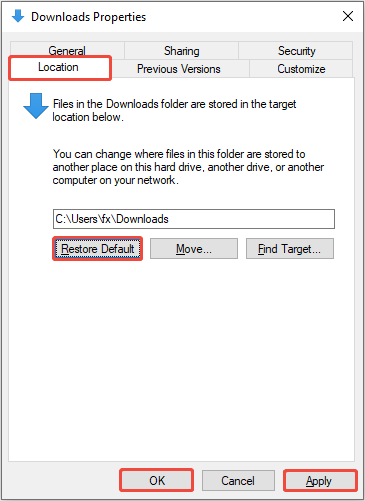
Step 1. Press Win + E to open File Explorer, locate and right-click the Downloads folder to select Properties.
Step 2. Go to the Location tab, click the Restore Default button, and click Apply > OK.
Method 2. Use SFC and DISM
Sometimes, your Downloads folder location may be corrupted due to a corrupted Windows user profile. In this case, the system may not load the files properly.
This issue can occur after unexpected system crashes, unsuccessful Windows updates, or malware attacks.
To fix it, utilize the built-in Windows tools – SFC and DISM to fix corrupted system files that could be impacting your profile.
Follow the instructions to run these tools:
Step 1. Type cmd in the Windows Search box, right-click Command Prompt, and choose Run as administrator.
Step 2. Click Yes in the UAC prompt.
Step 3. Copy and paste the following commands in order and press Enter at the end of each command line:
- Dism /Online /Cleanup-Image /CheckHealth
- Dism /Online /Cleanup-Image /ScanHealth
- Dism /Online /Cleanup-Image /RestoreHealth
Step 4. After the commands are finished, copy and paste “sfc /scannow” and press Enter.
Once the scan process completes, restart your PC and check if the downloaded files in the Downloads folder reappear.
Method 3. Clear File Explorer History
If there are corrupted caches and temporary files in the File Explorer, it may cause the file manager to not function well.
Therefore, opt for clearing the File Explorer history by following these steps below:
Step 1. Press Win + E to open File Explorer.
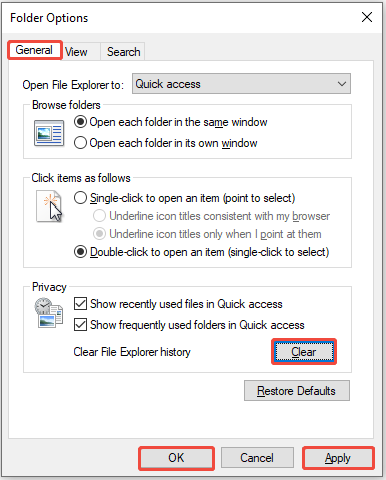
Step 2. Click the three dots > Options (For Windows 11 version) or the File menu > Change folder and search options (For Windows 10 version) at the top toolbar.
Step 3. In the Folder Options window, go to the General tab.
Step 4. In the Privacy section, click the Clear button next to Clear File Explorer history.
Step 5. Click Apply > OK to apply the changes.
Method 4. Check Privacy Settings
If your Downloads folder appears empty due to privacy or permission issues, check two primary areas in Windows Settings: File system access for applications and Controlled Folder Access.
>> Check App Permissions for File System Access
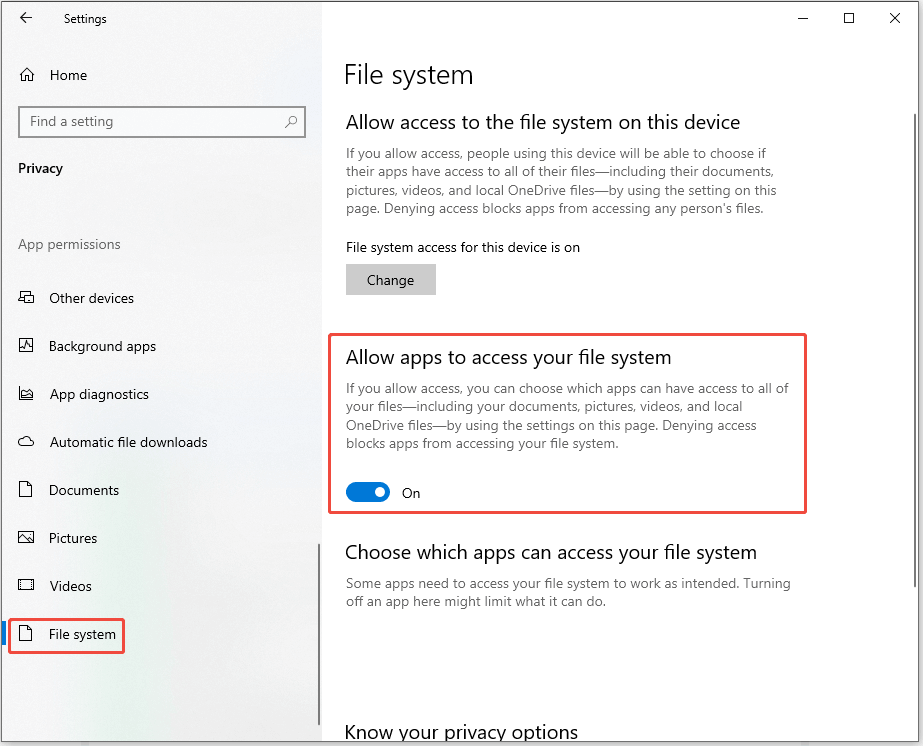
Step 1. Press Win + I to launch Settings and then go to Privacy & security (For Windows 11) or Privacy (For Windows 10).
Step 2. Scroll down to the App permissions section and choose File system.
Step 3. Make sure that Allow apps to access your file system is set to On.
>> Check Controlled Folder Access Settings
Step 1. Search for Windows Security in the Windows search bar and press Enter.
Step 2. Navigate to Virus & threat protection.
Step 3. Scroll down and click on Manage ransomware protection under the Ransomware protection section.
Step 4. Verify if “Controlled folder access” is enabled.
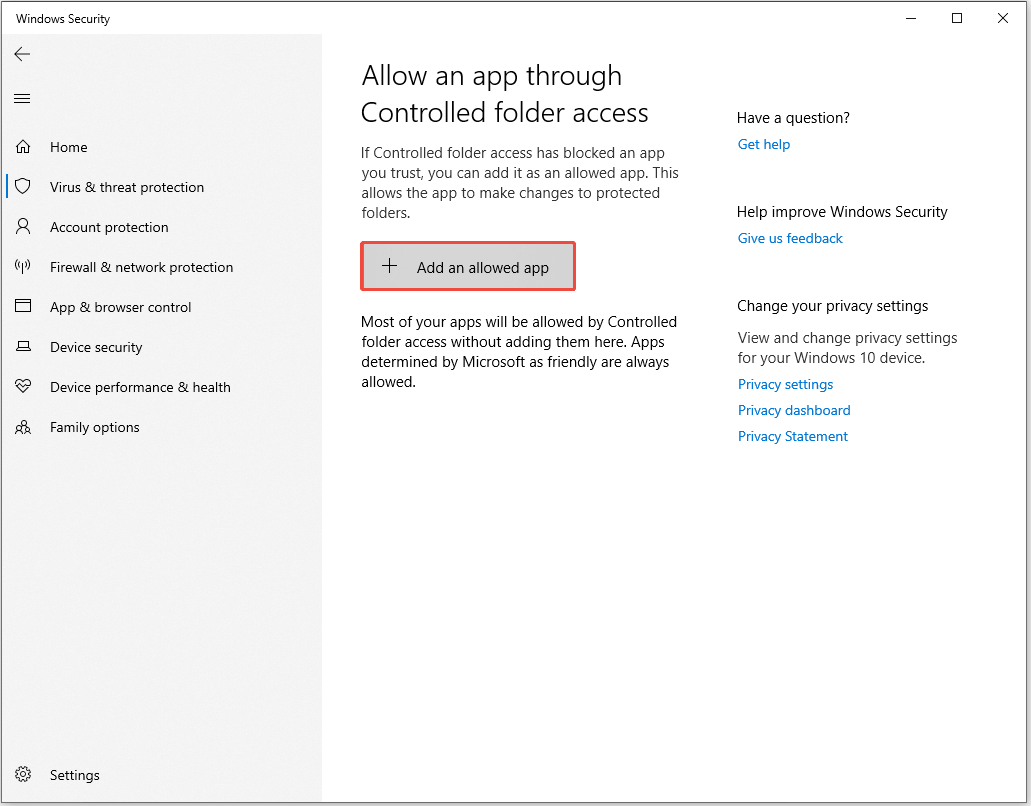
If it is enabled, click the Allow an app through Controlled folder access option, select + Add an allowed app, and include the specific application you are using for downloading files (e.g., your web browser).
Download your wanted files again and check whether they are stored in the Downloads folder.
Method 5. Scan for Malware
A malware infection can cause your Downloaded files to disappear by hiding, deleting, or encrypting it. Therefore, you need to scan for malware.
Step 1. Press Win + I together to launch Windows Settings and go to Update & Security.
Step 2. In the following window, select the Windows Security option in the left panel and click Virus & threat protection in the right pane.
Step 3. Click Scan options under the Quick scan button.
Step 4. Select Full scan and click Scan now.
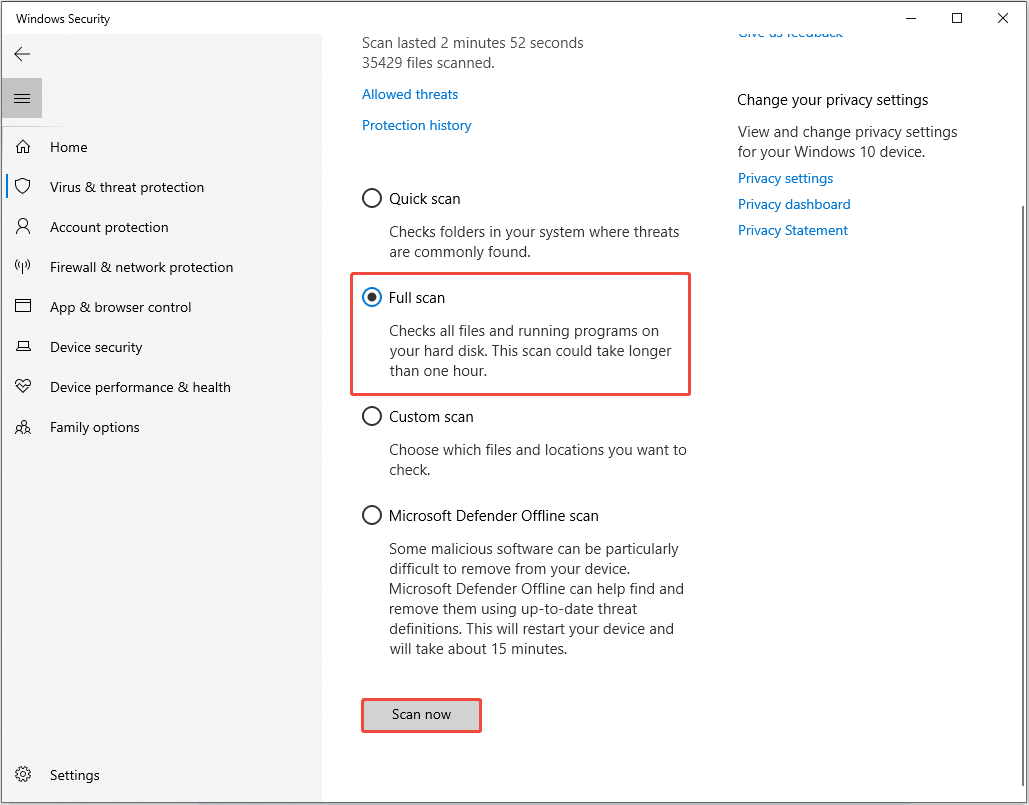
Windows Defender can detect and remove most malware threats and usually moves suspicious files to quarantine instead of deleting them.
To recover your missing Downloads folder using Windows Defender, follow these steps:
Step 1. Open Windows Security, and then click on Virus & threat protection in the left menu.
Step 2. Select Protection history under Current threats.
Step 3. Use Filter to view Quarantined Items.
Step 4. Look for entries related to your Downloads folder and click Restore to recover them.
If the methods mentioned above fail to make your downloads visible, your files may be lost from the Downloads folder.
Now, proceed to the next part to learn how to recover them.
How to Recover Lost Files from the Downloads Folder
In this part, we will introduce a powerful data recovery tool to help you recover lost downloads on Windows.
Before trying this tool, there are two places you need to check:
- Recycle Bin: Open the Recycle Bin and look for your deleted downloads. If they are here, select and right-click them, and then select Restore.
- File History: If you have enabled File History, open File Explorer and go to your Downloads folder. In the Home tab, click History. Next, in the pop-up File History window, select the wanted downloads and click the green Restore button.
If you don’t find your downloaded files in both the Recycle Bin and File History, consider using MiniTool Power Data Recovery to recover files.
This data recovery tool supports multiple file types, like pictures, videos, audios, documents, and so on, and it is compatible with Windows 11/10/8/8.1.
Additionally, it effectively handles recovery from accidental deletions, virus attacks, and other data loss scenarios.
Now, download and install this free data recovery software to get your downloads back.
MiniTool Power Data Recovery FreeClick to Download100%Clean & Safe
Here’s the detailed guide on downloaded file recovery using MiniTool Power Data Recovery:
Step 1. Scan the Downloads Folder
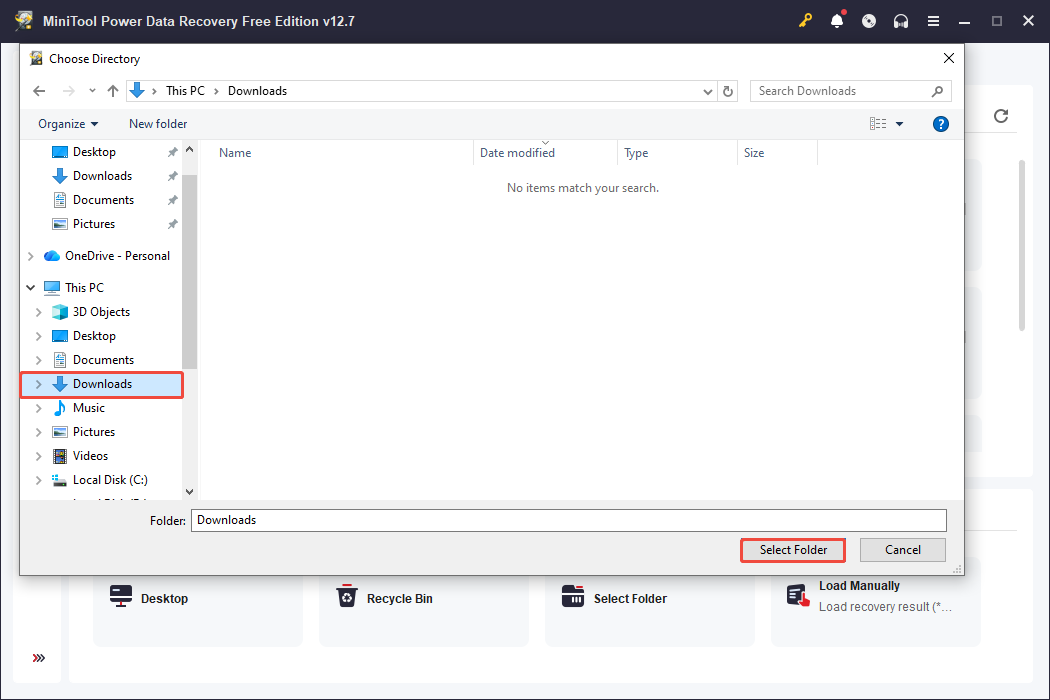
Open the MiniTool data restoration tool to get its main interface. Go to the Recover From Specific Location section, choose Select Folder, and click Browse.
In the new window, select the Downloads folder and click the Select Folder button.
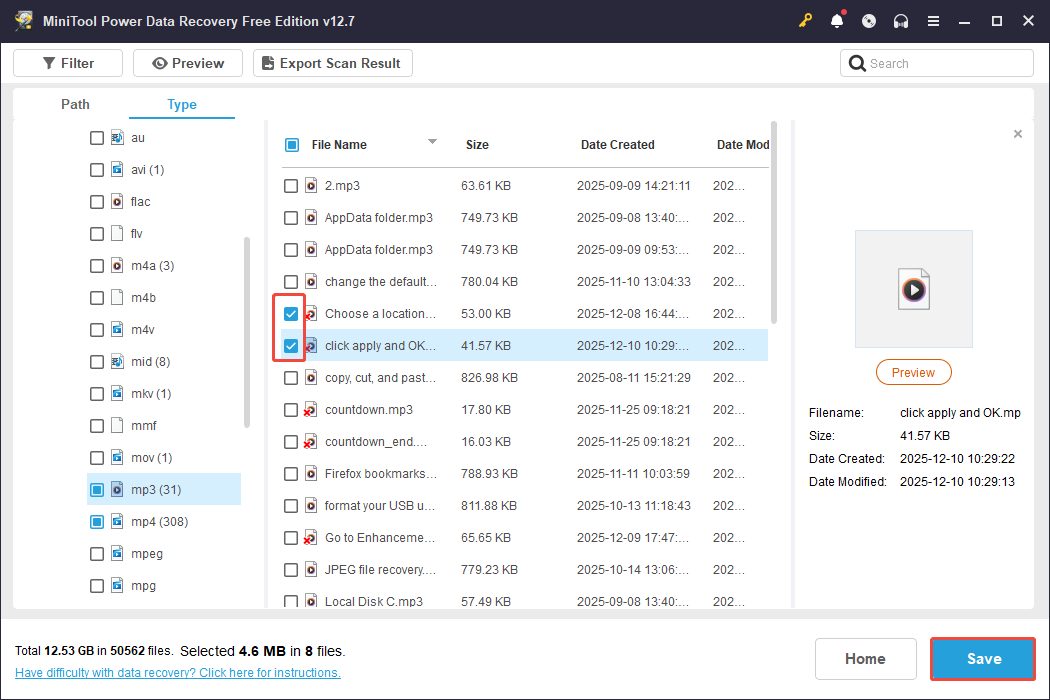
Step 2. Preview and Select the Wanted Files
After scanning, you will be located at the Path tab. Expand the Deleted Files folder and Lost Files folder to find files.
In addition, switch to the Type tab to look for files by file type.
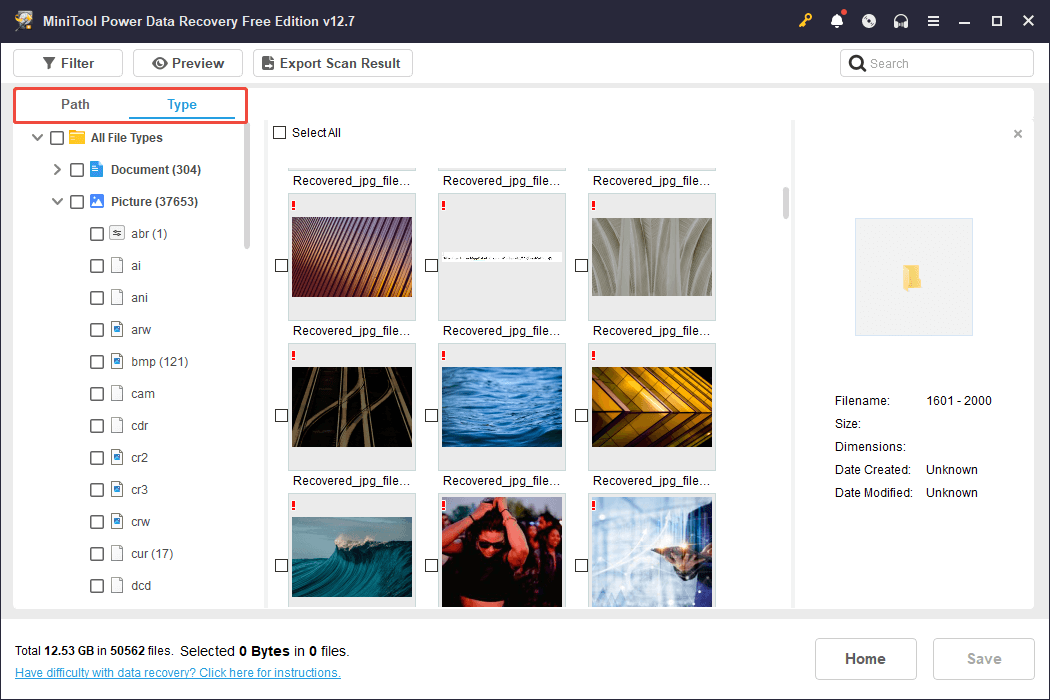
Moreover, this tool provides the Filter feature that allows you to filter out files by file size, file type, date modified, and file category.
To locate a specific file, type the file’s name or the keywords for the name in the search bar and press Enter.
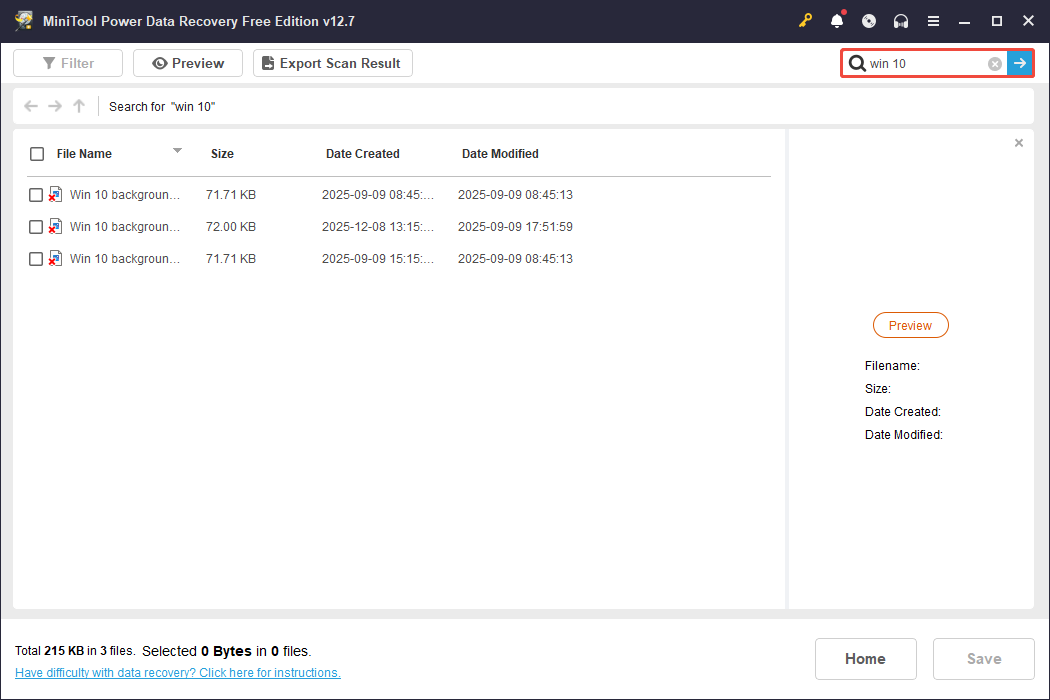
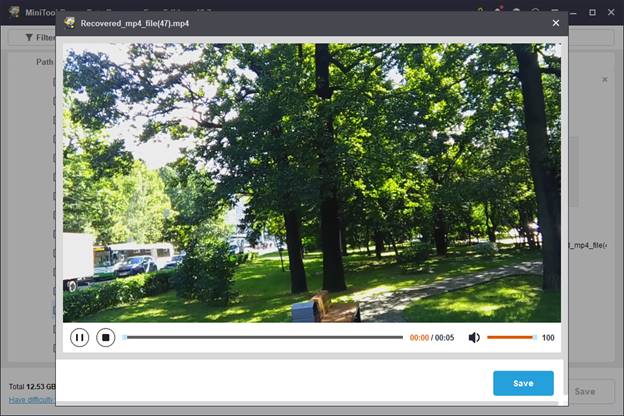
To preview the file, double-click it.
Step 3. Save the Desired Files
Now you can check the required files, click the Save button, and specify a safe location to store the recovered files.
Bottom Line
This post introduces how to fix “downloads not showing up in the Downloads folder” on Windows, including restoring folder location, using SFC and DISM, clearing history, and so on.
For the situation where downloaded files are lost, we also provide a robust data recovery tool to rescue them.
If you have any concerns or questions about MiniTool Power Data Recovery, please feel free to send an email to [email protected].
User Comments :