
System Restore is a useful tool that helps you recover from system failures. Sometimes you may need to run System Restore in Safe Mode. This post from MiniTool tells you how to perform system restore in Safe Mode on Windows 11/10/7.
Can You Perform System Restore in Safe Mode?
Safe Mode is a special diagnostic mode in the Windows operating system, useful for troubleshooting computer problems.
If Windows 11/10 fails to start normally, you can access Windows Recovery Environment (WinRE) to enter Safe Mode and run a system restore.
According to Microsoft, System Restore helps revert system files, registry settings, and installed apps to an earlier state, without affecting personal files.
When Should You Run System Restore in Safe Mode?
It is necessary to enter Safe Mode for a system restore in the following situations:
- Windows gets stuck in a boot loop, shows a blue screen, or encounters other boot errors.
- A normal system restore keeps failing, or errors appear during the restoration process.
- Third-party drivers, antivirus software, or apps block the system files from reverting properly.
How to Perform System Restore in Safe Mode on Windows 11/10
This part is about how to perform system restore in Safe Mode on Windows 10/11.
Step 1: Enter Safe Mode
First, you need to enter Safe Mode. Here are the details.
1. Press the Windows + I keys together to open Windows 11/10 Settings.
2. Enter WinRE (Windows Recovery Environment).
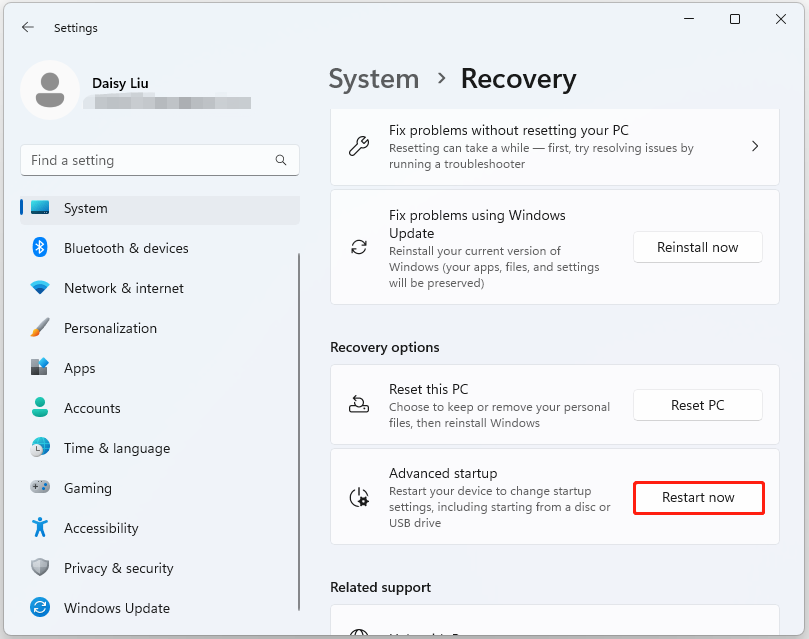
Windows 11: Go to System > Recovery. Under the Recovery options part, click Restart now next to Advanced startup.
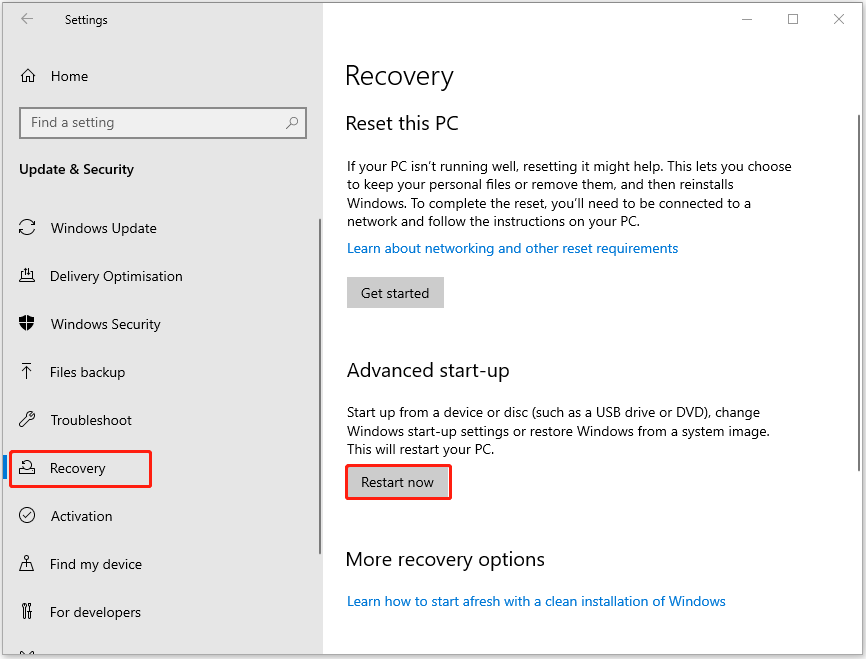
Windows 10: Go to Update & Security > Recovery. Under the Advanced start-up part, click Restart now.
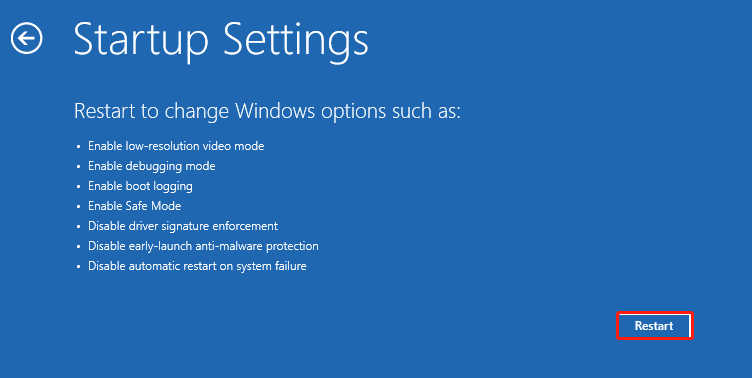
3. Next, click Troubleshoot > Advanced options > Startup Settings > Restart.
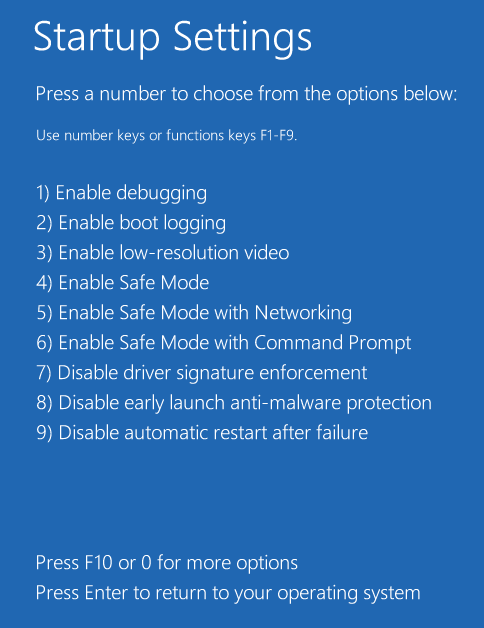
4. Press 4 or F4 to start Windows 11/10 in Safe Mode; Press 5 or F5 to start Windows 11/10 in Safe Mode with Networking; Press 6 or F6 to access Windows 11/10 in Safe Mode with Command Prompt.
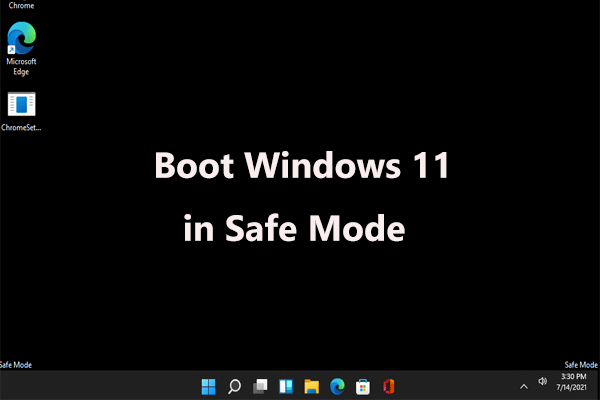
Step 2: Perform the System Restore
After entering Safe Mode on Windows 11/10, you can start to perform the system restore.
1. Press Windows + R to open Run.
2. Type rstrui.exe and press Enter.
3. When you launch the System Restore window, click Next.
4. Select the system restore point you want to recover and click Next to continue.
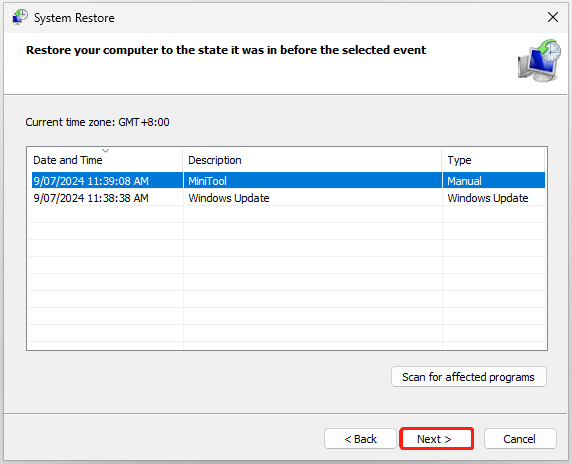
5. Confirm the restore point and click Finish to perform system restore in Safe Mode on Windows 11.
How to Perform System Restore in Safe Mode on Windows 7
This part is about how to perform system restore in Safe Mode on Windows 7.
Step 1: Enter Safe Mode
1.Turn off your computer completely and reboot it. Press the F8 Key repeatedly before the Windows logo appears, and stop until the Advanced Boot Options window pops up.
2. Use the arrow keys to choose Safe Mode press the Enter key.
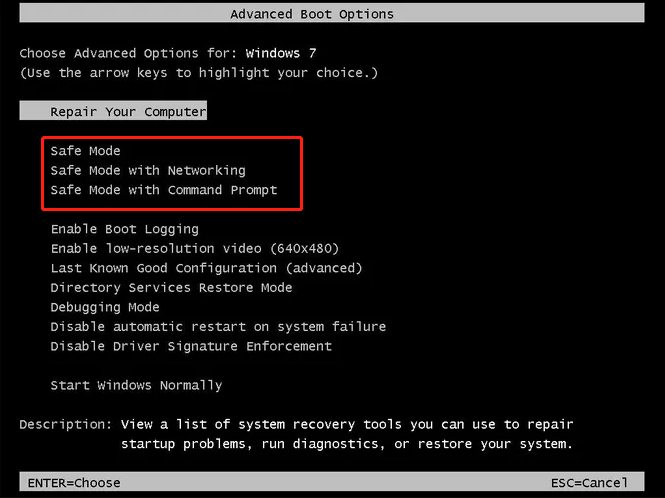
Step 2: Perform the System Restore
1. Click the Start menu> All Programs > Accessories > System Tools > System Restore.
2. If the recommended system restore point is working properly, you can click Next. If not, click Choose a different restore point and choose the system restore point you want.
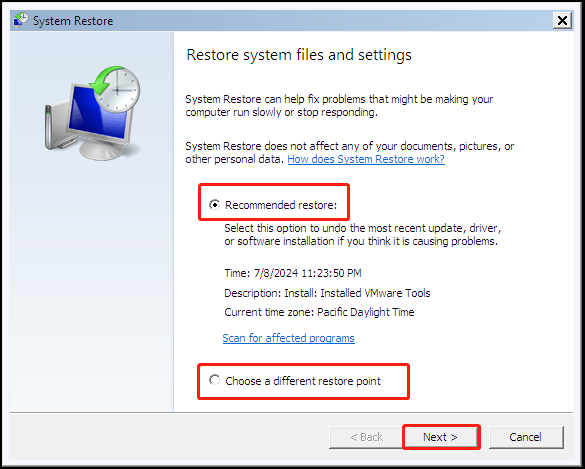
3. Confirm the settings are correct and click Finish to perform system restore in Safe Mode on Windows 7.
Backup and Restore Windows with MiniTool ShadowMaker
System Restore is used to undo recent system changes, including driver updates, software installations, and modified system settings.
If you want a comprehensive backup and recovery solution, MiniTool ShadowMaker is a practical choice. It provides a convenient way to protect your Windows system and restore it when needed.
Additionally, this backup software supports system/partition/disk/file backup, making it suitable for different data protection and recovery needs.
Learn key information from the comparison table:
| Method | What it uses | Main purpose |
| System Restore | Restore point | Undo recent system changes |
| MiniTool ShadowMaker | System backup | Restore Windows from a previous backup |
MiniTool ShadowMaker TrialClick to Download100%Clean & Safe
Step 1: Launch MiniTool ShadowMaker and go to Backup.
Step 2: Create a system backup.
- Under SOURCE in Backup, system drives are automatically selected. Just click DESTINATION to choose a backup target.
- Click Back Up Now to start the backup.

Step 3: Navigate to Tools > Media Builder and follow the on-screen instructions to create a bootable USB drive.
For a system recovery in case of system issues, follow these steps:
Step 1: Boot Windows from the bootable USB drive.
Step 2: Launch MiniTool ShadowMaker in the recovery environment.
Step 3: Find the available system backup under Restore and click the Restore button.
Step 4: Choose a backup version to proceed.
Step 5: Select volumes to restore from the backup file. Ensure MBR and Track 0 is checked.
Step 6: Complete the recovery.
Conclusion
You can perform System Restore in Safe Mode on Windows 11/10/7 to roll back system changes to an earlier restore point. Just access System Restore through WinRE.
For comprehensive system protection and recovery, consider using MiniTool ShadowMaker. If you experience issues with this software, contact us at [email protected].
Perform System Restore in Safe Mode FAQ
About The Author

Position: Columnist
Vera has been working at the MiniTool Team for over 10 years as a technical editor and content writer. She mainly focuses on disk and partition management, data recovery, Windows backup and restore, and PC troubleshooting. Through in-depth software testing and hands-on experience, she has helped users solve a wide range of computer problems and better protect their data on Windows devices.
User Comments :