
Understanding the Boot Selection Failed Windows 7
Windows boot errors can occur for many reasons, preventing you from loading the operating system. “The boot selection failed” is a common issue that typically appears in Windows 7 and Windows Server 2008 R2.
Here is the error message on the Windows Boot Manager interface:
Status: 0xc000000f
Info: The boot selection failed because a required device is inaccessible.
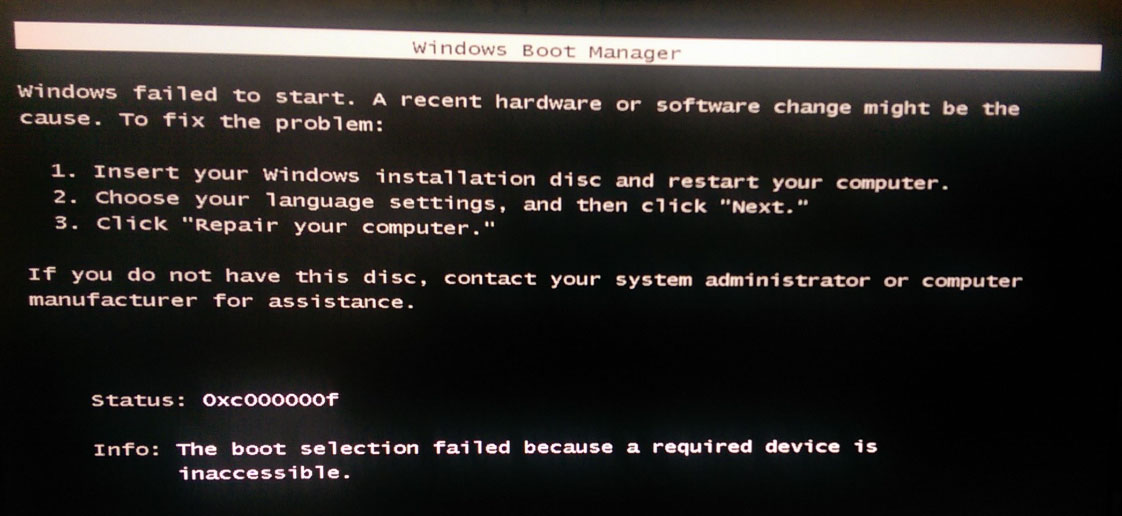
(Image from https://www.eightforums.com)
This frustrating error means the computer cannot find or access the operating system on its hard drive.
What Causes “the Boot Selection Failed” Error
Commonly, the Windows error can be attributed to several factors, as follows:
- Faulty or loose connections: A loose or corrupted cable that is connected from the hard drive to the motherboard can block the system from accessing the OS.
- Incorrect boot order: In BIOS, the system is set to boot from a drive that doesn’t contain the OS.
- External device interference: An external device, like a USB drive or external hard drive, can interfere with the boot process, triggering 0xc000000f.
- Corrupted BCD/MBR: The Boot Configuration Data (BCD) file or MBR that contains essential boot information may be damaged or missing.
- Hard drive problems: The disk may have bad sectors or be failing, preventing the operating system from being read correctly.
- Corrupted operating system: In some cases, system files may be damaged, causing “the boot selection failed”.
After learning the possible causes, you should take some troubleshooting steps to resolve this issue. Before fixing it, consider a data backup first because some fixes may involve system-level changes.
Back Up Data Before Fixing the Issue
“The boot selection failed because a required device is inaccessible” indicates a critical system problem that potentially causes data loss.
Additionally, some solutions involve repairing the boot process, but a failed repair attempt could worsen the situation or lead to data loss.
For data security, backing up is crucial.
To protect data on an unbootable computer, do this with the support of professional and reliable backup software. Here, MiniTool ShadowMaker will be your choice.
This tool offers many powerful features:
- Backs up files, folders, disks, partitions, and Windows.
- Automatically backs up PC data.
- Offers the incremental and differential backup schemes to back up only the changed files.
- Deletes old backup versions to manage storage space.
- Clones a hard drive to another drive for a disk upgrade or backup.
- Creates bootable media for backup and recovery.
Follow these steps to rescue data in case of “boot selection failed”. The process involves creating a bootable rescue drive, booting the system from it, and performing a backup.
Step 1: Create a Bootable USB drive.
1. Download, install, and launch MiniTool ShadowMaker on a working PC.
MiniTool ShadowMaker TrialClick to Download100%Clean & Safe
2. Under the Tools tab, click Media Builder to proceed.
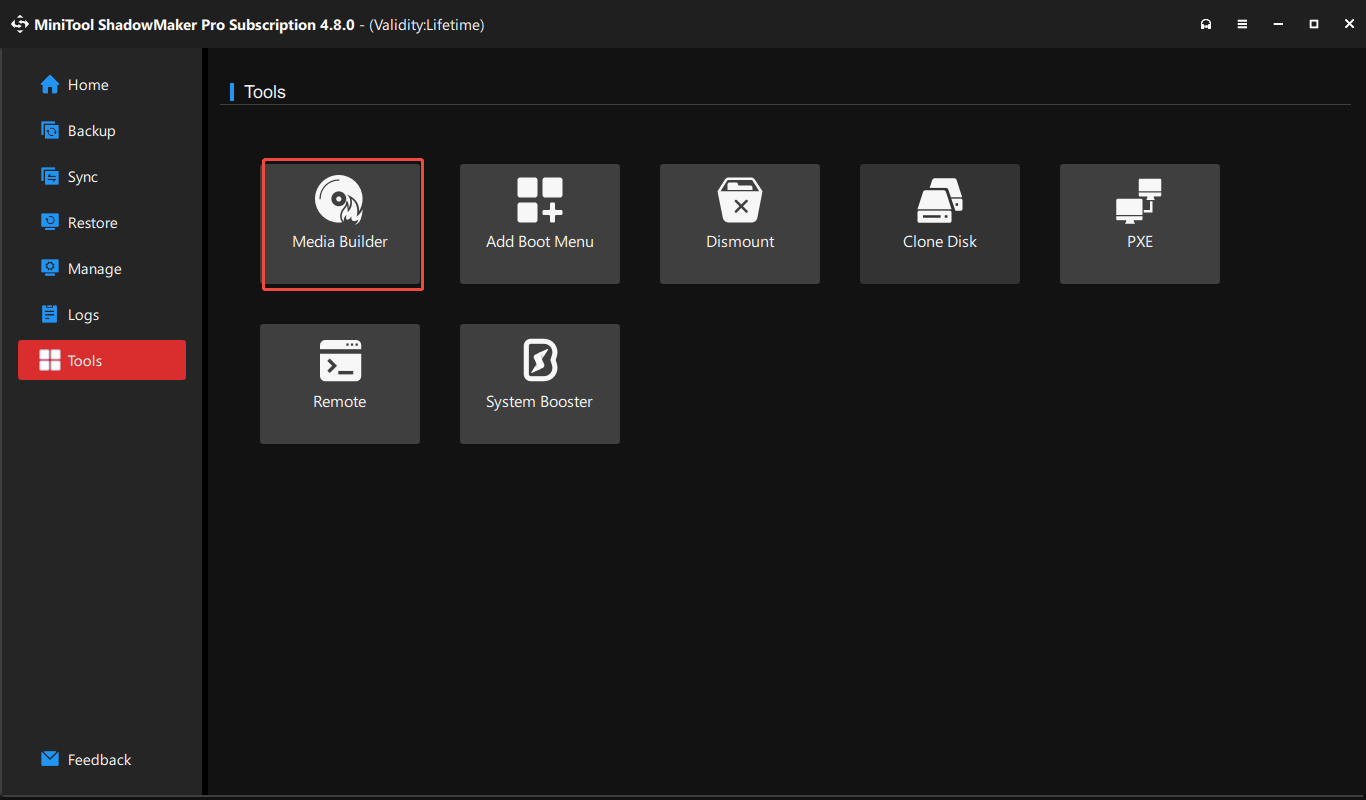
3. Connect a USB drive to the PC and follow the on-screen prompts to create a USB flash drive.
Step 2: Boot the problematic computer from that bootable USB drive.
1. Eject that drive from the working PC and reconnect it to the unbootable computer. Also, plug an external hard drive into that computer to store backups.
2. Restart the system and press F2, F10, Del, or Esc depending on the motherboard manufacturer to access the BIOS menu.
3. Set the USB drive as the first boot order and boot the machine to the MiniTool recovery environment.
Step 3: Run MiniTool ShadowMaker for data backup.
1. Follow the wizards to open MiniTool ShadowMaker and go to its Backup tab.
2. Select the files you need to back up in SOURCE and choose the connected external drive in DESTINATION.
3. Click Back Up Now to perform the data backup.
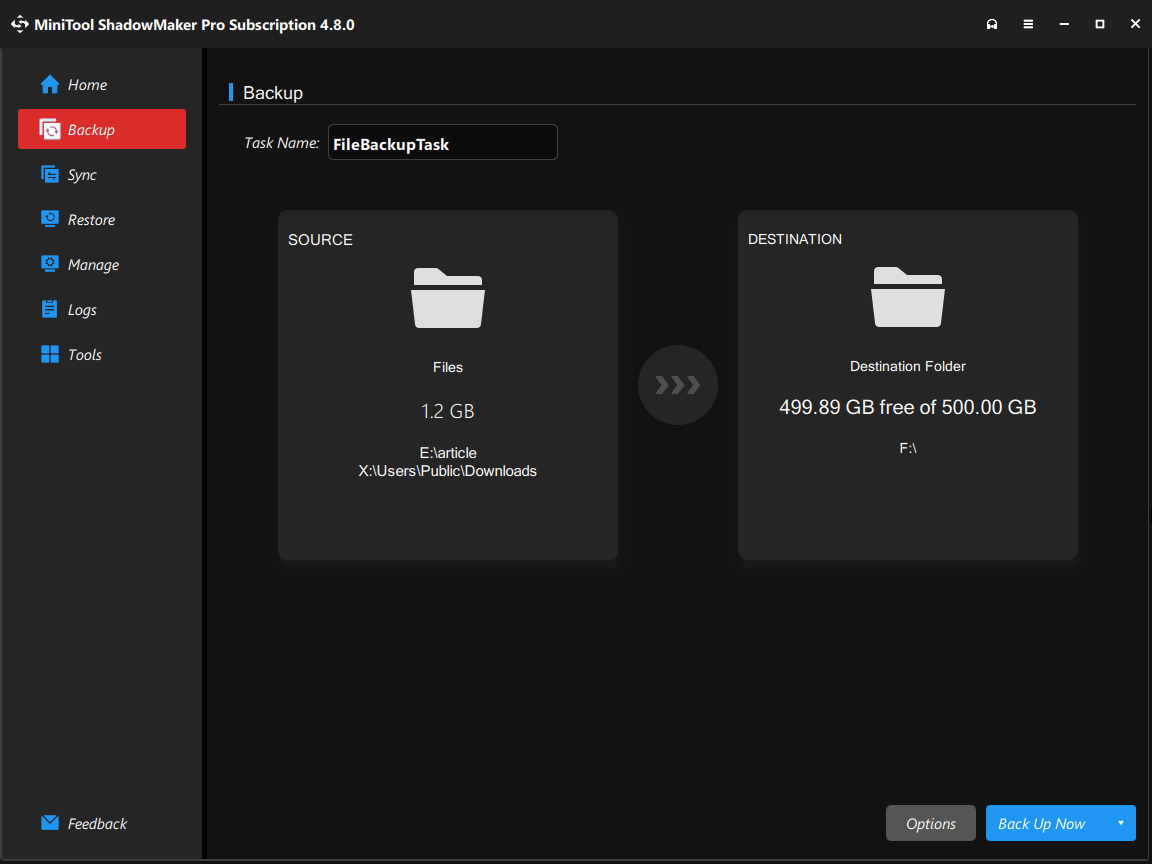
After finishing all the steps, you have successfully rescued your data from the unbootable computer.
Next, try some solutions to fix “the boot selection failed because a required device is inaccessible”. The following workarounds include some initial checks and advanced troubleshooting steps.
Basic Fixes and Checks for Boot Selection Failed 0xc000000f Windows 7
Windows error code 0xc000000f may result from interference from external devices, incorrect BIOS boot order, and loose physical connections. Running some initial checks and fixes beforehand can sometimes resolve your issue.
Option 1: Perform a Hard Reset
A hard reset is a crucial initial step to discharge residual power and re-establish the connection between the BIOS and hardware.
To do that:
Step 1: Hold the Power button for 10-15 seconds until the computer turns off completely.
Step 2: Unplug the power cord from the computer and the wall outlet.
Step 3: Wait for about 30 seconds.
Step 4: Reconnect the power cable and press Power normally to turn on the computer.
If the issue persists, proceed with the fixes and checks.
Option 2: Check Physical Connections
Error code 0xc000000f in Windows 7 may stem from a faulty or loose physical connection. If you are adept at computer hardware, check the connections.
Step 1: Shut down the PC and disconnect it from all power cables.
Step 2: Open the case (for a desktop PC) or back panel (for a laptop). For specific instructions, refer to your manufacturer’s manual.
Step 3: Locate the hard drive, disconnect it, then firmly reconnect both the SATA data cable to the disk and the motherboard.
Step 4: If possible, try a different drive port on the motherboard or a different SATA cable to rule out a bad port or cable.
Step 5: Reconnect the power cables and turn on the machine to check if it starts properly.
Option 3: Disconnect External Devices
In some cases, peripherals may conflict with the operating system, resulting in “the boot selection failed”. To identify whether the external devices are causing the error, disconnect them.
You should unplug all external devices except the keyboard and mouse, such as USB drives, printers, scanners, and card readers.
After the disconnection, Windows may boot up normally.
Option 4: Adjust BIOS Settings
“The boot selection failed because a required device is inaccessible” is often attributed to an incorrect boot sequence. Thus, checking your BIOS and adjusting the incorrect settings may solve the issue.
Follow the instructions:
Step 1: Restart your computer and repeatedly press the BIOS key (commonly F2, F10, F1, Del, or Esc) to access the BIOS menu.
Step 2: Navigate to the boot section, usually named Boot, Boot Order, Startup, or another similar tab (varies by manufacturer).
Step 3: Check if the system disk is the first boot option. If not, adjust the boot order and press F10 to save changes and exit.
Windows 7 should start normally without the 0xc000000f error.
If this issue still occurs on your computer, proceed with advanced troubleshooting methods. Follow the instructions below to run Startup Repair, check your disk, fix BCD, and reinstall the system.
Method 1: Run Startup Repair
Startup Repair is a built-in Windows recovery tool to fix many problems that prevent Windows from starting. When your computer is encountering issues like missing/damaged system files and corrupted boot configuration data, this utility is particularly useful.
To address your issue, follow the steps to run Startup Repair.
In Windows 7:
Step 1: Restart your computer and repeatedly press the F8 key until the Advanced Boot Options menu appears.
Step 2: Use the arrow keys to choose Repair your computer and press Enter.
Step 3: Select the language preferences and click Next to proceed.
Step 4: In the System Recovery Options window, click Startup Repair, and follow the instructions to finish the scan and repair process.
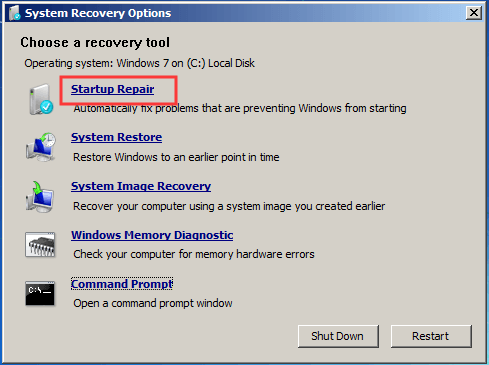
Once all steps are finished, restart the computer, and the system issue may be fixed.
Method 2: Perform a Disk Check
Disk problems can cause many issues, including “the boot selection failed required device is inaccessible Windows 7”. To rule out the possibility, perform a disk check through the following steps.
Step 1: Press F8 during Windows restart to access the System Recovery Options menu.
Step 2: Choose Command Prompt to proceed.
Step 3: Type chkdsk c: /f to scan the system for file system errors and fix them. Replace c with the letter of the drive where Windows is installed.
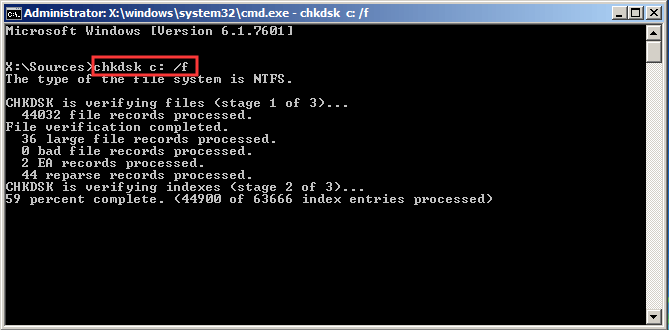
Step 4: Input chkdsk c: /r into Command Prompt and press Enter. This command-line utility will scan the C drive for bad sectors and attempt to recover readable information from them.
Upon completion of all procedures, reboot the operating system. It should not encounter the error code 0xc000000f.
Method 3: Repair the Boot Data Configuration
Windows BCD (Boot Configuration Data) stores critical boot settings, informing the Windows Boot Manager where to find the operating system. However, BCD files may be damaged, causing “boot selection failed 0xc000000f Windows 7”.
To fix the error, rebuild the BCD.
Step 1: Launch Command Prompt from the System Recovery Options interface.
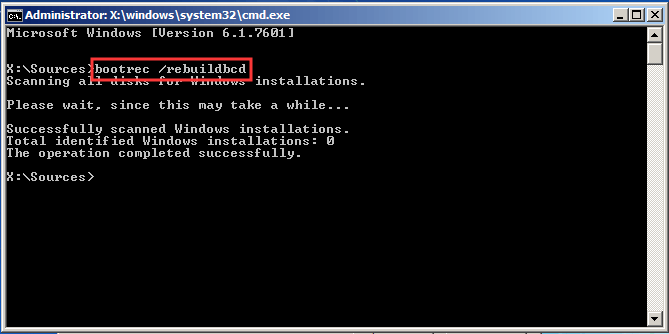
Step 2: Type the bootrec /rebuildbcd command and press Enter.
MBR (Master Boot Record), which contains essential boot code and the disk’s partition table, may be corrupted. We also recommend repairing the MBR by running these commands in turn:
- bootrec /fixmbr: writes a new MBR to the system partition.
- bootrec /fixboot: write a new boot sector to the system partition
- bootrec /scanos: scans your hard drives for compatible Windows installations and displays any found Windows installations that are not listed in the BCD store.
Then, reboot your computer, and the boot error should be solved.
Method 4: Reinstall Windows
If none of the solutions above work, the last resort is to reinstall the operating system.
To do that, prepare a Windows installation drive, access the BIOS menu, configure the system to boot from that drive, and follow the on-screen prompts for system reinstallation.
Since Windows 7 has ended its life, consider Windows 11 or 10 (Windows 10 still has extended support under a paid ESU).
Bottom Line
To sum up, this pro guide introduces what causes “the boot selection failed because a required device is inaccessible 0xc000000f” and covers 7 methods. Now, follow the troubleshooting tips to easily solve this issue.
Additionally, a reliable backup tool, MiniTool ShadowMaker, is offered. It is essential to run it to back up your important files to prevent data loss.
If you have a better solution, share it with us. Furthermore, for any problem with MiniTool software, contact us at [email protected].
“The Boot Selection Failed” FAQ
1. Perform a hard reset
2. Check BIOS boot order
3. Reset BIOS to default settings
4. Disable Secure Boot
5. Run Startup Repair
6. Rebuild BCD
7. Fix MBR
1. Check cables
2. Remove external devices
3. Set the correct boot order
4. Run Startup Repair
5. Repair BCD
6. Reset BIOS to defaults
7. Reinstall Windows
1. Check physical cable connections
2. Remove external devices
3. Check boot order in BIOS
4. Disable Fast Boot or change SATA mode to IDE/AHCI
5. Fix MBR and rebuild BCD
6. Run chkdsk
7. Run Startup Repair
8. Mark the boot disk as online
About The Author

Position: Columnist
Vera has been working at the MiniTool Team for over 10 years as a technical editor and content writer. She mainly focuses on disk and partition management, data recovery, Windows backup and restore, and PC troubleshooting. Through in-depth software testing and hands-on experience, she has helped users solve a wide range of computer problems and better protect their data on Windows devices.
User Comments :