
Quick Answer:
Disk health in Windows refers to the overall condition of a storage device, including file system integrity, bad sectors, and read/write performance.
You can check hard drive health in Windows 10/11 using the following methods:
- Using the CHKDSK command to scan and repair file system issues and mark bad sectors
- Using File Explorer Error Checking to quickly detect basic disk issues
- Using a disk manager such as MiniTool Partition Wizard to check for read/write errors, bad sectors, and file system integrity
- Using CrystalDiskInfo to view S.M.A.R.T. values, which indicate the overall physical health of HDDs and SSDs
__________________________________________________________________________________
If you find your hard drive or USB flash drive can’t work well and wonder how to check health of a hard drive in Windows 10/11, you can try the methods below.
How to Check Hard Drive Health in Windows 10/11
Method 1. Use Windows CHKDSK Utility
CHKDSK scans and repairs logical file system errors and identifies bad sectors. This method works with computer local hard drives, as well as external hard drives and USB flash drives.
Step 1. Press Windows + R, type cmd in the Run box, and press Ctrl + Shift + Enter to run Command Prompt as administrator.
Step 2. In the Command Prompt window, type the following command and press Enter:
chkdsk X: /f /r
Replace “X” with the actual drive letter of your hard drive or USB device.
CHKDSK will then start scanning the selected drive and automatically fix file system errors. It will also attempt to recover readable information from bad sectors.
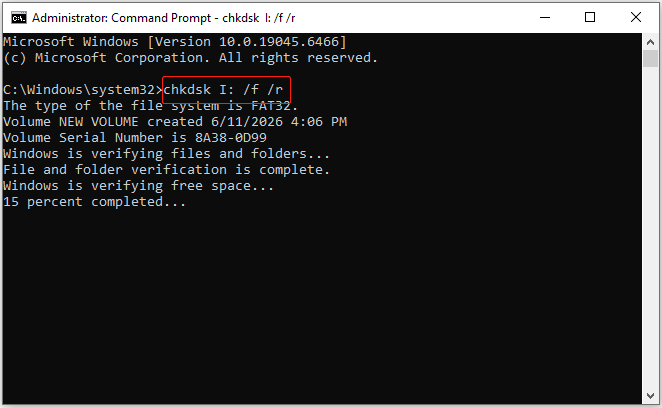
CHKDSK is the most commonly used built-in tool in Windows 10/11 for detecting and repairing logical disk errors.
Method 2. Use Error Checking to Check USB/Hard Drive Health
Windows offers another disk error checking tool in File Explorer that detects basic file system errors. Compared with CHKDSK, this utility provides a more user-friendly graphical interface.
Follow the steps below to run it.
Step 1. Open File Explorer. In the Devices and Drives section, right-click the target drive you’d like to scan and choose Properties.
Step 2. Go to the Tools tab and click the Check button under the Error checking section.
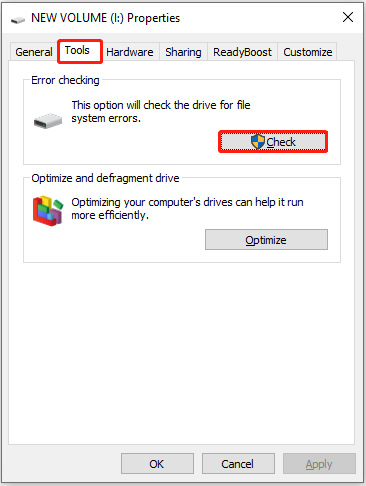
Step 3. In the pop-up Error Checking window, you can ignore the “You don’t need to scan this drive” message and click Scan drive to start scanning the drive for errors. If errors are found, you can decide if you want to fix them.
Method 3. Use MiniTool Partition Wizard
Compared with CHKDSK and Error Checking, MiniTool Partition Wizard provides a more complete HDD and SSD health check in Windows 10/11.
It combines key disk diagnostic features such as Check File System and Surface Test in one tool, allowing you to check and repair disk issues without using command lines or switching between Windows utilities.
Both features are available in the free edition.
MiniTool Partition Wizard FreeClick to Download100%Clean & Safe
How to check for file system errors:
Step 1. Launch MiniTool Partition Wizard and enter the main interface.
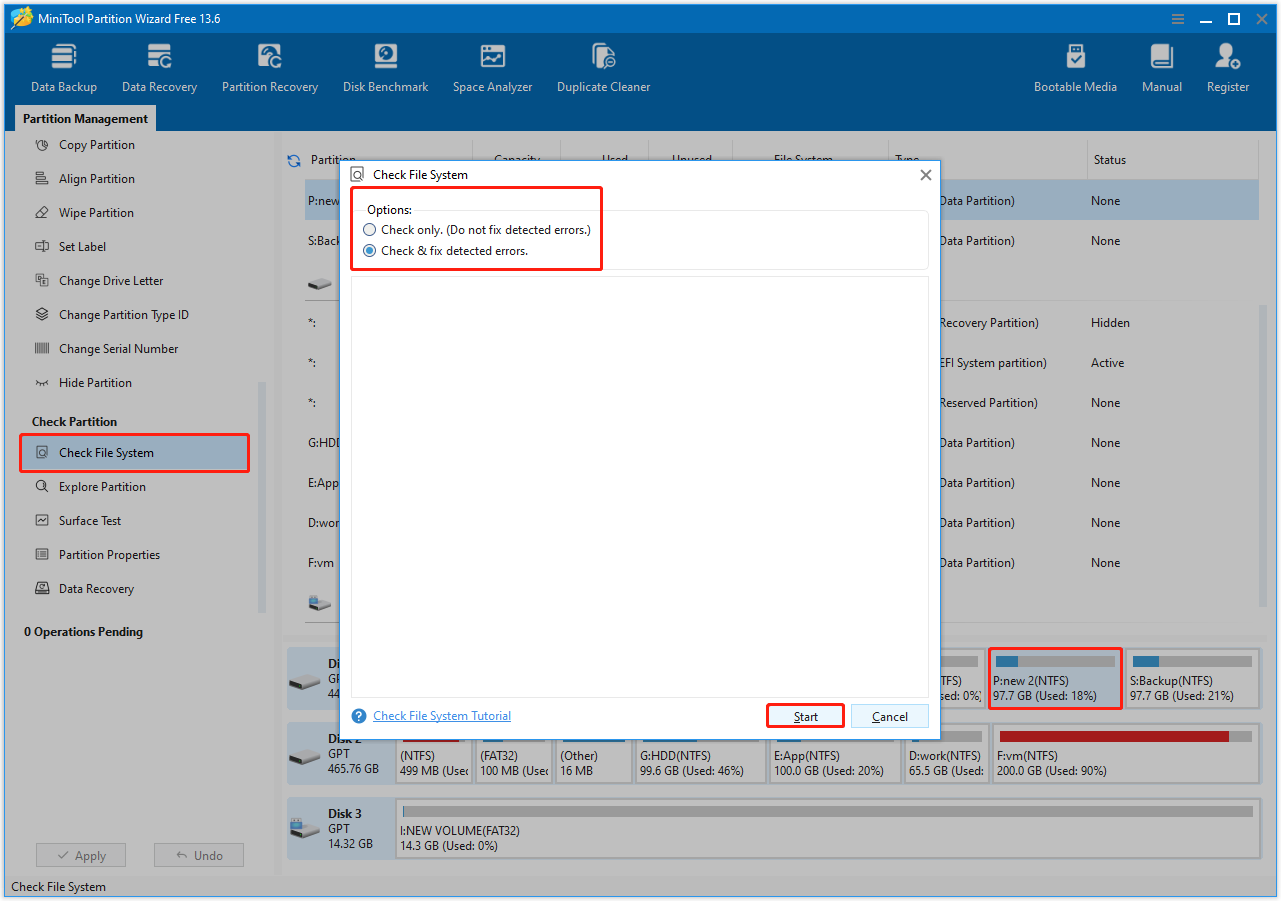
Step 2. Select the disk partition and click Check File System from the left menu.
Step 3. Choose whether to scan for errors only or scan and fix detected errors, then click Start.
How to run a surface test:
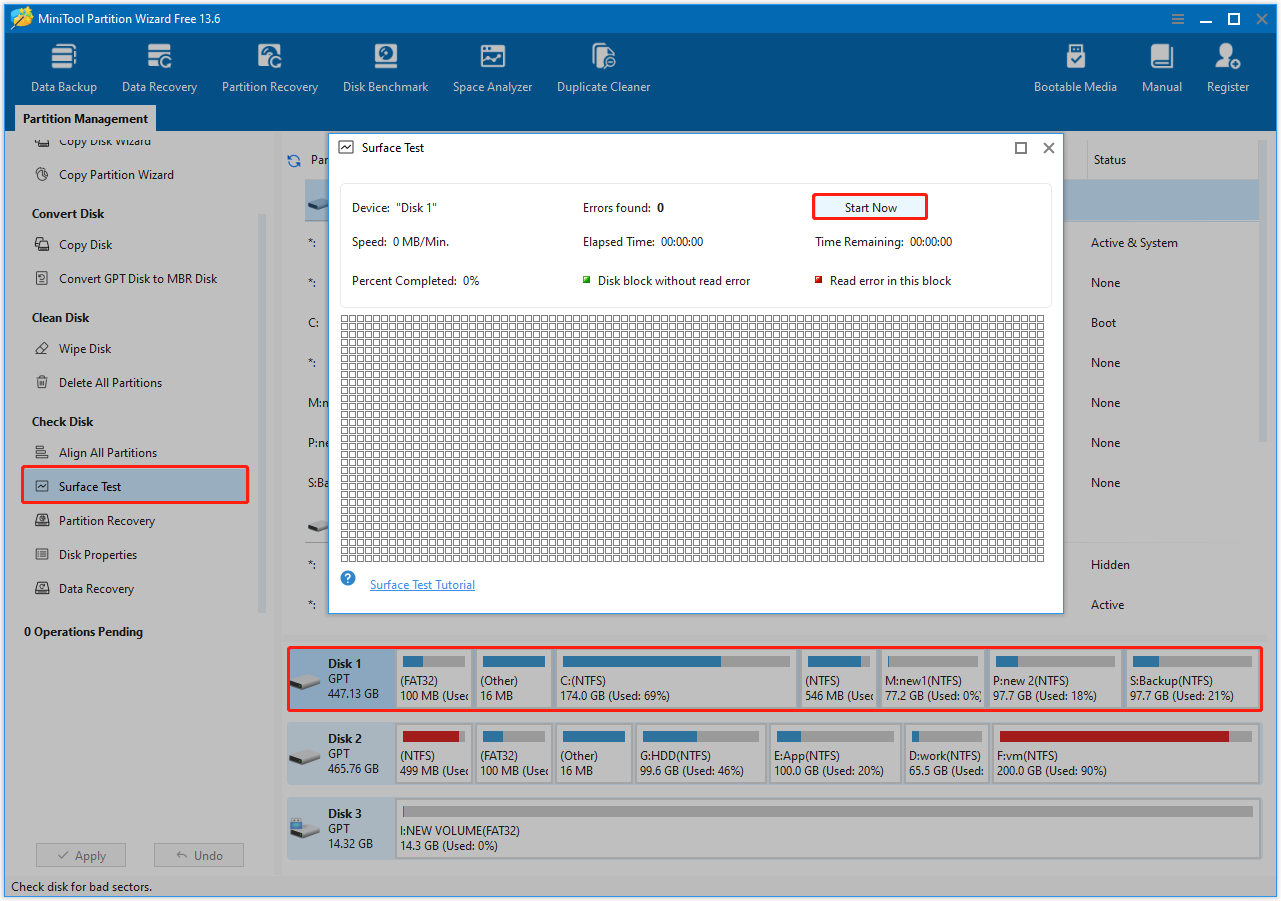
Step 1. On the main interface of the free partition manager, select the target partition or disk, then click Surface Test.
Step 2. Click Start Now to begin scanning the disk for read errors. During the process, disk blocks without errors will be marked in green, while blocks with read errors will be marked in red.
If no read errors are found, no further action is required. If read errors are detected, you should use a reliable tool to repair or isolate the affected sectors.
Method 4. Use CrystalDiskInfo
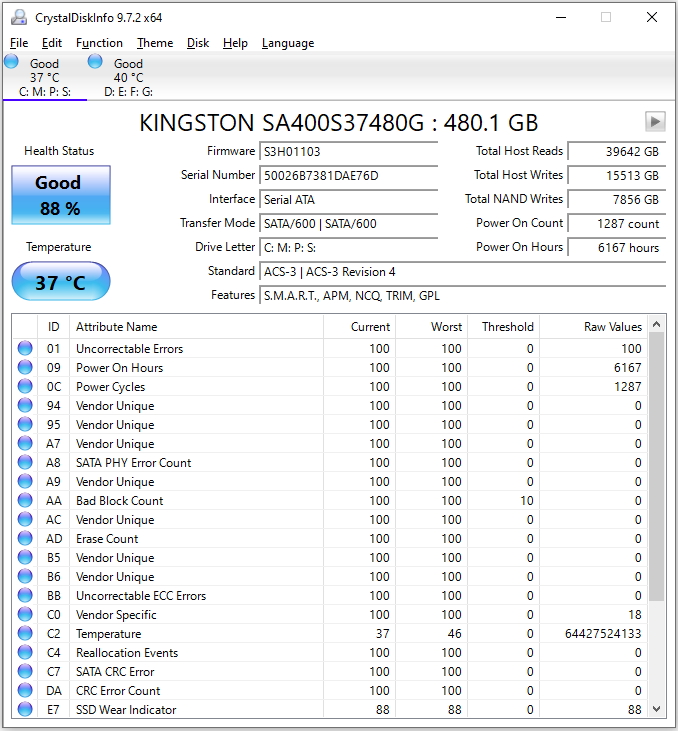
CrystalDiskInfo provides a direct way to monitor hard drive health by reading S.M.A.R.T. (Self-Monitoring, Analysis, and Reporting Technology) data.
It shows key indicators such as overall health status, temperature, power-on hours, and potential warning signs of disk failure.
Step 1. Download and install CrystalDiskInfo, then launch the program.
Step 2. Select the target hard drive or SSD from the top menu.
Step 3. Check the S.M.A.R.T. status, including health condition (Good/Caution/Bad) and temperature.
What to Do If Disk Errors or Data Loss Are Found
After checking disk health, the next steps depend on the results:
If no errors are found, you can continue using the drive normally. If minor errors are detected, repair them using CHKDSK or error checking tools
If data loss occurs, you need to recover files immediately from backups or by using data recovery software.
If severe issues or bad sectors exist, back up data and consider formatting or replacing the drive.
How to Recover Data from a Hard Drive or USB Device
If you lose files due to disk errors, accidental deletion, or drive corruption, you can use data recovery software to restore lost data.
A tool such as MiniTool Power Data Recovery can scan HDDs, SSDs, USB flash drives, and SD cards to recover deleted or lost files in different data loss scenarios, including formatting, system crash, virus infection, and disk failure.
Steps to recover files with MiniTool Power Data Recovery Free (1 GB of free data recovery capacity):
Step 1. Download, install, and run the free edition of MiniTool Power Data Recovery.
MiniTool Power Data Recovery FreeClick to Download100%Clean & Safe
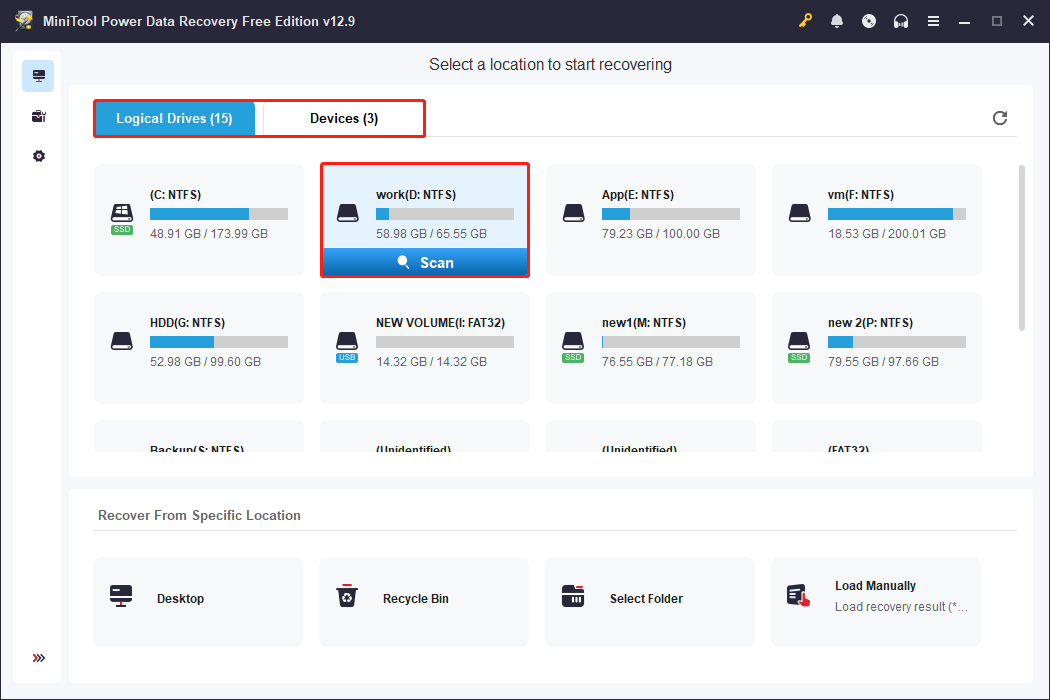
Step 2. On the main interface of the recovery tool, select the target drive under Logical Drives or Devices, then click Scan to search for lost or deleted files.
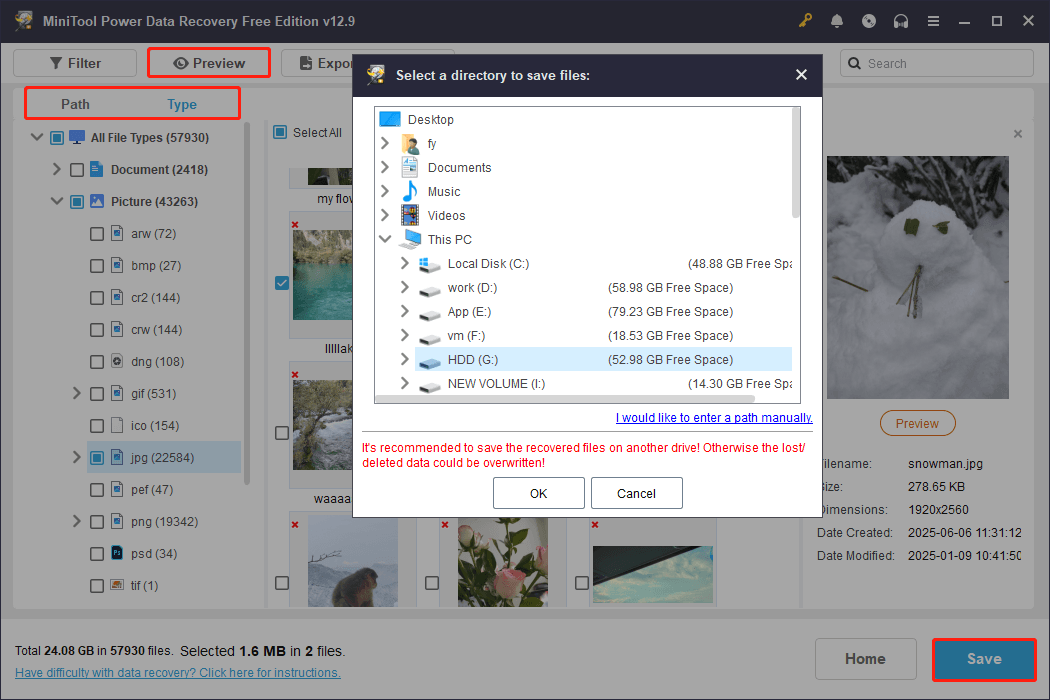
Step 3. After scanning, find your files under Path or Type and preview them. Finally, select the files you need, and click Save to store them on a different drive.
How to Back Up Your Disk
If a hard drive or USB device is still accessible but shows signs of poor health, it is strongly recommended to back up data immediately to avoid unexpected failure or permanent data loss.
In addition, before formatting or replacing the disk, backing up its data is also necessary. To back up files, you can:
- Copy files manually to another storage device
- Use backup software like MiniTool ShadowMaker to create a full system or disk backup
- Store critical files in cloud storage for extra protection
How to Format a Hard Drive
If disk errors persist after repair and data recovery, formatting may be required.
Formatting a drive will erase all existing data and rebuild the file system, which can help fix serious file system corruption or persistent disk errors.
You can format a hard disk using File Explorer, Disk Management, or MiniTool Partition Wizard. Taking MiniTool Partition Wizard for example:
Step 1. Select the disk partition and choose Format Partition.
Step 2. Set up the partition label and file system.
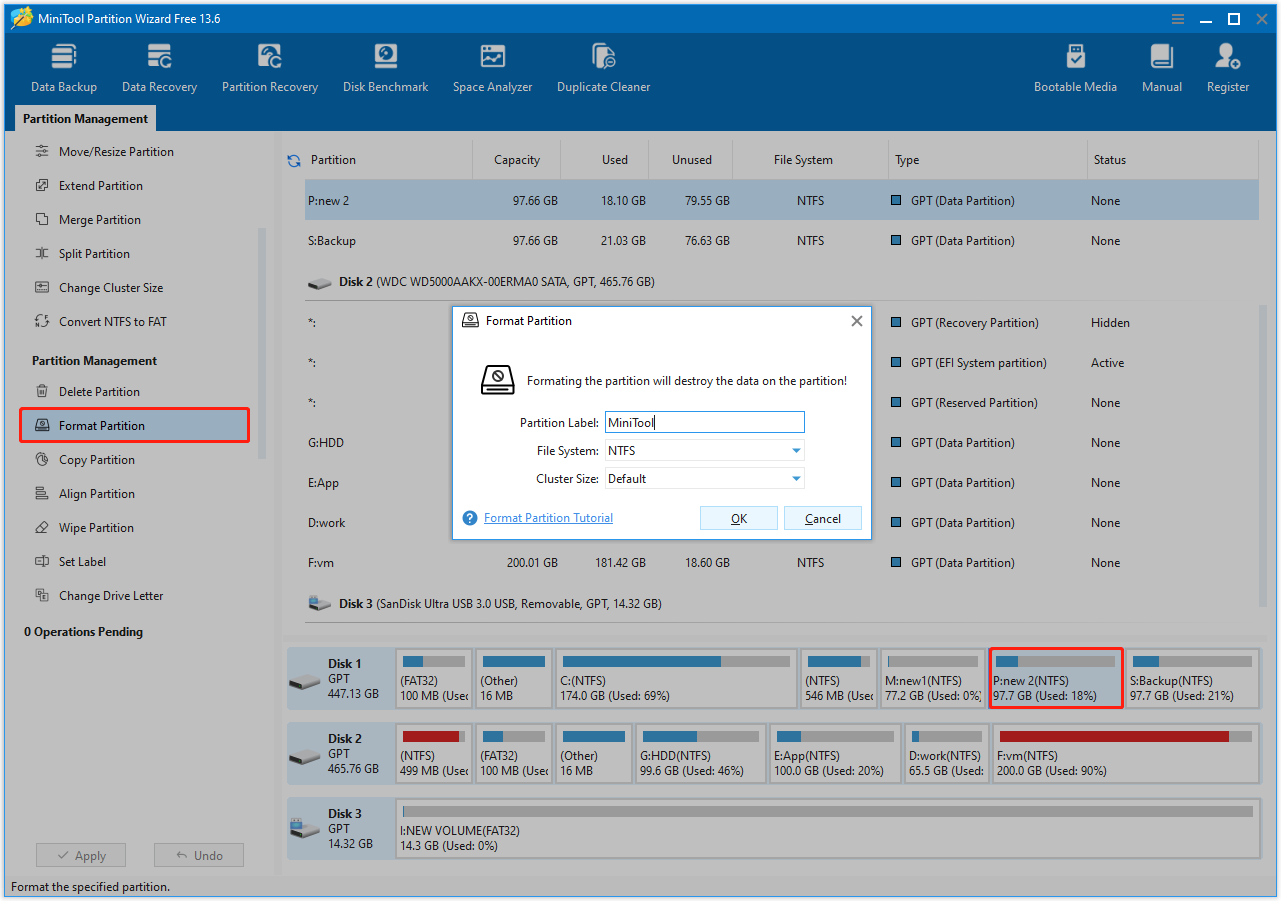
Step 3. Finally, preview the formatting effect and click Apply to confirm.
Verdict
This post provides ways to help you check hard drive or USB health in Windows 10/11 for free, and offers solutions to recover files from hard drive/USB and back up data for free.
If you have questions about how to use MiniTool software, please contact [email protected].
Check Hard Drive/USB Drive Health FAQ
Also, you can use CHKDSK to check hard drive health even if there are signs of failure.
However, actual lifespan varies significantly based on workload, temperature, and drive quality. In real-world usage, many hard drives can last 10 years or longer.
To reduce 100% disk usage, you can try disabling unnecessary services such as SysMain and Windows Search, or check for resource-heavy applications running in the background. In some cases, upgrading to an SSD is required.
About The Author

Position: Columnist
Shirley holds a bachelor’s degree in English and has been an editor at the MiniTool Team for many years. She specializes in IT-related content, with a focus on data recovery, file backup, disk management, and other technical topics. She is committed to delivering clear, accurate, and practical solutions to help users resolve common computer issues.
User Comments :