
The CRITICAL SERVICE FAILED error in Windows 11/10 may be triggered by bad drivers, corrupted files, or hardware issues. To fix it, run Startup Repair, uninstall recent updates, run DISM and SFC, perform a system restore, and check for RAM issues.
About CRITICAL SERVICE FAILED
CRITICAL SERVICE FAILED is a Windows BSOD error with bug check code 0x0000005A. This error indicates that a core system service or driver failed or crashed during startup.
The following are common causes:
- Corrupted or faulty driver
- Incompatible new hardware or drivers
- Broken Windows update
- Corrupted system file
- Faulty hardware
- Incorrect BIOS/UEFI settings
- Registry corruption/configuration issues
Suggestions: Back Up Important Data
CRITICAL SERVICE FAILED can cause a persistent boot loop or lead to frequent system crashes, putting your data at risk.
Therefore, it is essential to use Windows backup software to back up your important data for data security.
To do that, it is highly recommended to use MiniTool ShadowMaker. It offers the Backup feature to create a system image and back up files/folders/disks/partitions.
Step 1. Download, install, and launch MiniTool ShadowMaker on your PC.
MiniTool ShadowMaker TrialClick to Download100%Clean & Safe
Step 2. Select Backup from the left panel. Then, go to SOURCE, and click Folders and Files.
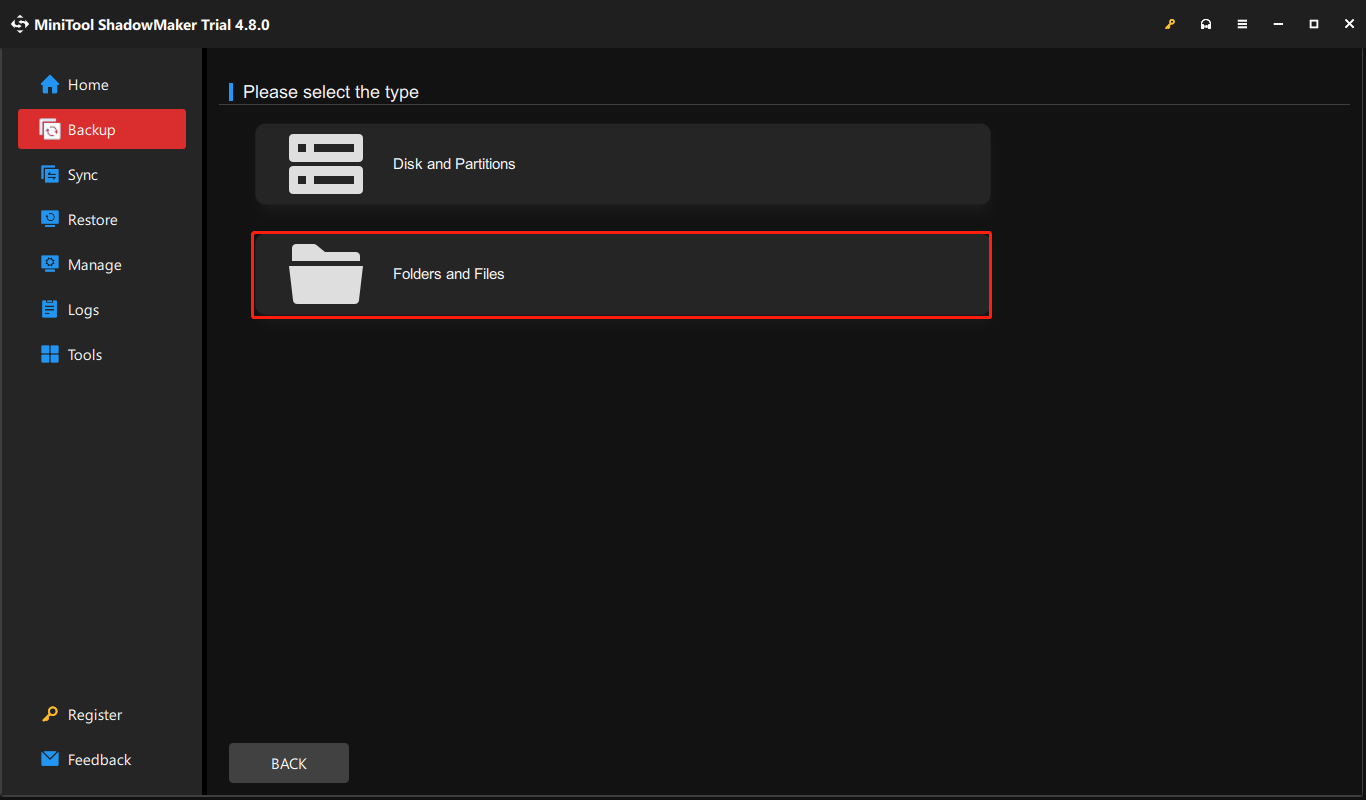
Step 3. Choose the files that you want to back up and click OK.
Step 4. Go to DESTINATION, choose a location as the storage path for the backup task, and click OK.
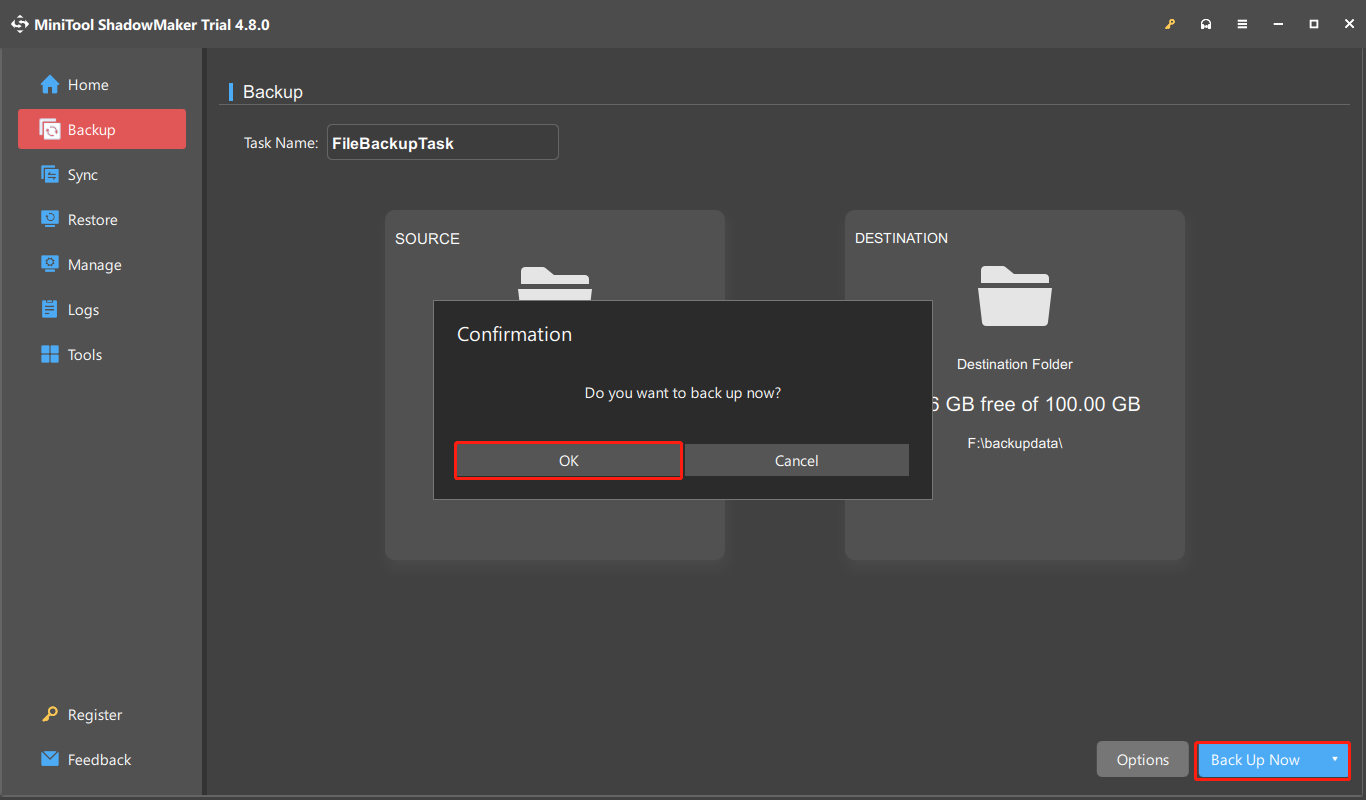
Step 5. Click Back Up Now and OK sequentially to start the backup process immediately.
How to Fix CRITICAL SERVICE FAILED in Windows 10/11
To fix CRITICAL SERVICE FAILED in Windows 10/11, use Startup Repair first. If this fails, enter Safe Mode to run commands like SFC, DISM, or CHKDSK, update/reinstall problematic drivers, or perform a system restore.
Method 1. Run Startup Repair
Windows Startup Repair is a built-in diagnostic tool designed to automatically resolve common boot issues. Follow these steps to use it to fix the CRITICAL_SERVICE_FAILED BSOD error:
- Access the Windows Recovery Environment (WinRE) using a bootable installation drive or by interrupting the boot process two to three times.
- Click Advanced options on the Automatic Repair screen.
- Select Troubleshoot > Advanced options > Startup Repair.
Then the Windows Startup Repair tool will automatically diagnose and fix the computer problems.
Method 2. Update Drivers
Incompatible, corrupt, or outdated drivers may also trigger the CRITICAL_SERVICE_FAILED error. To address this error, update them. Here’s the step-by-step guide:
Step 1. Right-click the Windows icon on the taskbar and select Device Manager from the pop-up menu.
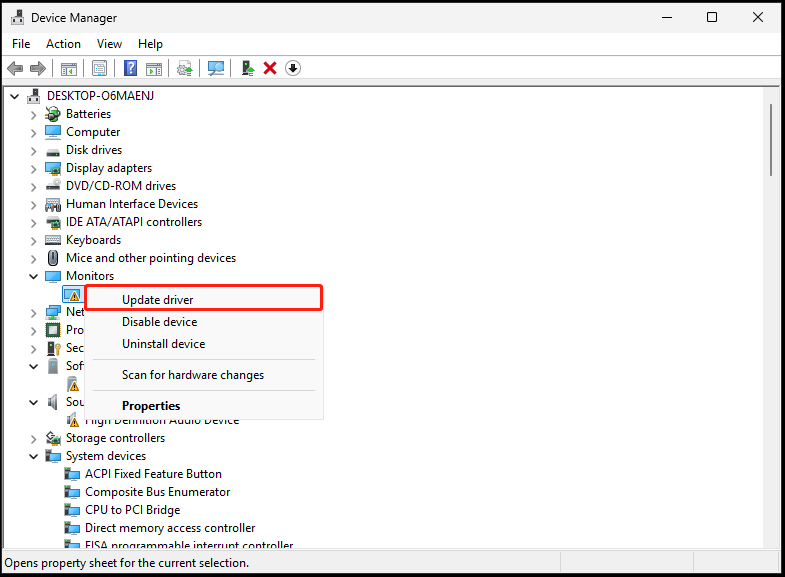
Step 2. Expand one of the categories to find if there are any drivers with the yellow triangle. Right-click the driver and select Update driver.
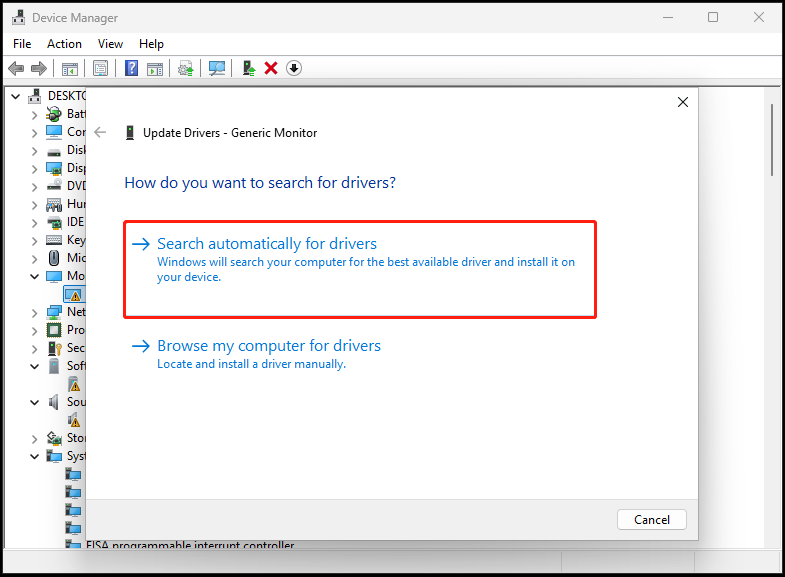
Step 3. In the prompted window, select Search automatically for drivers.
Step 4. Follow the instructions displayed on the screen to complete the update process.
Method 3. Uninstall Recent Updates/Apps
If you receive the CRITICAL_SERVICE_FAILED error after installing an update or a specific application, uninstall it to resolve the issue. Here’s how to do that:
Step 1. Press Win + S to open Search, type control panel, and press Enter.
Step 2. Set View by to Large icons and select Programs and Features.
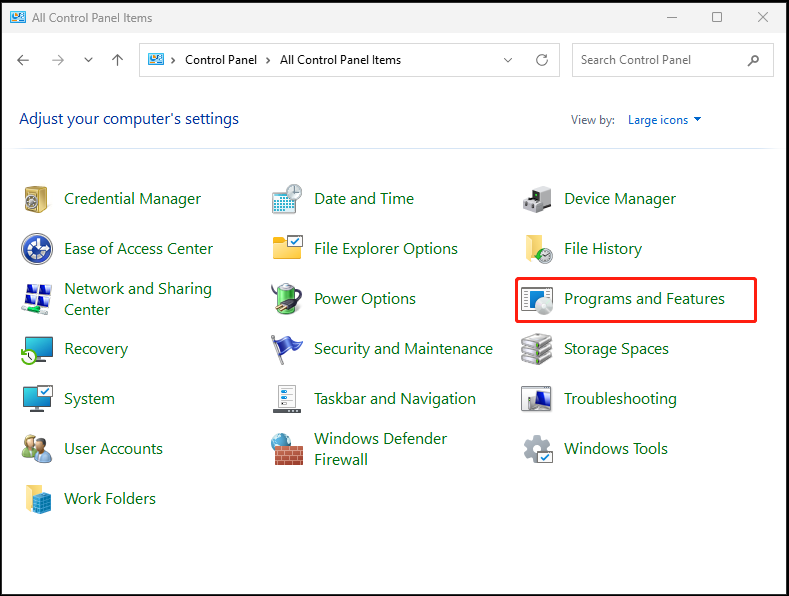
Step 3. Find the software you’ve installed recently, right-click it, and select Uninstall.
Step 4. Follow the on-screen instructions to complete the process. After that, restart your PC and check if the error has been resolved. If it hasn’t, continue by uninstalling the updates.
- Open Control Panel and go to the Programs and Features page again.
- Click View installed updates from the left panel.
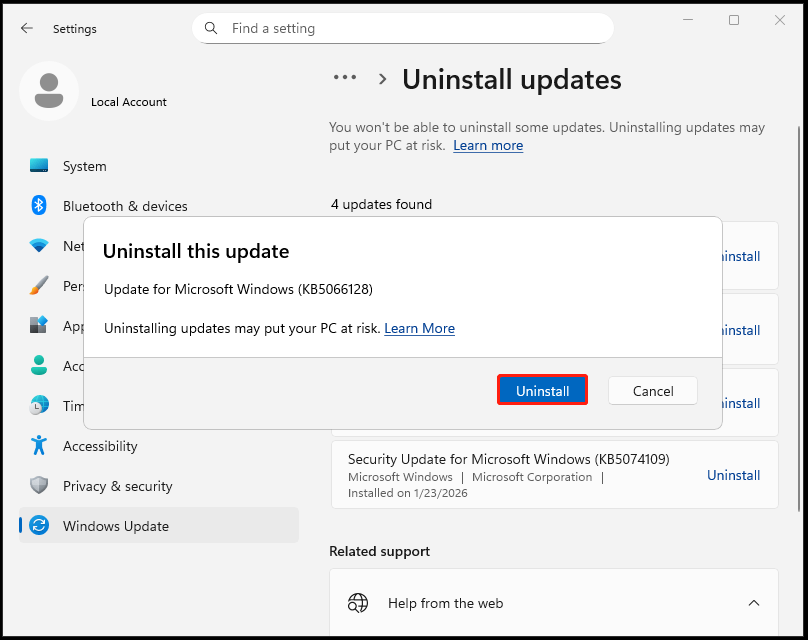
- Find and locate the latest update from the list and click Uninstall next to it.
- Click Uninstall in the prompted Uninstall this update window.
Method 4. Run DISM & SFC
Sometimes, corrupted system files can also cause BSOD errors, such as the Windows CRITICAL SERVICE FAILED error.
SFC scans and repairs corrupted or missing system files. DISM repairs the underlying Windows image (component store). Also, it can fix the corruption that prevents SFC from working.
Therefore, run DISM first and then SFC to troubleshoot the error:
Step 1. Run Command Prompt as administrator.
- Open Search.
- Type cmd in the search box.
- Find Command Prompt under Best match.
- Right-click it and select Run as administrator.
Step 2. In the prompted window, execute the following commands one by one to perform a DISM scan:
DISM.exe /Online /Cleanup-Image /RestoreHealth
Step 3. Once DISM scan is complete, type the following command and press Enter to start the SFC scan.
Then, it starts to scan all protected Windows system files and replace corrupt, missing, or changed versions with correct ones.
Step 4. Once done, restart the computer to check if the blue screen error persists.
Method 5. Run CHKDSK
If the hard drive on your computer is corrupted or faulty, the Windows CRITICAL SERVICE FAILED error may show up on your screen as well. To resolve this, run the CHKDSK command to identify and repair file system corruption or mark bad sectors.
Step 1. Run Command Prompt as administrator.
Step 2. Type chkdsk /f /r and press Enter to check and fix hard drive errors.
- /f: This parameter fixes logical errors in the disk’s file system.
- /r: This parameter performs a deep scan to locate bad sectors on the disk. Additionally, it attempts to recover readable information from it and reallocates that data to spare sectors.
Step 3. Type Y and press Enter to proceed. Then, restart your computer.
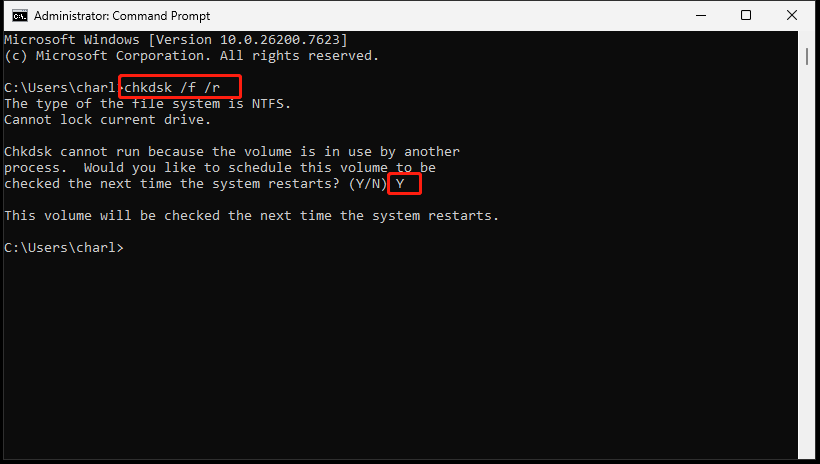
Step 4. Wait for the process to complete. Once done, disk errors may be fixed.
Method 6. Rebuild Boot Configuration Data
Boot Configuration Data (BCD) is a database in Windows that stores crucial boot-time configuration parameters. It enables the Windows Boot Manager to load the operating system.
Corrupted configuration files may also result in the stop code CRITICAL SERVICE FAILED error. To address it, rebuild BCD with the following steps:
Step 1. Run Command Prompt as administrator.
Step 2. Perform the following commands one by one.
- bootrec /scanos
- bootrec /fixmbr
- bootrec /rebuildbcd
Step 3. Once finished, exit Command Prompt and restart your PC. Now, check if the error has been resolved.
Method 7. Perform System Restore
System Restore reverts system files, registry, and applications to a previous state to fix instability without affecting personal files.
Try this method if the CRITICAL SERVICE FAILED error started after a driver, application, or system change.
Step 1. Press Win + R to open Run, type rstrui.exe, and click OK.
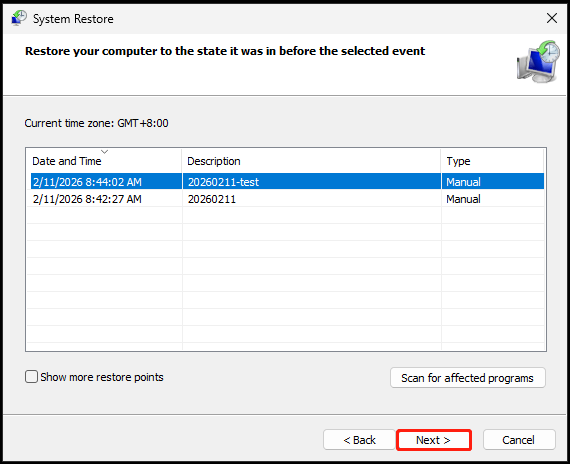
Step 2. In the pop-up System Restore window, click Next.
Step 3. Select a proper restore point from the list and click Next.
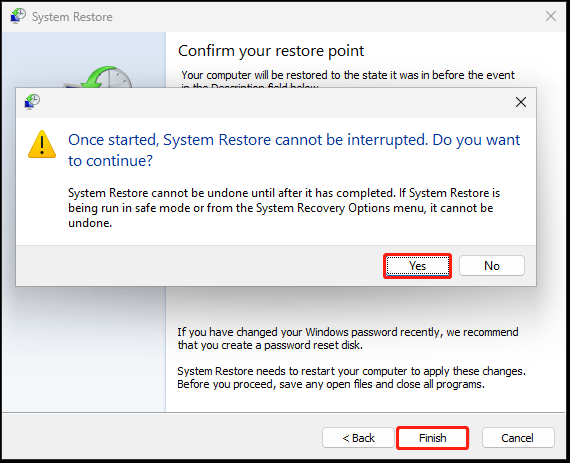
Step 4. Confirm your restore point on the next page. Then, click Finish and Yes sequentially to proceed.
Method 8. Check RAM for Hardware Problems
Faulty RAM can cause the CRITICAL SERVICE FAILED error. To know if your RAM is wrong, run Windows Memory Diagnostic. It is a built-in tool that can help check for memory issues.
Step 1. Open Run, type mdsched.exe, and press Enter.
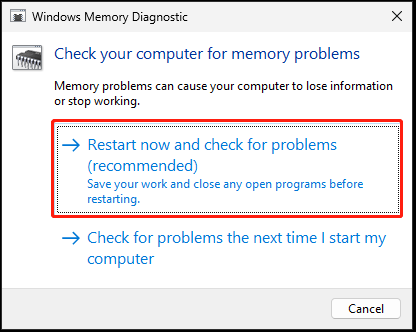
Step 2. In the prompted window, select Restart now and check for problems (recommended).
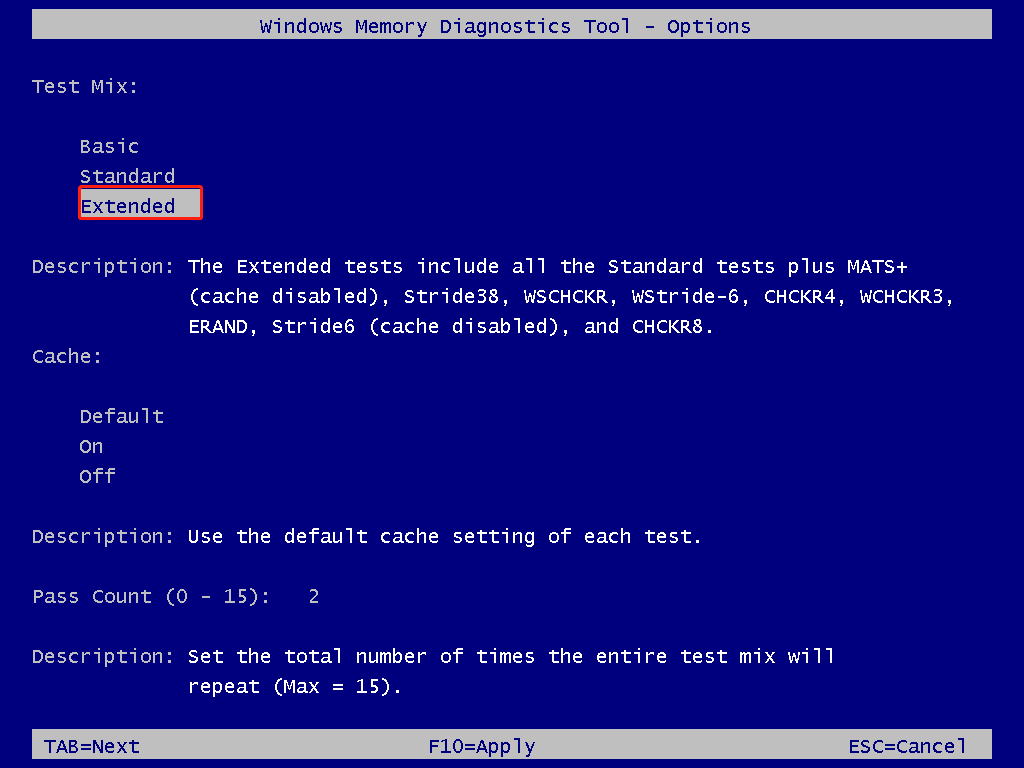
Step 3. Your computer will restart and automatically start the memory test. During the process, press F1 to access the Windows Memory Diagnostic – Options page, use the arrow keys to select Extended, and press F10 to confirm the operation.
Step 4. After the test finishes, check the memory test result in Event Viewer. Here are the steps:
- Press Win + X to open the Quick Link menu.
- Select Event Viewer.
- Go to Windows Logs > System.
- Click Filter Current Log in the right panel.
- Check MemoryDiagnostics-Results from the Event sources’ drop-down menu.
- Click OK.
- View the filtered results for any detected errors.
If errors are found in this memory test, it is likely that one or more RAM modules may be faulty.
Clean and reseat your RAM or test individual sticks if you have two or more RAM modules. If necessary, replace the faulty one with a new stick.
Method 9. Reset PC
Resetting the PC returns the system to its original factory state. This will reinstall the operating system and resolve performance issues, eliminate malware, or free up space. Therefore, use it as a last resort to fix the CRITICAL SERVICE FAILED BSOD error.
For more information, refer to the Reset the PC guide.
Conclusion
This post analyzes what causes the CRITICAL SERVICE FAILED BSOD error and explores how to fix this error on Windows with some useful approaches. Try these methods one by one until your PC works normally.
To keep your data secure, use MiniTool ShadowMaker to back up all important files. When you have some doubts about this software, please feel free to contact us by sending emails to [email protected].
CRITICAL SERVICE FAILED FAQ
About The Author

Position: Columnist
Charlotte is a technology columnist with a strong focus on the Windows operating system, specializing in disk management, backup, and data recovery. She is passionate about analyzing computer errors, identifying root causes, and delivering practical solutions. In her free time, she stays updated on the latest developments in computer systems and hardware while continuously learning new technologies to broaden her expertise. Her writing style is clear and easy to understand, making complex technical topics accessible even to users with limited computer knowledge.
User Comments :