
Use MiniTool ShadowMaker as an Alternative Backup Solution
OneDrive sync issues can interrupt normal file synchronization and may require time to resolve before the service returns to normal.
To keep data secure, a local backup is another option. This method doesn’t rely on an internet connection and isn’t limited by the free storage quotas of OneDrive (5GB for personal accounts).
To backup data to an external hard drive or USB flash drive, use the dedicated backup software such as MiniTool ShadowMaker.
This utility supports various backup types, including file backup and system image backup, full/incremental/differential backup, and automatic backup.
When files are lost or the Windows operating system fails to start up, data recovery and system image recovery can be easily performed.
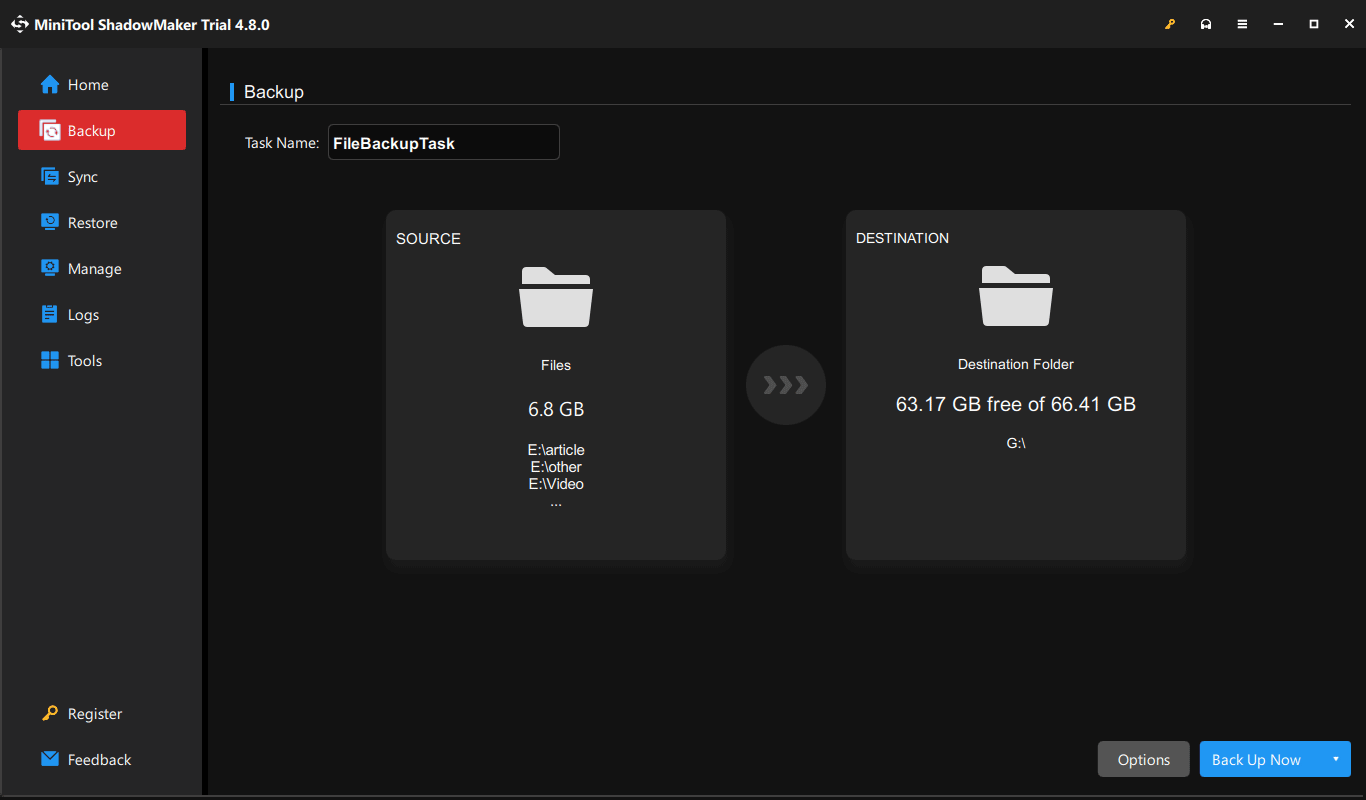
Follow the instructions to execute a file backup task:
Step 1: Connect a USB drive or external hard drive to the PC.
Step 2: Download, install, and launch MiniTool ShadowMaker.
MiniTool ShadowMaker TrialClick to Download100%Clean & Safe
Step 3: In the Backup page, click SOURCE > Folders and Files > Computer. Then browse the computer, choose the files or folders you need to back up, and click OK.
Step 4: Click the DESTINATION section, select the USB or external drive, and click OK to confirm.
Step 5: Choose Back Up Now > OK to start the file backup task. Check the result in Manage.
Two Common Examples of OneDrive Sync Issues
Syncing files to OneDrive is generally seamless. However, various problems can arise, including files getting stuck in a pending state, slow syncing, files not syncing, and so on. We will explain two common examples below.
Case 1: OneDrive Not Syncing Files to File Explorer
OneDrive provides real-time, automatic synchronization to ensure files are up to date across all devices that are connected with the same Microsoft account.
However, sometimes files fail to appear in OneDrive after being added. These files do not appear in File Explorer, even though OneDrive reports that “your files are synced”.
Case 2: OneDrive Red X on Folder But No Sync Issues
OneDrive folders may show a red X icon even though files appear to sync normally.
This mark usually indicates that there is a conflict with a certain file or folder, or corrupted icon cache, rather than an actual upload failure.
Causes of OneDrive Sync Issues
OneDrive sync problems are commonly caused by:
- Storage limitations: OneDrive is out of storage space, resulting in a frozen account that cannot edit, upload, or sync new files.
- File restrictions: The file you attempt to sync may be open in another application. Or the file path exceeds 400 characters. Or the file name contains invalid characters such as “, *, :, <, >, ?, /, \, and |.
- An outdated app or Windows: Incompatibility issues can occur if you run an old version of Windows or the OneDrive app, causing sync issues.
- File conflicts: The same file was modified on different devices at the same time, causing a conflict. As a result, OneDrive sync issues occur.
- Sync paused or not running: The OneDrive app is paused, not running, or needs to be signed in.
- Network issues: There is a slow or unstable internet connection, triggering OneDrive not syncing.
- Cache corruption: The cached Office file may be blocking the sync process.
- Antivirus interference: Antivirus software may incorrectly identify the network activity as malicious or suspicious file access, blocking OneDrive from syncing files.
How to Fix OneDrive Sync Issues
To resolve sync issues like OneDrive not syncing or a red X icon, try some quick fixes and advanced troubleshooting tips.
The key actions include restarting the app, pausing and resuming syncing, checking storage space, unlinking and relinking the account, and resetting OneDrive.
Initial Quick Fixes
Option 1: Restart OneDrive
The simplest method to address OneDrive sync issues is to restart the OneDrive application.
Follow these steps:
Step 1: Click on the OneDrive icon in the Windows taskbar.
Step 2: Click the gear icon > Pause syncing and choose Quit OneDrive.
Step 3: Type OneDrive in the Search box and press Enter to relaunch this app.
Check if OneDrive can sync files properly. If not, proceed with other solutions.
Option 2: Check Storage Space
OneDrive offers various storage plans for personal, family, and business use. The personal accounts provide 5GB of free storage, and Microsoft 365 Basic offers 100GB for $1.99/month.
Follow the instructions to verify the storage space:
Step 1: Open OneDrive in the taskbar.
Step 2: Click Settings to access the OneDrive Settings page.
Step 3: Check the Storage information. If you use a free account, the storage can run out quickly, preventing you from syncing files.
To free up space, empty the recycle bin. To do this task, click View online to access the OneDrive website. Then, choose Recycle bin on the left, select all files, and click Delete.
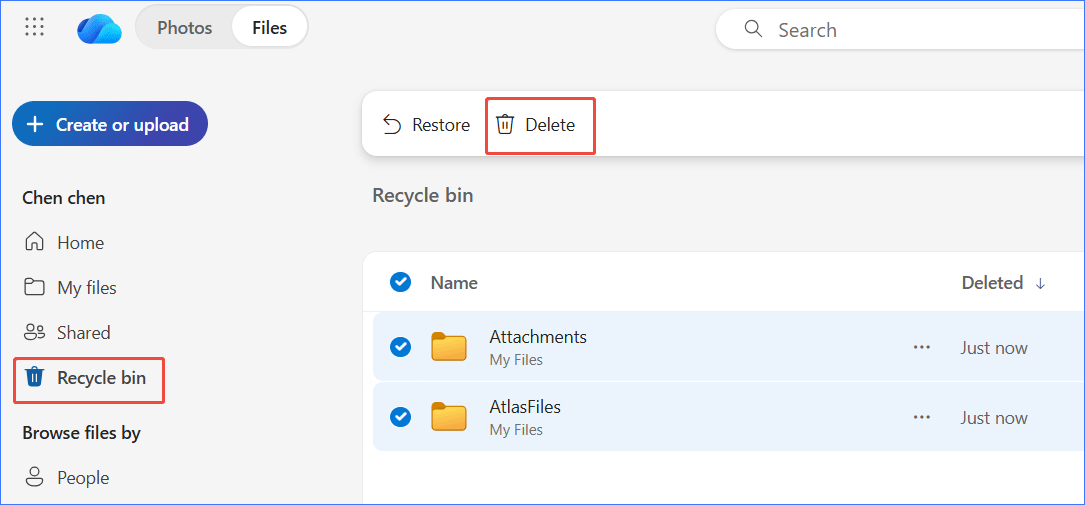
If emptying the recycle bin cannot free up much space, upgrade OneDrive to an advanced plan for more space. Then, re-sync files seamlessly.
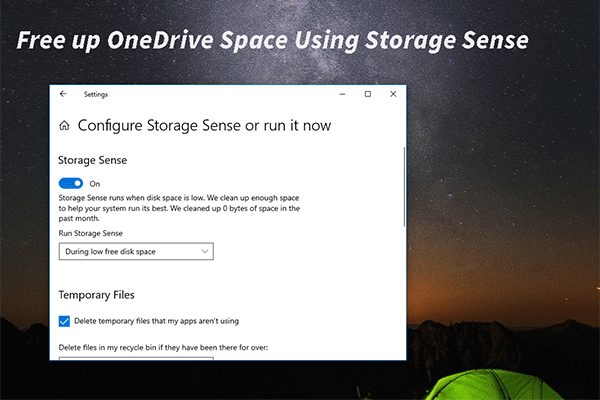
Option 3: Pause and Resume Syncing
To address OneDrive not syncing in Windows 11/10, pausing the sync task and resuming it can help.
Step 1: Click the OneDrive icon on the taskbar.
Step 2: Open the Settings menu and click Pause syncing.
Step 3: Select 2 hours, 8 hours, or 24 hours.
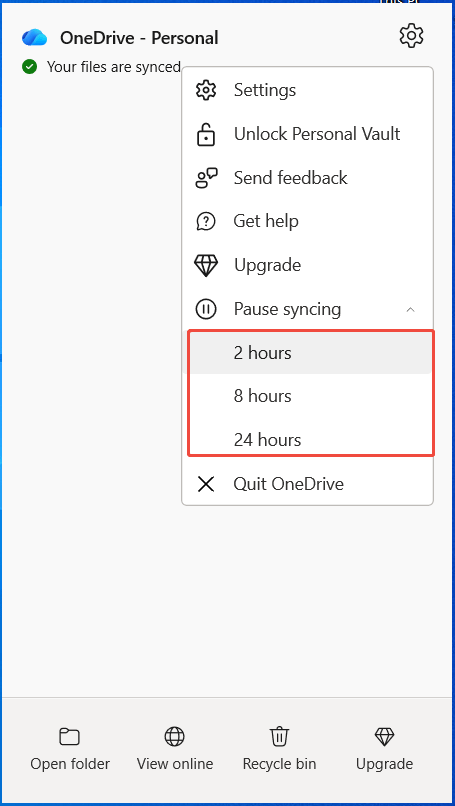
Step 4: Choose Resume syncing from the menu.
Then, check if sync problems persist.
Option 4: Move Files Out of the OneDrive Folder
Moving some files out of the synced folder can address sync problems, especially when the sync icon gets stuck for a long period of time.
Step 1: Pause syncing via the taskbar.
Step 2: Choose a file from one of the synced folders and move it to a local folder, such as the Desktop.
Step 3: Click Resume syncing.
Step 4: After files are synced, move the file back into the OneDrive folder. Then, check if sync issues are addressed.
Option 5: Update OneDrive and Windows
OneDrive sync issues, such as syncing being stuck, paused, or failing, often occur because an outdated app fails to communicate with Microsoft servers.
Ensure you use the latest version of OneDrive to eliminate the incompatibility with the Windows operating system.
Step 1: Access the OneDrive download page and click Download OneDrive to get the OneDriveSetup.exe file.
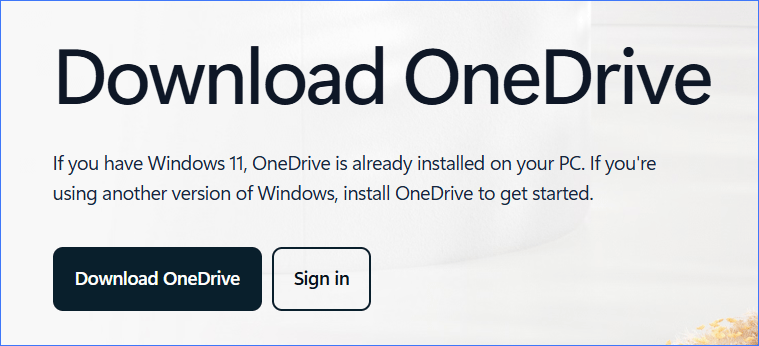
Step 2: Run this file to download the latest version of OneDrive.
Additionally, installing the latest Windows updates is an effective solution, which helps get the most out of OneDrive.
Step 1: Open Windows 11/10 Settings via Win + I.
Step 2: Choose Update & Security > Windows Update or Windows Update.
Step 3: Click Check for updates. Windows will download and install the available updates.
Step 4: Follow the on-screen instructions to finish the final installation.
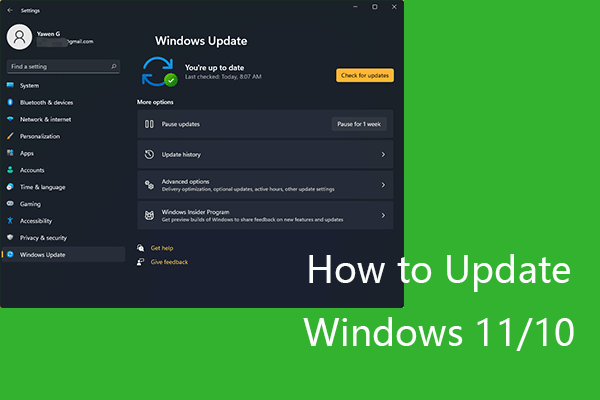
After the updates, launch OneDrive through the Search box, re-sync files, and check if this app can function properly.
If the issue persists, try the following additional troubleshooting steps.
Advanced Troubleshooting Tips
To fix OneDrive not syncing, unlink and relink the OneDrive account, clear sign-in credentials, check the file path, and reset OneDrive.
Option 1: Unlink and Relink Your OneDrive Account
In some cases, unlinking and relinking the computer to OneDrive is an effective solution to fix OneDrive sync issues. This process temporarily disconnects local folders from the cloud and forces a re-synchronization, without deleting files.
Unlink the account:
Step 1: Select the OneDrive icon in the notification area.
Step 2: In the pop-up, click the gear icon and choose Settings.
Step 3: Go to the Account tab.
Step 4: Click Unlink this PC > Unlink account.
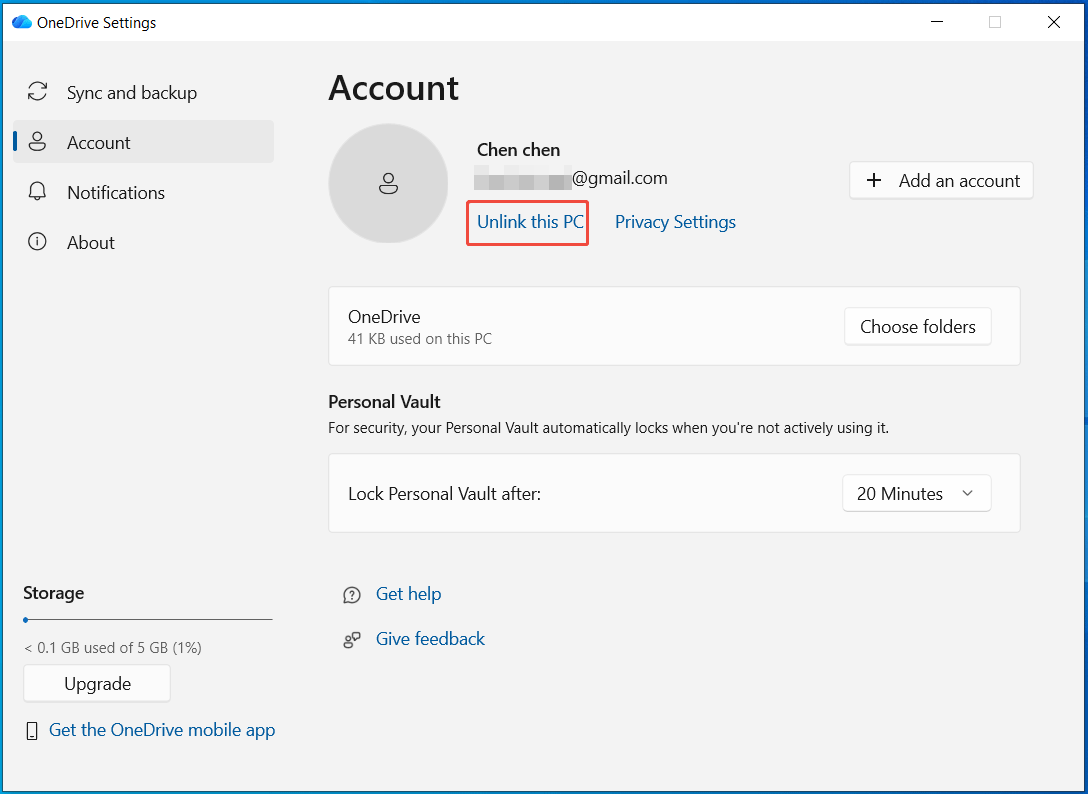
Relink the account
Step 1: Open the OneDrive app from Windows Search.
Step 2: Click the Sign in button in the prompted window.
Step 3: Select Next and choose Use this folder if you are connecting with the same account as before. Otherwise, click Choose new folder to avoid combining files from two accounts.
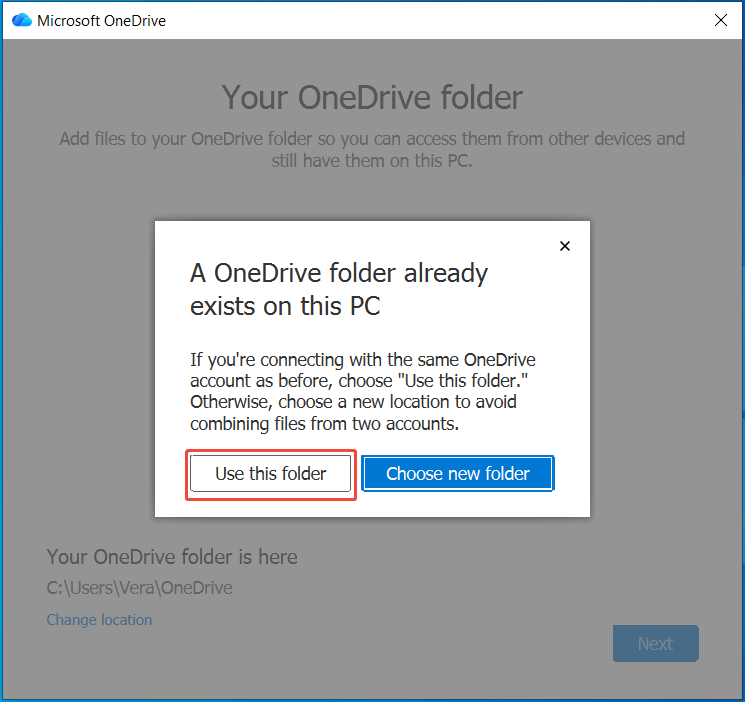
Step 4: Follow the on-screen instructions to finish the setup.
The issue of OneDrive not syncing should be resolved.
Option 2: Clear Sign-in Credentials
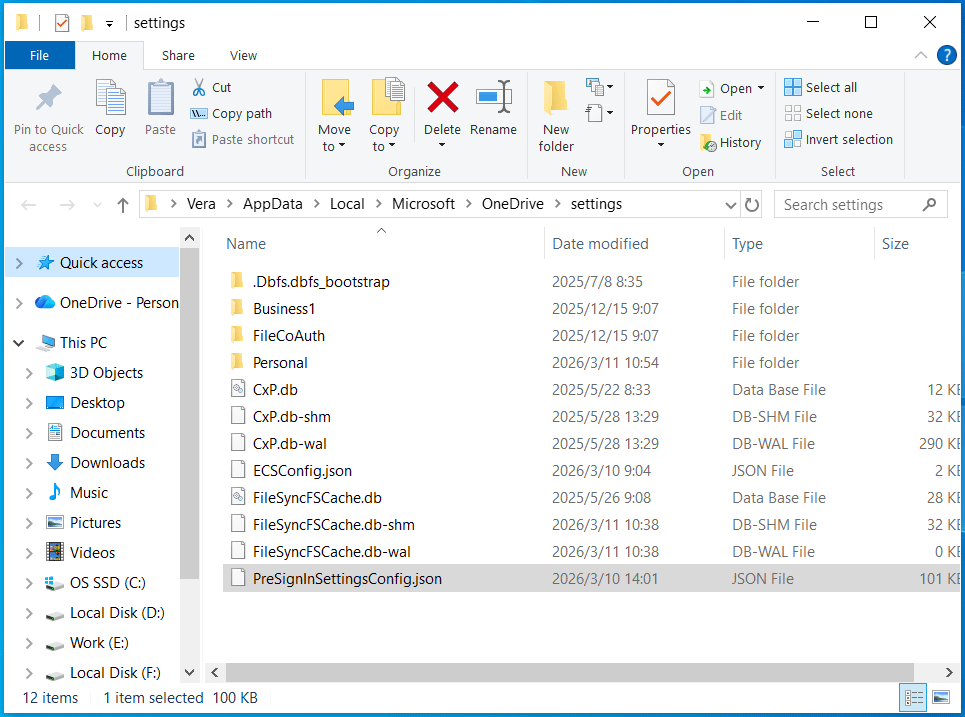
Deleting the PreSignInSettingsConfig.json file can help address OneDrive sync problems.
Follow these steps:
Step 1: Press Win + R to open Run.
Step 2: Type %localappdata%\Microsoft\OneDrive\settings and click OK.
Step 3: Select the PreSignInSettingsConfig.json file and delete it.
Option 3: Check File Name and Path
OneDrive not syncing may occur because of the limitations.
According to Microsoft, the file path (including the file name and extension) should be less than 400 characters. Moreover, the file name should not contain invalid characters, such as <, >, and ?.
Double-check the file you need to sync and ensure it meets the requirements.
Additionally, individual files larger than 250GB will not sync. If the file exceeds the limit, compress it.
To learn details, refer to the OneDrive restrictions guide.

Option 4: Manage Backup
This proven approach is recommended by some forum users. Try to manage backup if OneDrive doesn’t show synced files in File Explorer.
Step 1: Navigate to OneDrive Settings > Sync and Backup.
Step 2: Toggle the sync of folders to on.
Step 3: In the Account tab, click Choose folders, and select Make all files available.
Step 4: Click OK to confirm the selection.
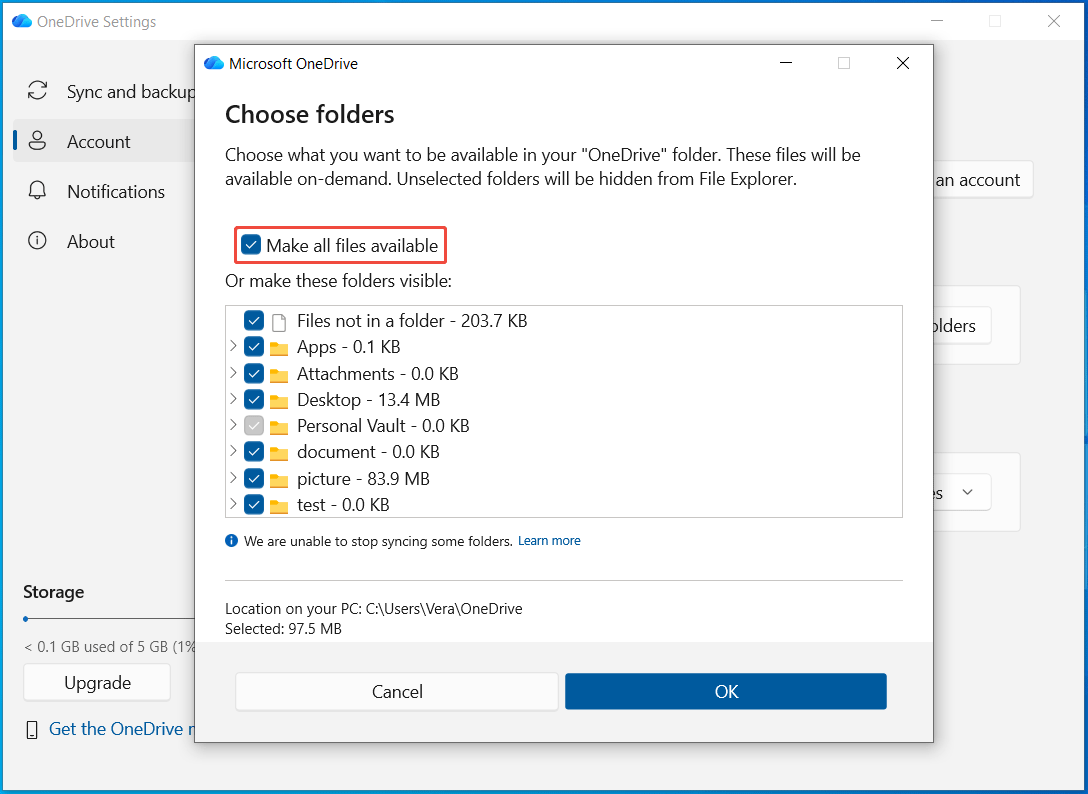
Now, the synced files should appear in File Explorer.
Option 5: Reset OneDrive
Resetting OneDrive can sometimes address sync issues, such as files stuck in sync pending or the icon showing a red X. The process rebuilds the sync cache and reconnects local folders to the cloud, without deleting files.
Follow the steps to reset the OneDrive app:
Step 1: Press Win + R to open the Run window.
Step 2: Type %localappdata%\Microsoft\OneDrive\onedrive.exe /reset and click OK.
Step 3: If the “Windows cannot find …” message appears, copy and paste the following command to Run, and press Enter.
C:\Program Files\Microsoft OneDrive\onedrive.exe /reset
Step 4: If the message still appears, execute the command: C:\Program Files (x86)\Microsoft OneDrive\onedrive.exe /reset.
Now, restart OneDrive and it should sync files properly.
Wrapping Things Up
A variety of factors can result in stuck on sync pending, a red X icon, or sync errors. This post provides several solutions to OneDrive sync issues. Follow the instructions to pause and resume syncing, reset OneDrive, and unlink & relink the account to restore OneDrive to a working state.
To back up PC data to a local device, run MiniTool ShadowMaker. As for the issues with this software, send an email to [email protected].
OneDrive Sync Issues FAQ
1. Reset the OneDrive app using %localappdata%\Microsoft\OneDrive\onedrive.exe /reset.
2. Move the problematic file out of the OneDrive folder, wait for the sync to complete, and move it back.
3. Right-click the file, choose Properties, go to the Security tab, click Edit, and grant full control.
Step 1: Open OneDrive Settings.
Step 2: Go to Account.
Step 3: Click Choose folders and ensure all items are selected.
About The Author

Position: Columnist
Vera has been working at the MiniTool Team for over 10 years as a technical editor and content writer. She mainly focuses on disk and partition management, data recovery, Windows backup and restore, and PC troubleshooting. Through in-depth software testing and hands-on experience, she has helped users solve a wide range of computer problems and better protect their data on Windows devices.
User Comments :