
This guide compares Samsung T7 vs T9 across key aspects, including speed, features, storage capacity, and warranty. Discover the key differences and choose the Samsung portable SSD that best fits your needs.
Quick Answer
The Samsung T7 and Samsung T9 are popular external portable SSDs.
- Choose T7 if you prioritize a lightweight and affordable SSD for everyday storage and backups.
- Use T9 if you need faster transfer speeds and larger storage capacity.
What Is Samsung T7?
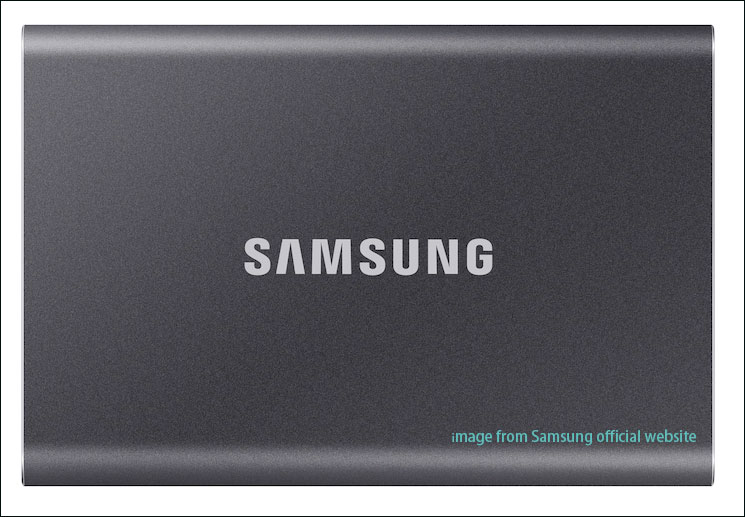
Samsung T7 was released on April 26, 2022. The Samsung T7 series includes the regular T7, the rugged T7 Shield, and the T7 Touch reviewed here. They each have the same storage technology and are capable of the same transfer speeds, but the T7 Touch adds a fingerprint sensor to the T7’s specification to keep your data safe if you need to.
What Is Samsung T9?
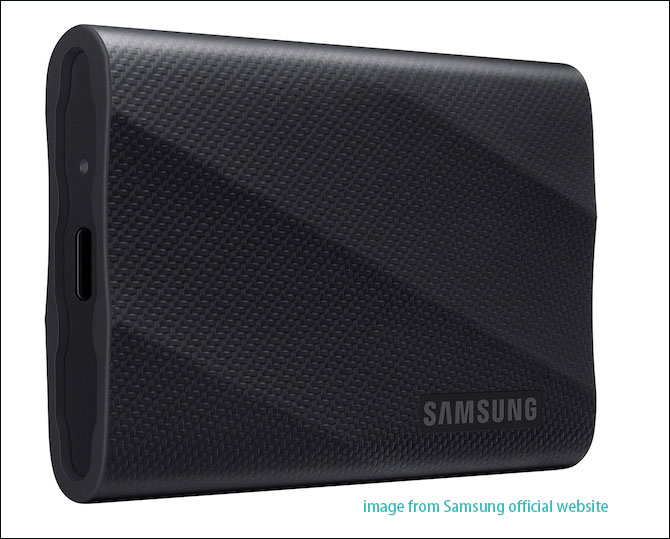
The Samsung T9 Portable SSD was released on October 3, 2023. It features a native USB 3.2 Gen 2×2 interface (USB Type-C) and comes with a proprietary Samsung controller and the company’s latest 3D V-NAND, similar to the T7 Shield series of drives.
Like some of Samsung’s internal SSDs, the T9 supports the company’s TurboWrite technology. TurboWrite accelerates write performance by configuring a portion of the NAND flash memory as an SLC cache.
Samsung T7 vs T9: What Are the Differences
The table below highlights the key differences between the Samsung T7 and T9. Compare their speed, capacity, features, and warranty to see which SSD is right for you.
| Feature | Samsung T7 | Samsung T9 |
| Interface | USB 3.2 Gen 2 (Up to 10 Gbps speed) | USB 3.2 Gen 2×2 interface (Up to 20 Gbps speed) |
| Sequential Read | Up to 1,050 MB/s | Up to 2,000 MB/s |
| Sequential Write | Up to 1,000 MB/s | Up to 2,000 MB/s |
| Capacity | 500GB, 1TB, 2TB, and 4TB | 1TB, 2TB, and 4TB |
| Dimensions | 85 x 57 x 8 mm | 88 x 60 x 14 mm |
| Weight | 58g | 122g |
| Encryption | AES 256-bit hardware encryption | AES 256-bit hardware encryption |
| Drop Resistance | Up to 2 meters | Up to 3 meters |
| Warranty | 3 years | 5 years |
Samsung T7 vs T9: Performance and Speed
Samsung says the T9 is around twice as fast as the T7.
“The USB interface enables two lanes of 10 Gbps operation to provide 20 Gbps data transfer rates which delivers faster speeds when transferring high-resolution videos or large files, effectively saving creators’ time during heavy workloads like video editing,”
The T9 delivers up to 2,000 MB/s for both sequential read and write speeds, while the T7 reaches up to 1,050 MB/s read and 1,000 MB/s write speeds.
In practical use, the T9 excels at transferring large files like 4K videos and game files. Samsung says it can transfer a 4GB video in nearly two seconds or a 90-minute 4K recording in 12 seconds.
Samsung T7 vs T9: Features
The third part of Samsung T9 vs T7 is features.
The portable SSD T7 is lightweight and pocket-friendly, delivering fast speeds while protecting your data, making it easy to store and transfer large files. It supports AES 256-bit hardware encryption and Samsung Magician software for password protection and firmware updates.
Samsung T9 also comes with Samsung Magician software, ensuring you get software like data migration, PSSD software, and card authentication tools in the Magician software. Additionally, it adds Dynamic Thermal Guard to help manage heat during demanding workloads.
Samsung T7 vs T9: Storage
The Samsung T7 and T9 are available in different storage capacities.
- T9: 1TB, 2TB, 4TB.
- T7: 500GB, 1TB, 2TB, and 4TB
Samsung T7 vs T9: Warranty
Samsung T7 offers a three-year comprehensive warranty, while Samsung T9 offers five years of repair coverage.
Samsung T9 vs T7: Which One to Choose
After learning the differences between Samsung 79 and T7, it is easy to choose the right SSD for your needs.
- Use T7 for everyday file storage and PC backups, since it is smaller, lighter, and offers sufficient speed.
- Choose T9 for large file transfers, 4K video editing, and gaming, as it offers faster speeds and better performance.
Back up Files to Samsung T7 or T9
Whether you choose Samsung T7 or T9, you may use it as a storage device to free up your PC space. After getting the portable SSD, connect it to your computer and then use the Samsung migration software – MiniTool ShadowMaker to back up files. This tool also allows you to clone SSD to larger SSD.
MiniTool ShadowMaker supports almost all storage devices that can be recognized by Windows, such as HDD, SSD, USB external disks, Hardware RAID, Network Attached Storage (NAS), Home File Server, Workstations, and so on.
Now, let’s see how to back up the computer with MiniTool ShadowMaker step by step:
Step 1: Download and install MiniTool ShadowMaker.
MiniTool ShadowMaker TrialClick to Download100%Clean & Safe
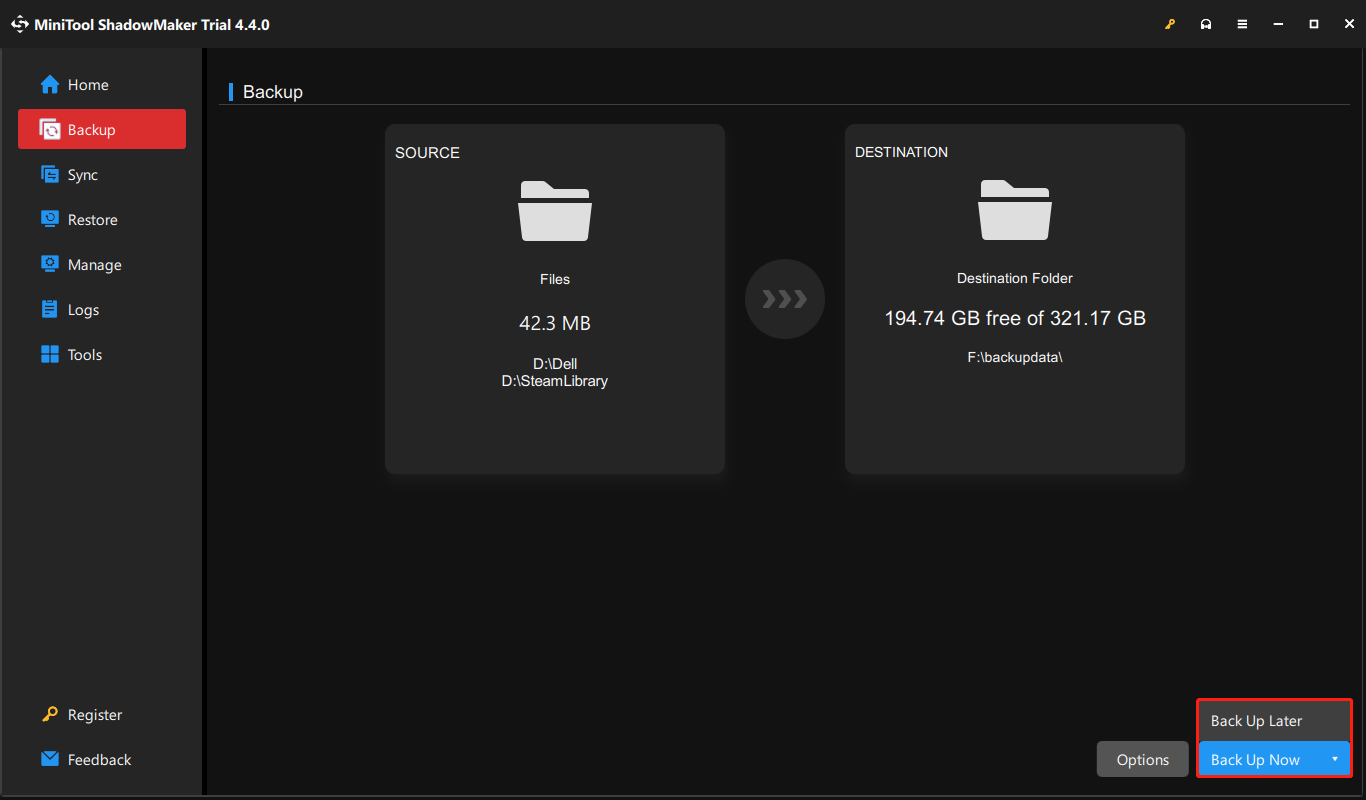
Step 2: Go to the Backup page. MiniTool ShadowMaker chooses the operating system as the backup source by default.
To backup important data, you need to click the SOURCE module and choose Folders and Files in the popup window to continue.
Step 3: Click the DESTINATION module and select the portable SSD as the location.
Step 4: Select Back Up Now to start the backup.
Bottom Line
As for Samsung T9 vs T7, this post has shown their differences in several aspects. If you do not know which one is better, you can refer to the above part. In addition, if you have any problem with MiniTool ShadowMaker, please feel free to contact us via email [email protected] and we will reply to you as soon as possible.
Samsung T9 vs T7 FAQ
About The Author

Position: Columnist
Vera has been working at the MiniTool Team for over 10 years as a technical editor and content writer. She mainly focuses on disk and partition management, data recovery, Windows backup and restore, and PC troubleshooting. Through in-depth software testing and hands-on experience, she has helped users solve a wide range of computer problems and better protect their data on Windows devices.
User Comments :