
The USB armory Mk II is actually a security-focused open source hardware computer. It is able to run Linux on an NXP i.MX6 ULZ. Ordinary users may fell strange about the tiny and open source USB computer. Because of this, I decide to introduce this USB Linux computer to you in brief.
Please go to the home page to get solutions for data & disk protection.
It was Inverse Path who first released security-oriented USB Armory USB-stick in 2014. Then, nothing alike was launched. Till two months ago, there was finally a second generation version launched successfully on Crowd Supply. It is called USB armory Mk II and released by the security company F-Secure Foundry (it acquired the Inverse Path in 2017).
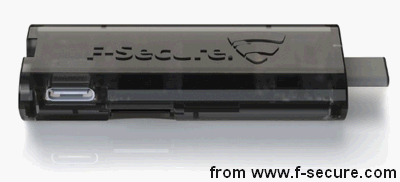
What Is USB Armory Mk II
The USB armory Mk II provides an open source hardware design and it is a classic flash drive sized computer.
What’s included in USB armory?
- Before November 1, this F-Secure USB stick was even equipped with a free enclosure.
- Besides, a microSD card which has pre-loaded Debian was contained in it.
- What’s more, there’s a debug daughter board used to break out the UART, SPI, I2C, and GPIO.
With it, you can get easy access to develop and run a variety of applications.
If This Can’t Help You With Free USB Data Recovery, Nothing Will.
USB Linux Computer Review
I will introduce USB armory Mk II to you in the following 3 aspects.
One: connectivity.
- The USB 2.0 over USB-C plug for host with complete device emulation
- The Flash drive functionality through the emulation of USB mass storage device
- The Serial communication over USB or physical UART by making use of Debug Board
- The USB 2.0 over USB-C receptacle used for the additional devices or used as a connection to host
- The Full TCP/IP connection to or from the USB armory through the USB CDC Ethernet emulation
Two: interfaces and ports.
Type 1: USB.
There are two USB-C ports on the F-Secure USB stick; they allow users to get a plug used for the traditional USB-based host communication and the integrated receptacle, which can serve as a host or a device.
Type 2: Bluetooth.
There is a u-blox ANNA-B112 Bluetooth module contained in USB armory; it is able to help achieve out-of-band interaction with the wireless client such as mobile applications.
Three: security functionality.
One: True Random Number Generator (TRNG).
It includes a RNGB driver which can be operated in the modern Linux kernels. The Linux hw_random framework components will be enabled after its loading.
Two: High Assurance Boot (HABv4).
In fact, the on-chip internal Boot ROM authentication of initial bootloader can be enabled easily by this feature through the digital signature. This helps to create the first trust anchor which can be used for code authentication. It has close relationship with Secure Boot.
Three: Data Co-Processor (DCP).
Similarly, the DCP module driver is contained in it and is operation in the modern Linux kernels. The corresponding algorithms will be unveiled to the public via the Crypto API interface.
Four: ARM® TrustZone®.
An ARM® TrustZone® is implemented in both the CPU core and internal peripherals of the i.MX6 SoC family.
Five: Secure Non-Volatile Storage (SNVS)
Each SoC was made to contain a device-specific random 256-bit OTPMK key, which is unreadable. However, the DCP is able to complete AES encryption/decryption of user data by using that key on the basis of the Secure Non-Volatile Storage (SNVS) companion block.
Six: eMMC Replay Protected Memory Blocks (RPMB).
By making use of the shared secret between the host and the eMMC, the eMMC RPMB features replay-protected authenticated access to the flash memory partition areas.
Seven: External cryptographic co-processors (ATECC & A71CH).
The Microchip ATECC608A and NXP AT71CH are responsible for accelerating hardware for both the elliptic-curve cryptography and hardware-based key storage.
All in all, the USB armory Mk II is expected to be the last word in secure mobile computing.
User Comments :