
Toshiba launches a new flash memory technology: XL-FLASH which is a dedicated low-latency SLC 3D NAND flash memory. It will offer you more efficient operating system reads and writes, more efficient parallelism, and other excellent performance. Browse the official website of MiniTool to get more information.
At the Flash Memory Summit last year, Toshiba introduced XL-FLASH, in response to Samsung’s Z-NAND and Intel’s 3D XPoint. XL-FLASH is an SLC 3D NAND flash memory, focusing on low latency.
Toshiba gave out few details at the time, but it prepares to provide more information this year. Toshiba lays out a timeline for bringing XL-FLASH to market: it will start sampling next month and next year, it will begin mass production.
What Is New Flash Memory Technology: XL-FLASH?
You have heard the news that Toshiba launches its new flash memory technology: XL-FLASH, but you may ask what XL-Flash is.
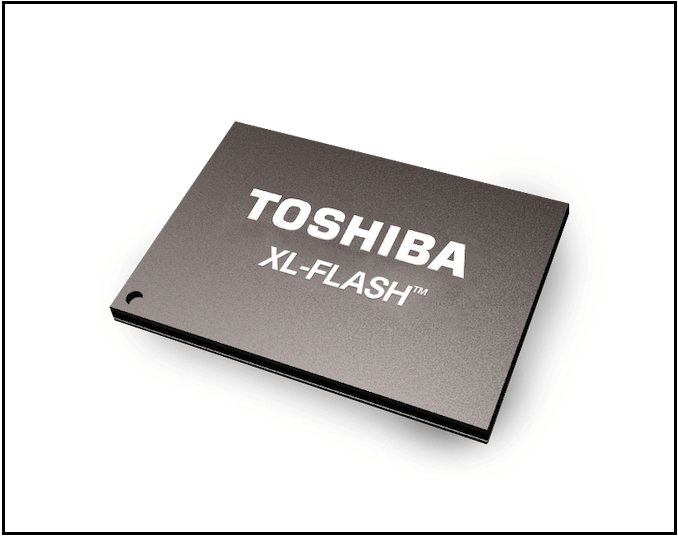
XL-FLASH is based on BiCS FLASH 3D flash memory technology which is an innovative technology of Toshiba Memory and uses 1-bit-per-cell SLC. This provides high performance and low latency, which benefits for enterprise storage and data centers.
XL-FLASH is classified as SCM that can hold on to contents like NAND flash memory, bridging the performance gap between DRAM and NAND. Although volatile memory solutions such as DRAM is quite useful with access speeds required by demanding applications, this performance is costly.
With DRAM’s scalability and the cost-per-bit stabilizing, this new SCM layer in the memory hierarchy can fix this problem via a low-cost, high-density and non-volatile NAND flash solution. Industry analysis firm IDC expects the SCM market to exceed $3 billion in 2022.
XL-FLASH, which sits between DRAM and NAND FLASH, offers faster speeds, shorter latency, and higher storage capacity. Compared with the price of traditional DRAM, it is cheaper.
XL-FLASH will be deployed in SSD format firstly but it can be extended to memory channels on the DRAM bus that connect devices, such as future industry standard NVDIMMs – non-volatile dual inline memory modules.
Key Features of New Flash Memory Technology: XL-FLASH
This part will show you some key features of this new flash memory technology: XL-FLASH.
1.The first XL-FLASH parts will use a 128Gb die in a 2-die, 4-die, 8-die package.
2.The 128Gb die will be divided into 16 planes. This architecture is designed for more efficient parallelism. Compared with capacity-oriented 3D NAND parts, 16 planes support a much higher degree of parallelism.
3.The page size will be 4KB, which provides more efficient operating system reads and writes performance. 4KB page size is much smaller than most 3D NAND uses, but that’s not surprising since XL-FLASH can only store one bit per cell, not three or four.
4. XL-FLASH provides fast page read and program times. According to Toshiba, the read latency will be less than 5 microseconds, approximately 10 times faster than existing TLC.
Business Model of New Flash Memory Technology: XL-FLASH
XL-FLASH is a kind of storage class memory. The most striking difference between XL-FLASH of Toshiba and Z-NAND of Samsung may ultimately lie in the business model. Z-NAND of Samsung is used exclusively for their Z-SSD products, while XL-FLASH of Toshiba will be sold just as its 3D TLC and QLC NAND.
According to some SSD controller vendors, in their upcoming controllers, they are going to support XL-FLASH. Thus, when XL-FLASH begins to enter the market, it may be used in several competing SSDs.
Bottom Line
In conclusion, this post has shown you much information about Toshiba’s new flash memory technology: XL-FLASH. It is a new storage class memory solution which offers you low-latency service. Hope you can learn more about XL-FLASH after reading this post.
User Comments :