
What Is “The System Cannot Find the File Specified” Disk Error?
The “The system cannot find the file specified” error in Virtual Disk Manager usually occurs when Windows cannot access a valid partition structure on a disk or USB drive.
In most cases, the issue is related to a corrupted partition table, damaged file system metadata, or an unrecognized storage device.
You may encounter this error in the following situations:
- Formatting a USB drive or external hard drive in Disk Management
- Initializing a disk in Disk Management
- Running formatting commands in DiskPart
- Creating partitions on removable storage devices
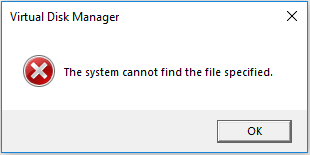
DiskPart has encountered an error the system cannot find the file specified:

How to Solve “The System Cannot Find the File Specified” Disk Error?
When Windows is unable to format flash drives due to this error, follow the methods below to fix it.
Way 1. Use DiskPart Clean Command
The DiskPart clean command removes all existing partitions and resets the disk structure.
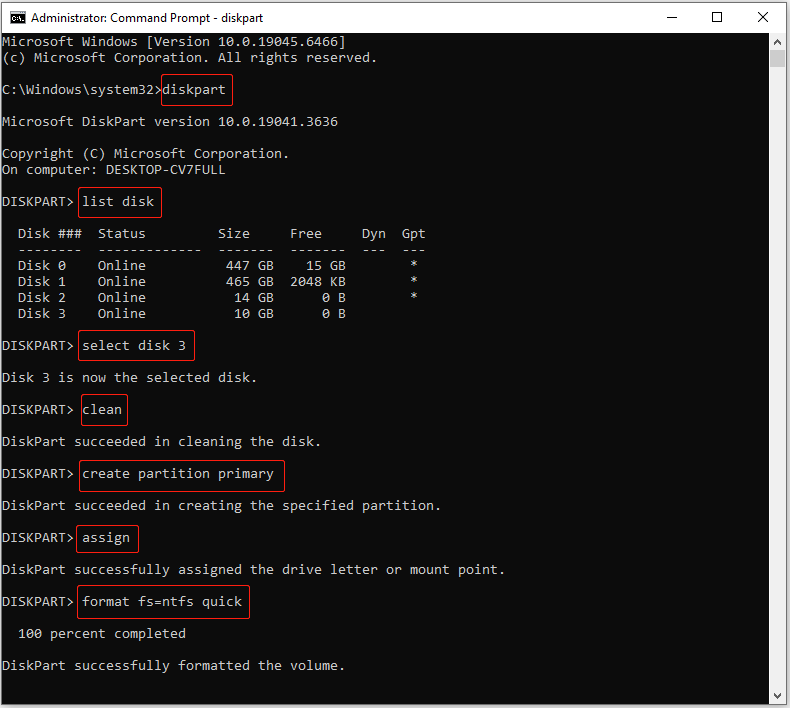
Step 1: Press the “Windows + R” keys to open the Run dialog. In the Run box, type “diskpart” and hit the Enter key to open the DiskPart command prompt tool.
Step 2: In the DiskPart window, execute the following commands one by one:
- list disk (In this step, you should identify the disk number of the USB drive by the size.)
- select disk * (* stands for the disk number of the USB with errors. You should replace it accordingly.)
- clean (This command will delete all partitions and the partition table, resetting the drive to the state it was in when it was originally purchased.)
- create partition primary (create a primary partition on the disk)
- assign (assign an available drive letter)
- format fs=ntfs quick (you can replace ntfs with another file system, such as exfat or fat32)
Way 2. Use MiniTool Partition Wizard
MiniTool Partition Wizard can be used as an alternative solution to repair or rebuild the disk structure.
MiniTool Partition Wizard provides several disk management functions that can help resolve this problem, including formatting unrecognized drives, converting disk partition styles, and checking for bad sectors.
MiniTool Partition Wizard FreeClick to Download100%Clean & Safe
The following methods can be used with MiniTool Partition Wizard to fix the issue:
#1. Use MiniTool Partition Wizard to Format the USB Drive
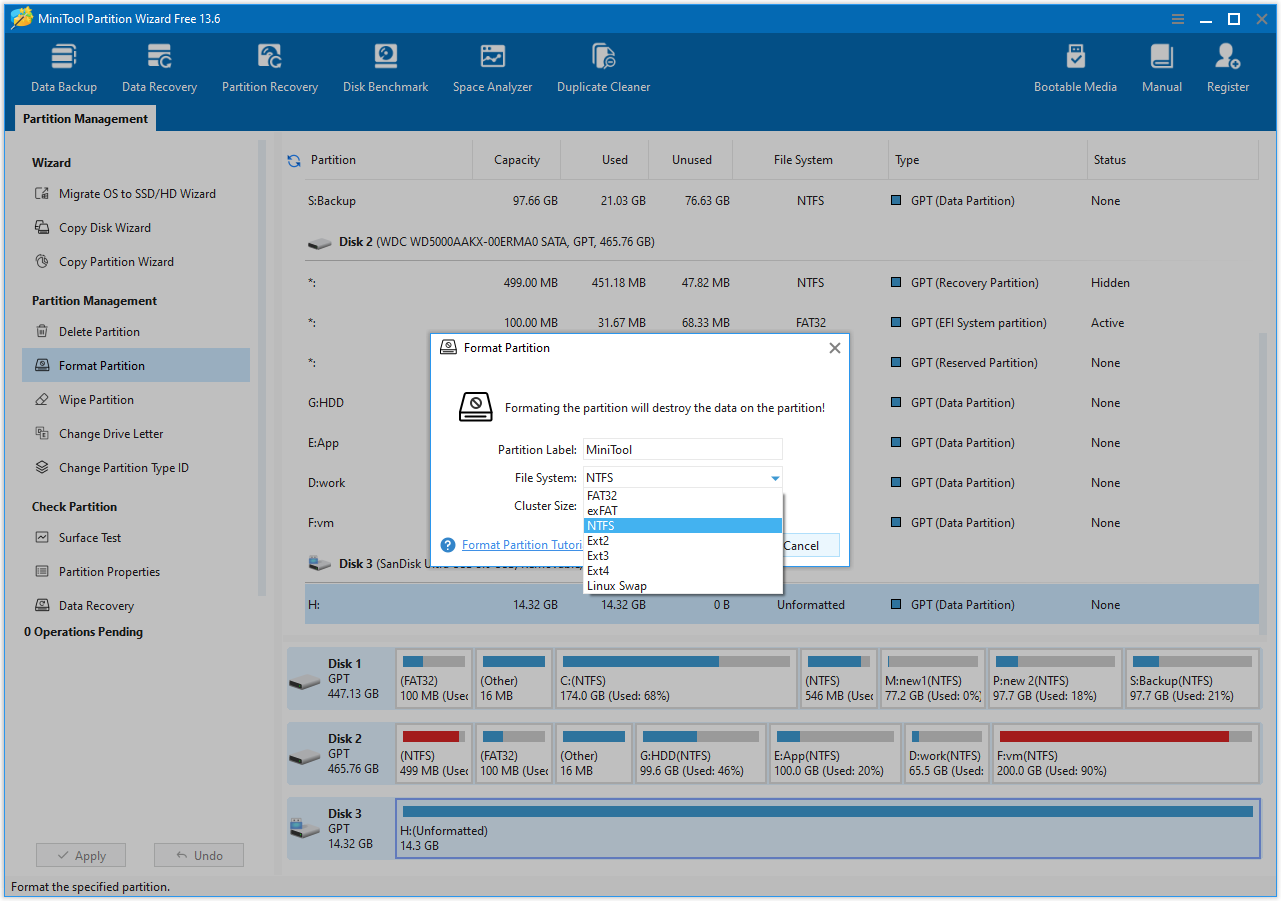
Step 1: Launch MiniTool Partition Wizard. Right-click on the partition of the USB drive. Then, choose the Format option from the context menu.
Step 2: A Format Partition wizard window will pop up. In this window, select a proper file system. In general, you can choose NTFS, FAT32, or exFAT for your USB drive. Then, click the OK button.
Step 3: Click the Apply button to execute the pending operation.
#2. Use MiniTool Partition to Convert the USB Drive to GPT
In some cases, you are unable to format the drive due to an inconsistent or corrupted partition style that cannot be properly interpreted by Disk Management or DiskPart.
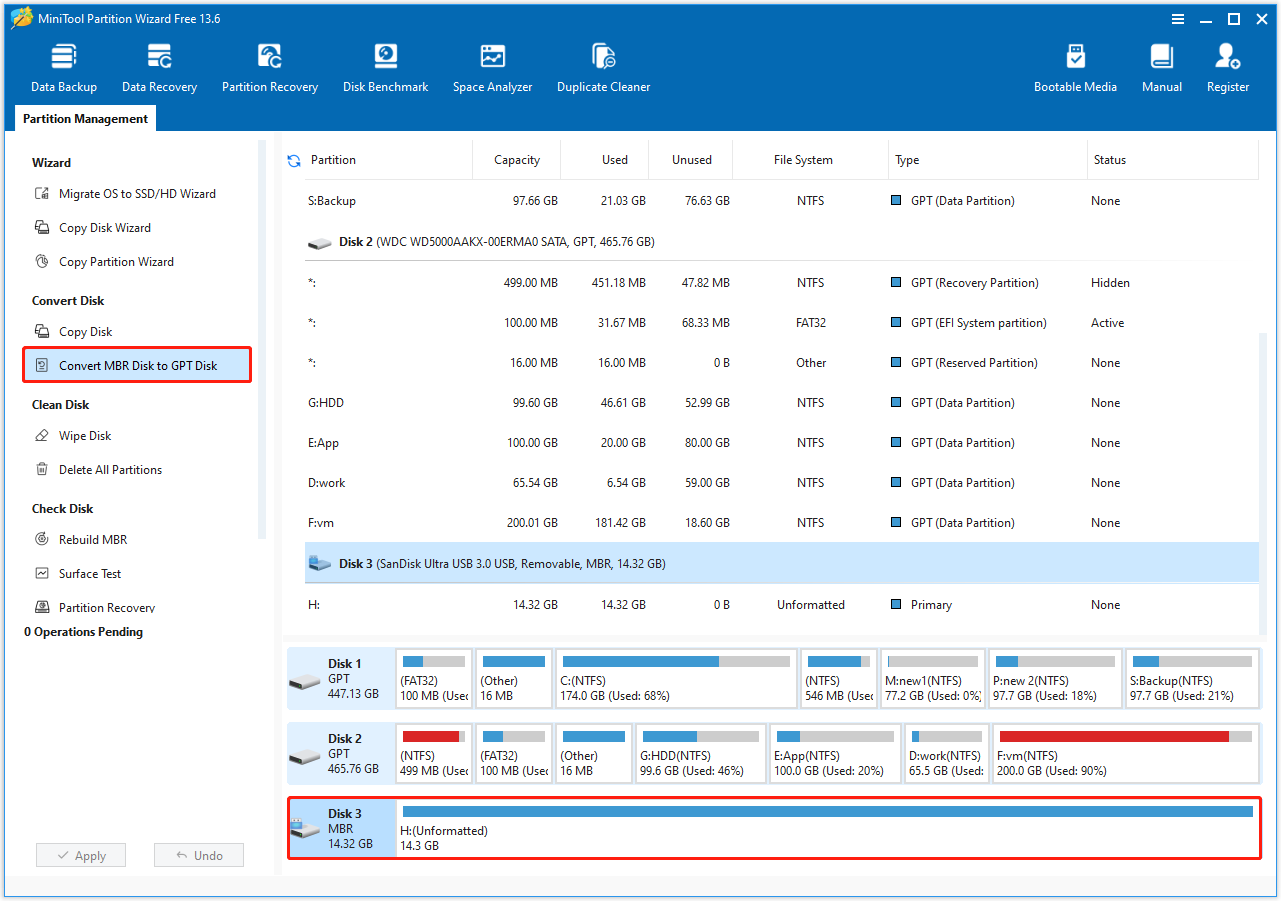
Rebuilding or converting the disk’s partition style can help restore proper recognition. MiniTool Partition Wizard provides the ability to convert a disk between MBR and GPT.
Here is the guide:
- Launch MiniTool Partition Wizard.
- Select the disk and choose the Convert MBR Disk to GPT Disk option.
- Click the Apply button to execute the pending operation.
#3. Use MiniTool Partition Wizard to Check Bad Blocks on the USB Drive
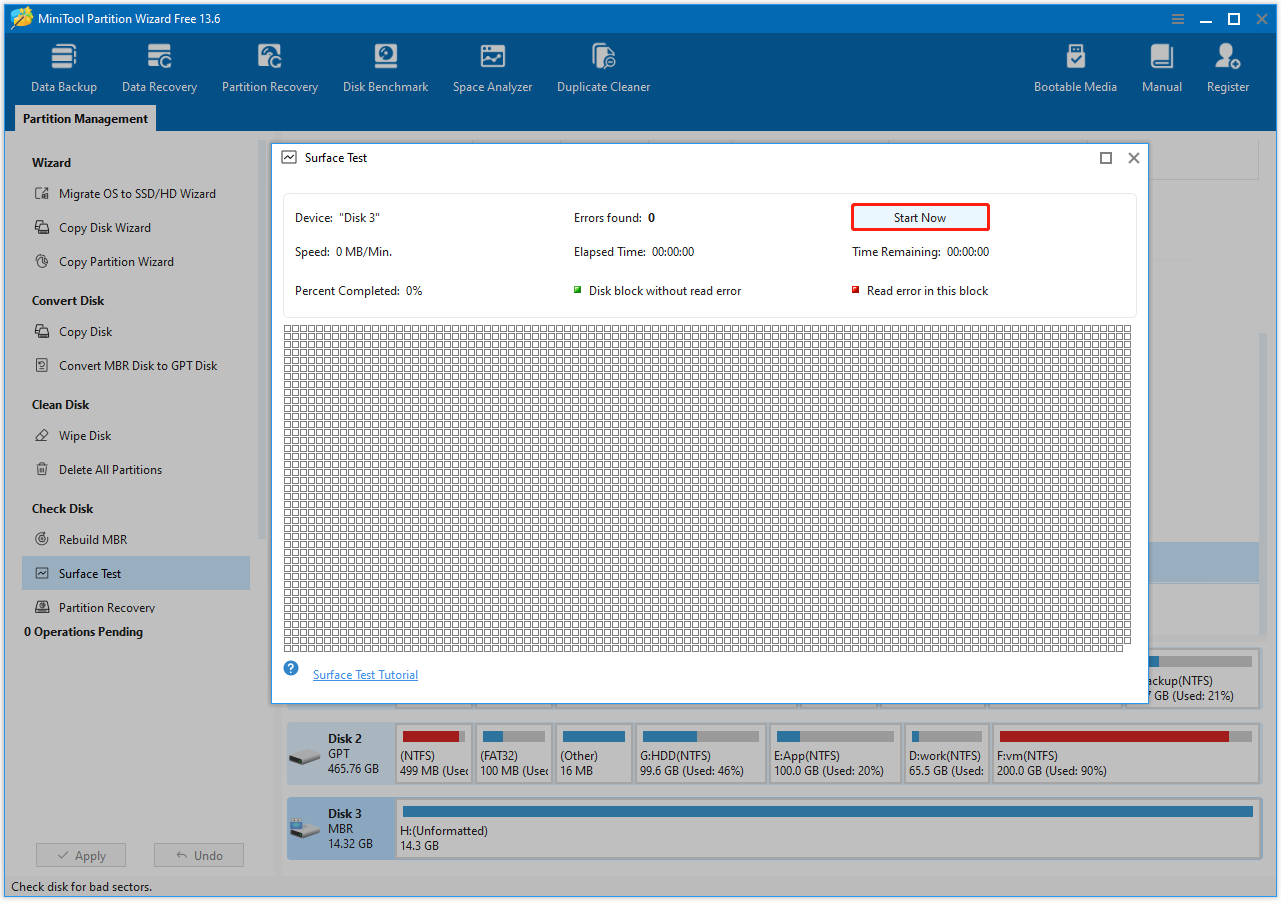
If all the above methods don’t work for you, you should consider whether the USB drive is failing. MiniTool Partition Wizard includes a feature named Surface Test, which can scan the USB drive for bad sectors/blocks.
If there are too many bad sectors/blocks on your USB drive, it means that the USB drive is failing and you need to replace it with a new one. Here is the guide:
- Launch MiniTool Partition Wizard.
- Right-click on the USB drive icon and choose the Surface Test option.
- After the Surface Test window pops up, click the Start Now This software will start scanning the USB drive for bad blocks. Bad blocks will be marked with a red color, and fine blocks will be marked with a green color.
Way 3. Use Burning Software
USB bootable tools such as Rufus or other ISO writing utilities can help rewrite the disk structure and bypass Windows-level errors caused by damaged partition metadata.
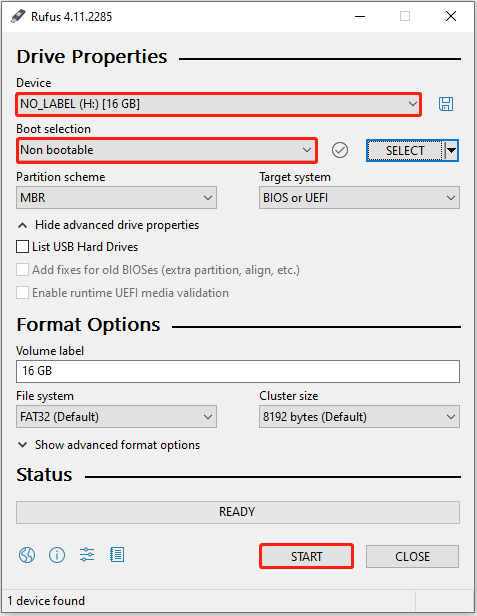
Taking Rufus as an example to show you the steps.
Step 1. Get Rufus from its official website.
Step 2. Select the target USB drive under Device and select Non bootable under Boot selection. Then set up the format options and click START.
Bottom Line
Do you know other ways to solve the “Virtual Disk Manager the system cannot find the file specified” and “DiskPart has encountered an error the system cannot find the file specified” errors? Share them with us in the following comment zone.
In addition, if you encounter problems when using MiniTool Partition Wizard, please feel free to contact us via [email protected]. We will get back to you as soon as possible.
About The Author

Position: Columnist
Shirley holds a bachelor’s degree in English and has been an editor at the MiniTool Team for many years. She specializes in IT-related content, with a focus on data recovery, file backup, disk management, and other technical topics. She is committed to delivering clear, accurate, and practical solutions to help users resolve common computer issues.
User Comments :