
Dropbox Not Syncing
Dropbox is a cloud-based file storage and synchronization service that lets users save and access files online from any device.
It provides a secure workspace for documents, photos, and videos, with features like file backup, collaboration tools, and automatic sync for easy sharing.
However, it may stop syncing files across devices. This can interrupt work, making you frustrated.
Common Reasons for Dropbox Not Syncing
- Internet problems: A slow, unstable, or inconsistent connection disrupts the synchronization process.
- Limited storage: A full Dropbox account or low device storage halts file updates.
- File issues: Unsupported characters, overly long file names, or duplicate versions trigger sync errors and failures.
- Outdated or damaged app: An outdated or corrupted Dropbox app compromises the software’s ability to sync.
- Security software interference: Firewalls or antivirus programs may block Dropbox’s connection to the server.
- Sync settings: Paused syncing or excluded folders directly prevent specific files from being uploaded.
Use MiniTool ShadowMaker as an Alternative Backup Solution
Data backup should adhere to the “3-2-1 rule”: maintain at least three copies of your data, store them on two different media types, and keep one copy off-site.
While Dropbox serves as a cloud-based backup solution, you also need a local backup to ensure maximum security. MiniTool ShadowMaker is a local backup solution that is worth considering.
This PC backup software is widely compatible with Windows 7/8/8.1/10/11 and is good at file backup and Windows backup.
Here’s how to use this software to back up files:
Step 1. Download and install MiniTool ShadowMaker on your PC. Then, launch it.
MiniTool ShadowMaker TrialClick to Download100%Clean & Safe
Step 2. Navigate to the Backup page, go to SOURCE, and click Folders and Files.
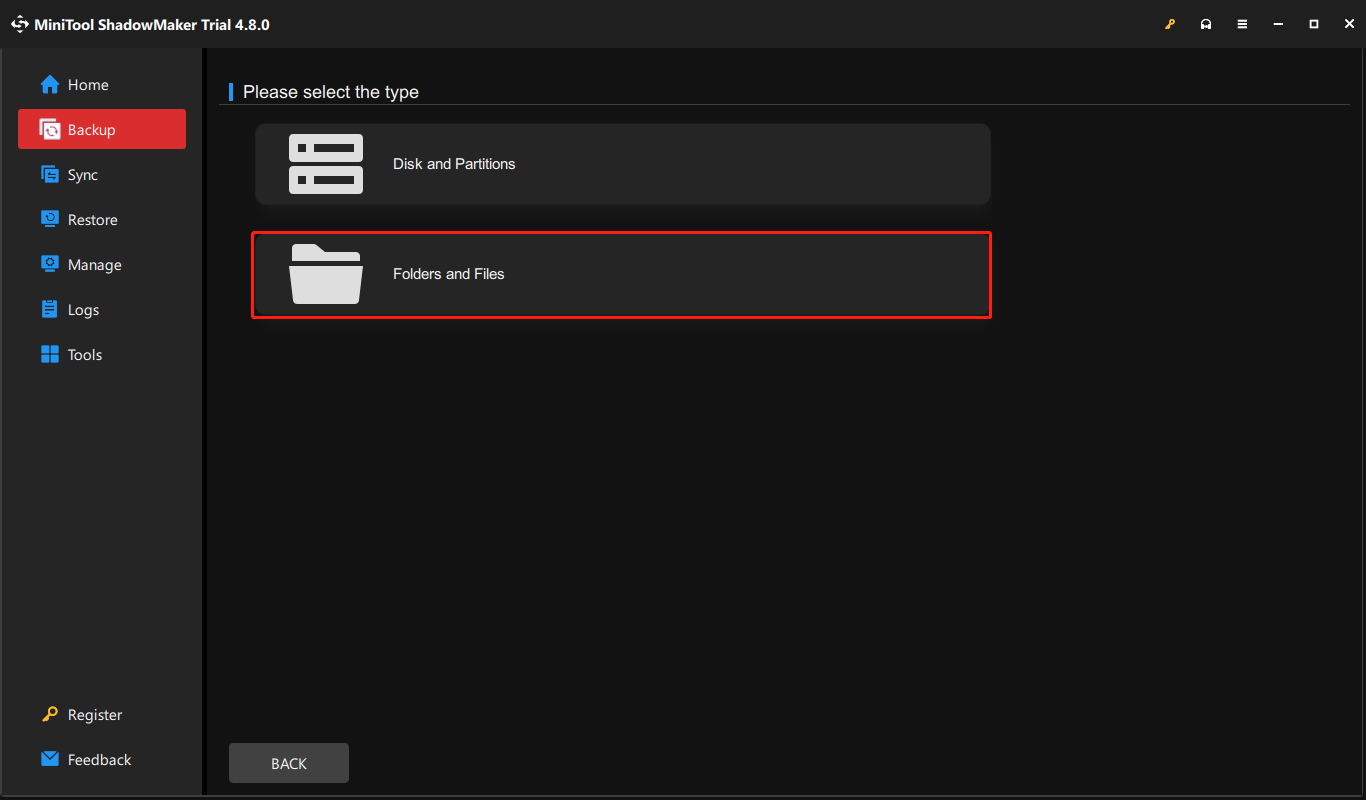
Step 3. Select the files you wish to back up, then click OK.
Step 4. Go to DESTINATION, choose the backup location, and click OK.
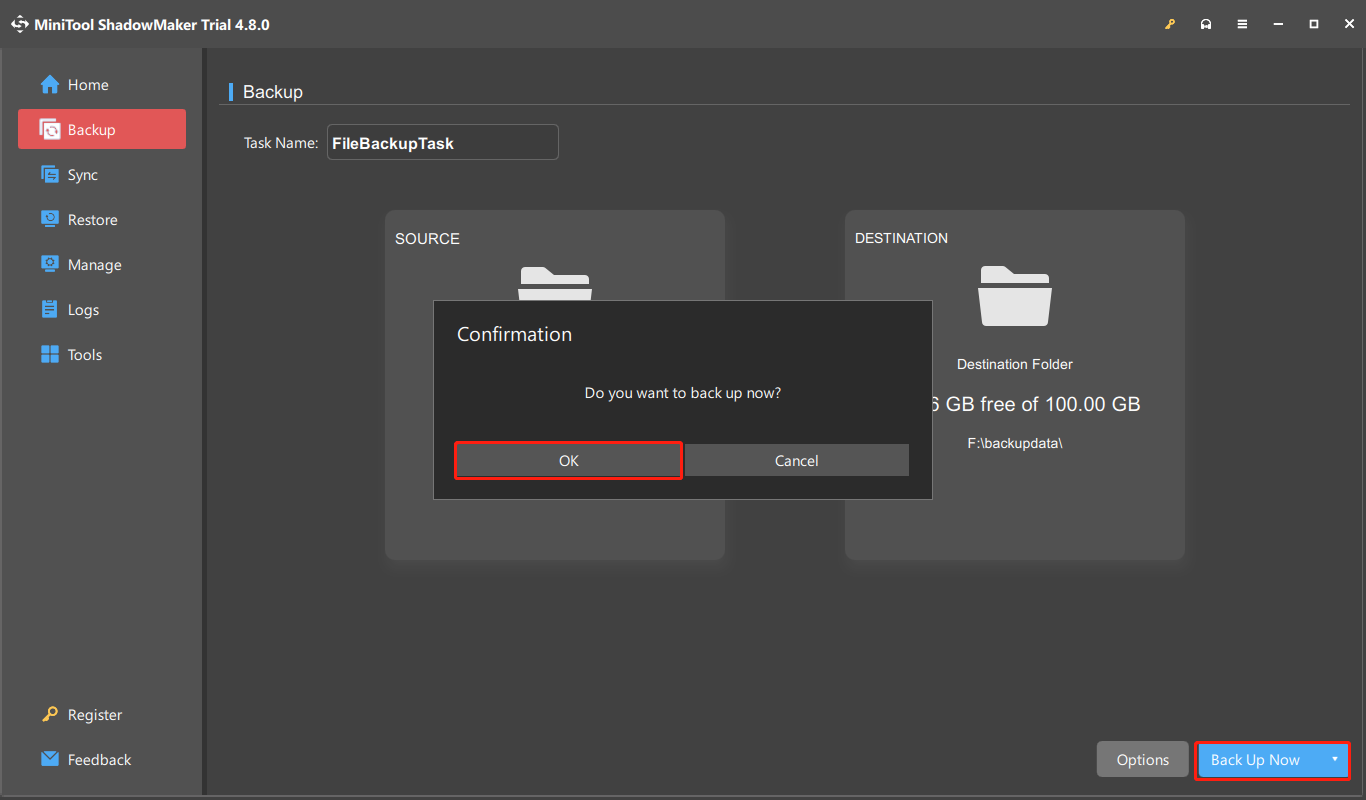
Step 5. Click Back Up Now and OK to confirm.

How to Fix Dropbox Not Syncing
To fix Dropbox not syncing, restart Dropbox, check your internet and storage, then try pausing/resuming sync, clearing the cache, or relinking your account. Additionally, ensure file names are supported, and your firewall isn’t blocking Dropbox.
Immediate Troubleshooting Steps
Try some quick fixes to resolve Dropbox syncing issues on Windows 10/11. Start by checking your sync status and restarting the app. Then, verify your internet connection, firewall settings, and storage space.
Method 1. Restart Dropbox
Reopening the app can refresh the connection. Try this method via these steps:
- Close the Dropbox app completely.
- Reopen it from your computer or mobile device.
- Check if the sync resumes.
If the issue persists, restart your computer, ensure you are connected to the internet, or pause and resume syncing.
Method 2. Pause and Resume Sync
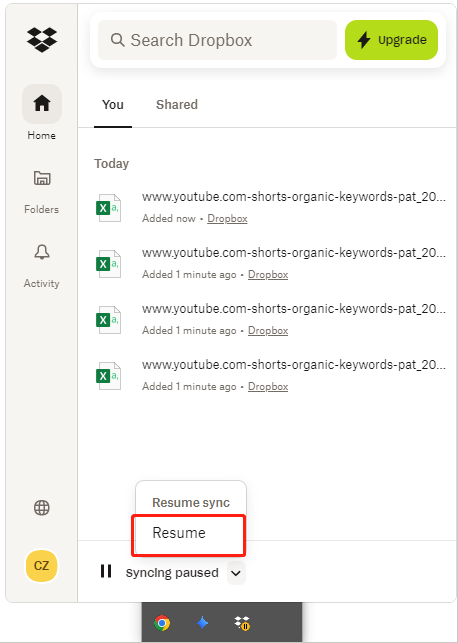
Pausing and resuming Dropbox sync functions as a “soft reset.” This method can help Dropbox re-index files, fix stalled uploads, and resolve network issues. Additionally, it frequently corrects synchronization errors.
- Click the Dropbox icon in the taskbar.
- Select Pause Syncing.
- Wait a few seconds, then select Resume.
- Dropbox will attempt to re-sync pending files.
Method 3. Check Internet & Firewall
To resolve Dropbox syncing issues, check your internet connection for stability to ensure uninterrupted data transfer. Additionally, verify that firewalls and antivirus software are not blocking Dropbox processes, as this prevents communication with the servers.
# 1. Check Your Internet Connection:
- Ensure you are connected to a stable Wi-Fi or wired network.
- Try opening a website to confirm the internet access.
- If your connection is unstable, switch to a different network or restart your router.
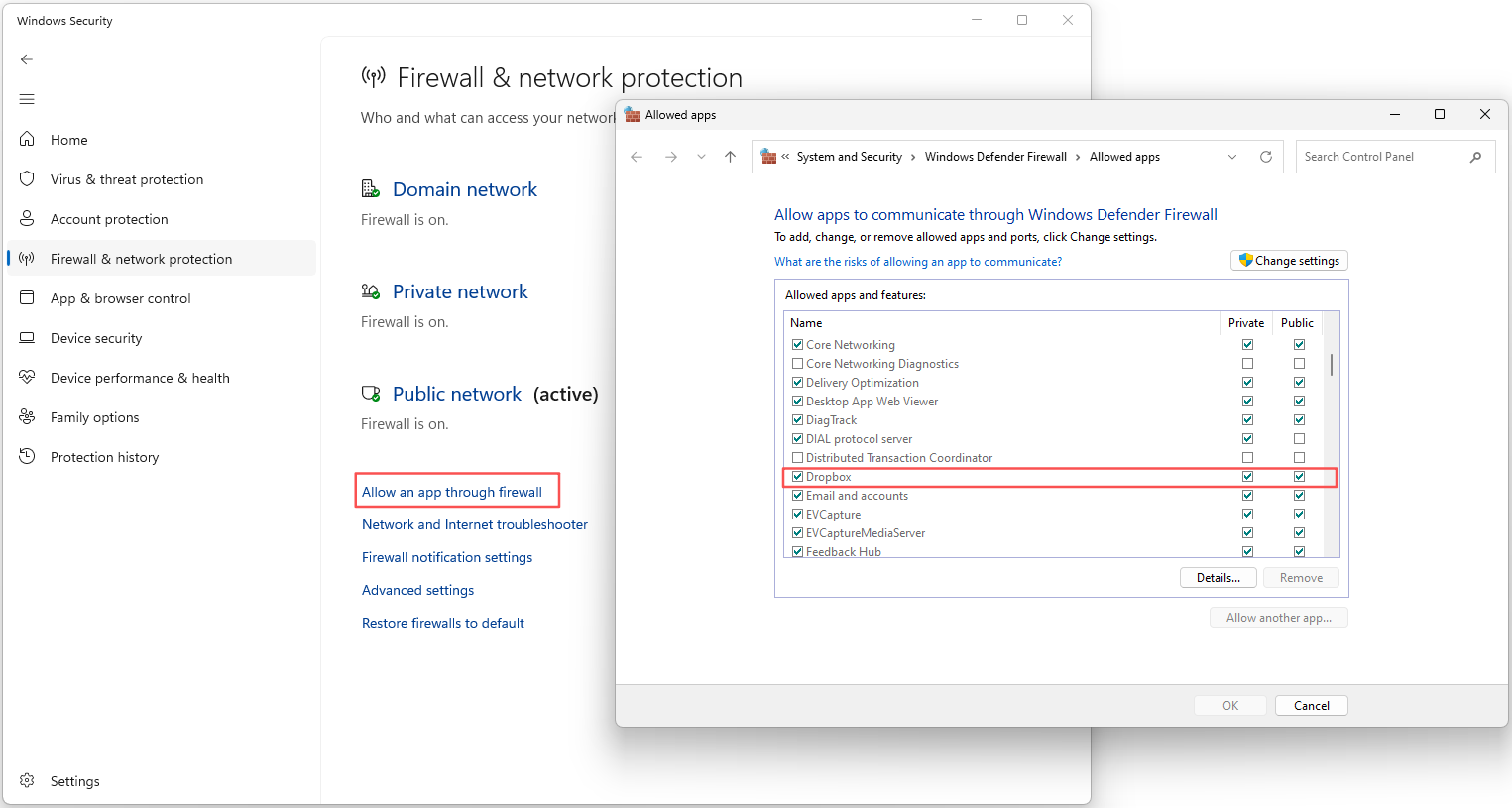
# 2. Check Firewall and Antivirus:
- Press Win + S to open Search.
- Type windows security and press Enter.
- Go to Firewall & network protection.
- Click the Allow an app through firewall link.
- Locate Dropbox from the app list and ensure both Private and Public checkboxes are selected.
Method 4. Check Storage Space
Dropbox will stop syncing if your account exceeds its storage quota. Thus, check your Dropbox account usage with the following steps:
- Log in to Dropbox.com.
- Click your profile.
- View Manage account.
- Make sure your Dropbox has enough free space for syncing files.
- If you’re low on storage, delete unnecessary files or upgrade your plan.

More Advanced Solutions
If those steps don’t work, try re-linking your account or checking for file name and permission issues. You can also use the “Fix Hardlinks” feature or check the Dropbox server status. If all else fails, a clean reinstall of the app should do the trick.
Method 1. Re-link Account
Relinking your Dropbox account means signing out and back in. This is a key troubleshooting step for syncing issues. It forces the app to reconnect to the server, re-index local files, and repair possible database corruption. Here’s how to do that:
- Click the Dropbox icon.
- Click the profile picture or initials, and select Preferences > Account.
- Select Unlink This Dropbox (or Sign out).
- Sign in again to relink your account.
- Dropbox will resync all your files.
Method 2. Check File Names
Checking file names is an important troubleshooting step. Dropbox on Windows cannot sync files with illegal characters, forbidden symbols, or very long paths. In this case, a red X icon may show up on the file, indicating the file is not up to date. Here are some tips you can follow:
- Remove unsupported characters from filenames (such as *: < > ? / \ |).
- Rename the filename that may exceed Dropbox limits.
- Ensure there are no duplicate filenames within the same folder.
Method 3. Check File Permissions
Dropbox may fail to sync if it lacks permission to read or write files.
To fix this issue, you must ensure the application has full access to the files and folders on your computer. Here are three options to fix this issue:
- Use a Dropbox built-in feature, “Fix Permissions” or “Fix Hardlinks” utility
- Manually grant full control
- Check individual file permissions
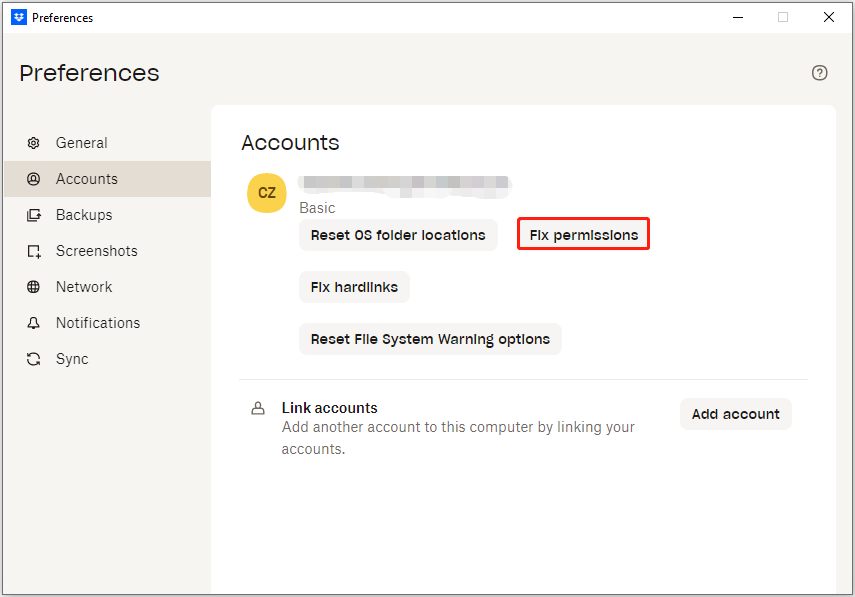
Option 1. Use the Fix Permissions button feature
- Make sure the Dropbox desktop application is running.
- Click the Dropbox icon in the taskbar.
- Click your profile picture or initials and select Preferences.
- Go to the Account tab, and then click anywhere in the window under the tab.
- Hold down the Alt key.
- Some buttons will appear. Then, find the Fix permissions button and click it.
- Enter your computer’s login credentials (not your Dropbox password) if prompted.
- Wait a few minutes to see if the sync resumes.
Option 2. Manually grant full control
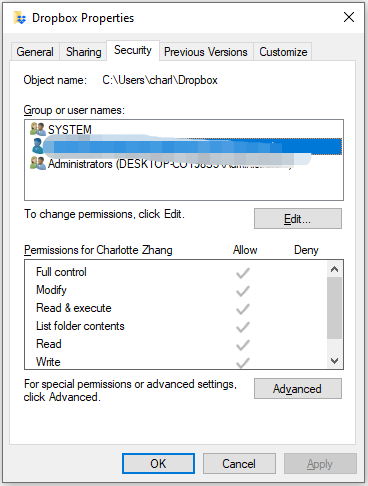
If the built-in tool doesn’t work, manual adjustment may be necessary:
- Right-click the Dropbox folder (usually in C:\Users\Username\Dropbox) and select Properties.
- Go to the Security tab and click Edit.
- Select your user account.
- Check the Allow box for Full control.
- Click Apply and OK.
Option 3. Check individual file permissions
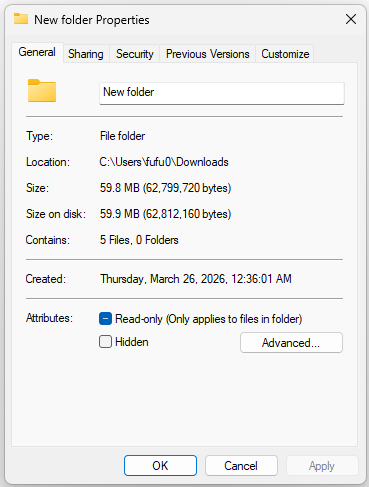
- Right-click the problematic file or folder in File Explorer and select Properties.
- In the General tab, check if the Read-only option is unchecked.
After following these steps, check the sync status of the files. A green checkmark indicates a successful sync.
Method 4. Check Dropbox Server Status
It’s important to check the Dropbox status page to see if syncing issues are due to server downtime or local problems. Here’s how to do that:
- Visit Dropbox Status to see if there’s a temporary server outage.
- If servers are down, you may need to wait until Dropbox fixes the issue.
Method 5. Move the Stuck File
Moving a stuck file out of the Dropbox folder lets the app bypass the error and sync queued files. This resolves issues with file locking, invalid characters, or corruption. Here’s how to perform that:
- Click the Dropbox icon in the Windows taskbar to identify the stuck files.
- Pause syncing from the Dropbox menu to avoid file usage errors.
- Move the stuck file to the folder outside Dropbox.
- Let Dropbox sync the remaining files. Then, the stuck status should disappear.
- Move the file back into the Dropbox folder to force re-indexing and proper syncing.
Method 6. Clear Dropbox Cache
Clearing the Dropbox cache can help free up storage space and resolve synchronization issues that the application encounters when handling files. This process is safe because it only removes temporary copies, not your actual stored files.
To clear the cache, simply locate the Dropbox cache folder, delete its contents, and restart the app. Here are the detailed steps:
Step 1. Navigate to your Dropbox cache folder:
C:\Users\<username>\Dropbox\.dropbox.cache
Step 2. Delete the files inside the cache folder.
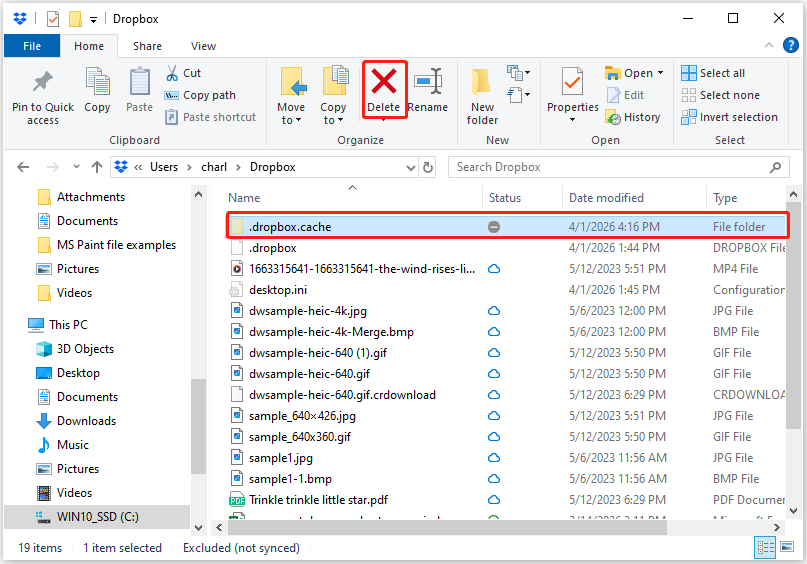
Step 3. Restart Dropbox and check if syncing works.
Method 7. Reinstall/Update Dropbox
Reinstalling or updating Dropbox can resolve syncing issues by repairing corrupted application files, fixing permission errors, and applying essential software patches.
# 1. Update Dropbox
Step 1. Go to the Dropbox website or app store.
Step 2. Download and install the latest version of Dropbox.
Step 3. Restart the app to apply updates.
# 2. Reinstall Dropbox
Step 1. Type control panel in the Search box.
Step 2. In Control Panel, select Programs and Features.
Step 3. Find Dropbox from the app list, right-click it, and select Uninstall.
Step 4. Click Yes in the UAC window. Then, choose Uninstall in the Dropbox Uninstall window.
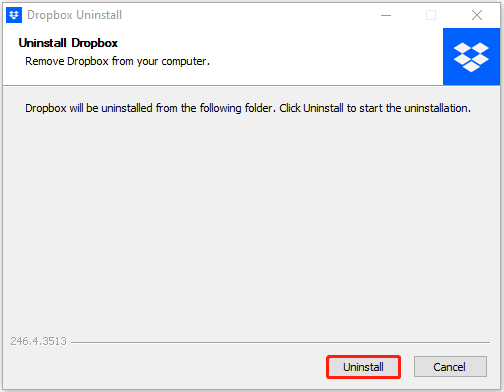
Step 5. Click Close to exit the window. Now, the Dropbox has been uninstalled successfully.
Step 6. Download the latest installer from the Dropbox website. Then, run the installer and re-link your account.
Final Words
Dropbox not syncing can be due to various reasons. To fix that, follow the methods mentioned in this post, including restarting the app, verifying the account log status, and checking the firewall/antivirus software.
Use MiniTool ShadowMaker to back up your data locally for enhanced security. If you encounter any issues with this software, feel free to contact us by sending an email to [email protected].
Dropbox Not Syncing FAQ
In contrast, synchronization is a bidirectional, real-time updating process that facilitates collaboration across devices, preserving immediate states—if a file is deleted locally, it is also deleted in the cloud.
Here’s what it means:
Keep 3 copies of your data: The primary production data and two backup copies.
Use 2 types of storage: Two different media types, such as local storage and NAS.
Maintain 2 offsite copies: One cloud storage location and one separate physical location.
It acts more as a sync service than a true backup, may use significant system resources, and offers fewer productivity tools than alternatives.
About The Author

Position: Columnist
Charlotte is a technology columnist with a strong focus on the Windows operating system, specializing in disk management, backup, and data recovery. She is passionate about analyzing computer errors, identifying root causes, and delivering practical solutions. In her free time, she stays updated on the latest developments in computer systems and hardware while continuously learning new technologies to broaden her expertise. Her writing style is clear and easy to understand, making complex technical topics accessible even to users with limited computer knowledge.
User Comments :