
If your Windows 10/11 PC is facing serious issues, you can try factory resetting it from Command Prompt. This guide from MiniTool explains how to factory reset Windows using CMD, what to prepare before resetting, and how to keep your data safe.
Quick Answer
If your Windows 10/11 PC has serious system problems or cannot work properly, you can factory reset it from Command Prompt.
The easiest way is to run the systemreset -factoryreset command, which opens the built-in Reset this PC feature. Before resetting your computer, make sure to back up important files because the process may remove apps, settings, and personal data.
Why Factory Reset Windows 10/11
A factory reset restores your Windows PC to its original state. It can help fix serious system issues, remove unwanted software, improve system performance, or prepare a computer before selling it.
However, factory reset may remove installed applications, settings, accounts, and personal files depending on the reset option you choose. Therefore, creating a backup before resetting Windows is strongly recommended.
Also read: What Does Factory Reset Do & Does Factory Reset Delete Everything
Back Up Your Data Before Factory Reset
Before factory resetting Windows, it is recommended to create a backup to avoid unexpected data loss.
MiniTool ShadowMaker is a professional backup tool that can back up files, folders, disks, partitions, and the Windows operating system. It also supports scheduled backups, incremental backups, and system image recovery.
MiniTool ShadowMaker TrialClick to Download100%Clean & Safe
Step 1: Open MiniTool ShadowMaker and click Keep Trial to continue.
Step 2: Go to the Backup page. At the beginning, the operating system is selected as the backup source by default. You can click the SOURCE module and choose Folders and Files to select the critical data you need to back up. Then click OK to continue.
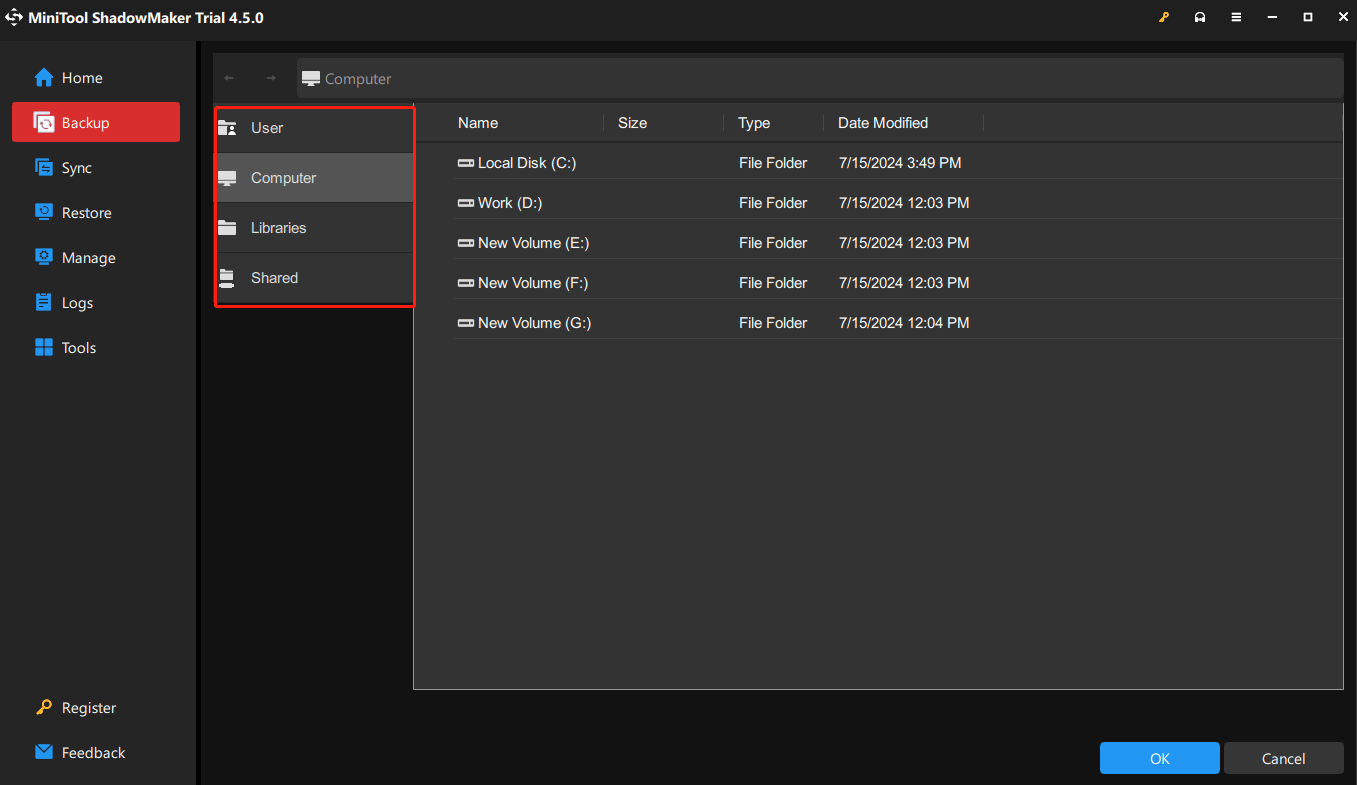
Step 3: Choose the DESTINATION module to save the backup image. MiniTool ShadowMaker supports four destination paths to be chosen (User, Computer, Libraries, and Shared). But we strongly recommend you choose an external hard drive under Computer. Then click the OK option to go on.
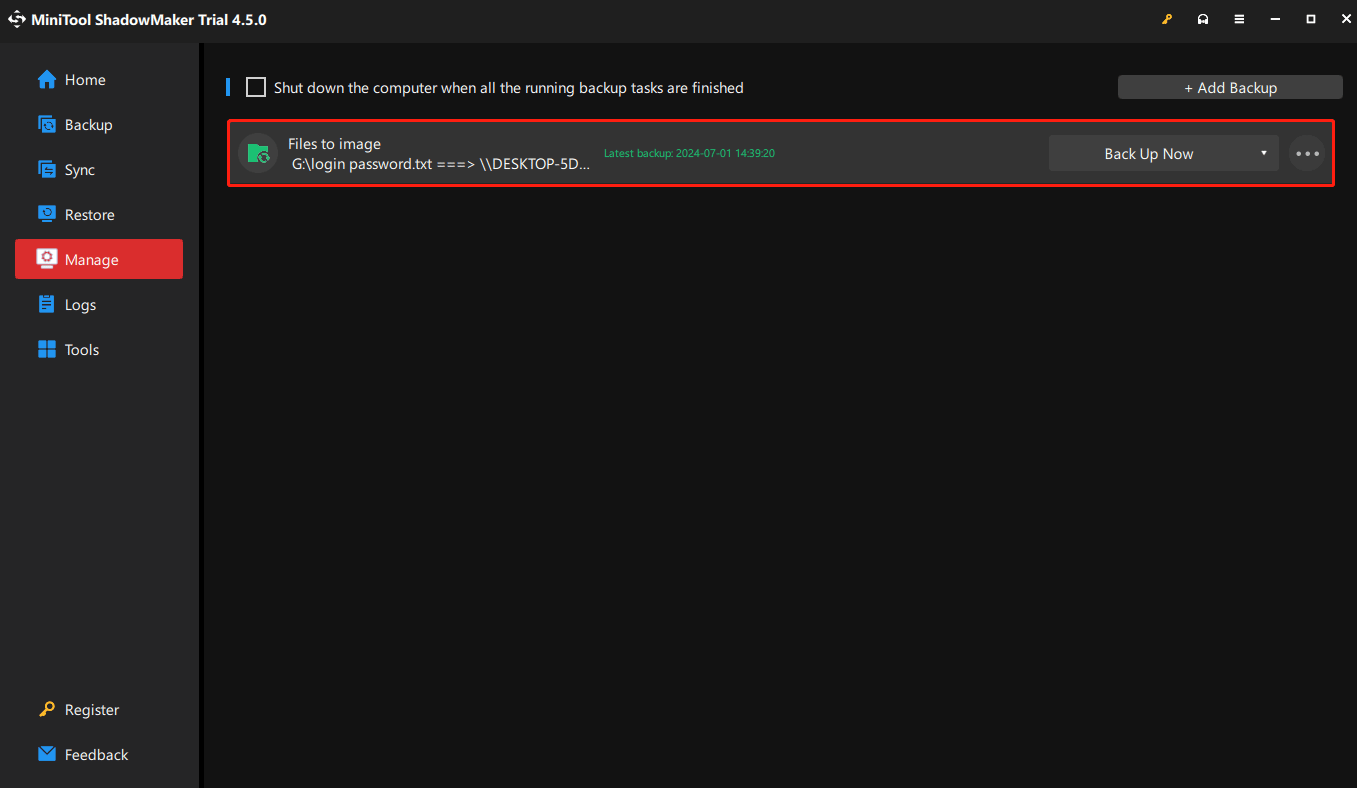
Step 4: Select Back Up Now or Back Up Later. Both of them can lead you to the Manage section, where you will see the backup progress. If you choose to back up later, you need to start the task under Manage.
How to Factory Reset Windows 10/11 Using Command Prompt
How to factory reset Windows 10 from command prompt? A factory reset can easily solve problems related to the operating system. Next, we will show you how to set the computer to the factory settings.
Take Windows 10 as an example. Note that these steps are also applicable if you want to factory reset Windows 11 from Command Prompt.
Step 1: If the computer can boot correctly, input cmd into the search box of Windows and right-click Command Prompt. Then select Run as administer. If your PC is unable to boot, restart it, long press the Power button for five to ten seconds. Repeat this twice and the third time the computer will automatically enter the Windows Recovery Environment. Then, go to Advanced Options > Troubleshoot > Command Prompt.
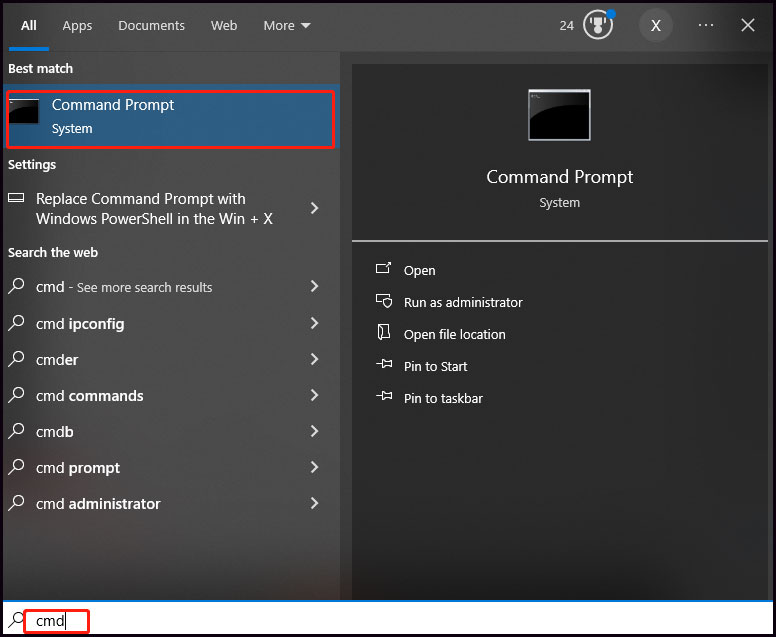
Step 2: Type systemreset -factoryreset in the Command Prompt window and hit the Enter key.
Step 3: Then you will receive a message prompt. Choose an option between Keep my files and Remove everything.
- Keep my files: It will make Windows settings back to their defaults but retain your personal files.
- Remove everything: It will erase all of your data and reset Windows to its original state.
Step 4: Choose Remove Everything as an example. Then you’ll be asked if you want to clean the drive. Select Just remove my files or Remove files and clean the drive. It is recommended to completely clean the drive if there is something wrong on your PC.
Step 5: Read what the resetting will do and click the Reset button.
Other Ways to Reset Windows 10/11
How to factory reset Windows 10 from command prompt? There are some other ways to factory reset the computer except for using Command Prompt. You can also use the built-in features of Windows such as Reset this PC and Windows 10 ISO image file. In the following part, we will show you how to perform a factory reset using the two methods. Take Windows 10 as an example.
Reset This PC
Windows 10 Reset this PC can help you reset your computer. It will keep your data if you choose the Keep my files option before resetting the computer. Look at the following step-by-step introduction.
Step 1: Go to Settings, locate Update & Security, and click it.
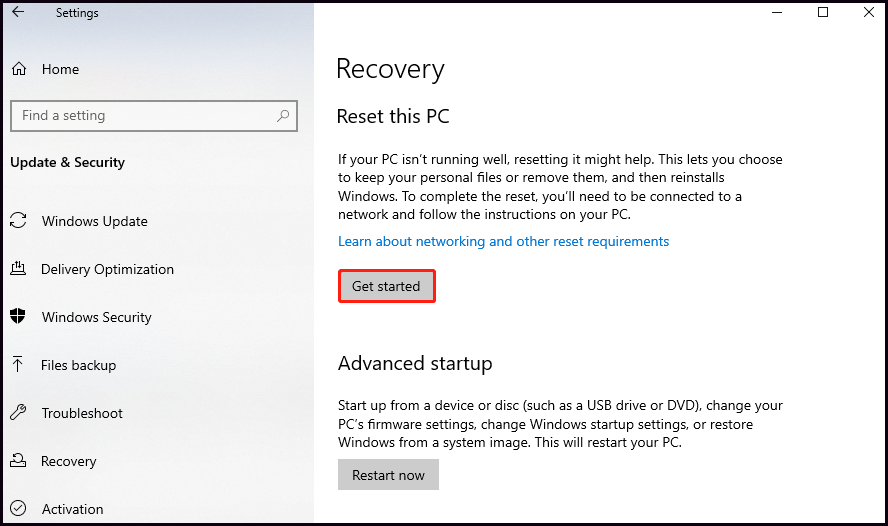
Step 2: Choose Recovery and click Get started under Reset this PC to continue.
Step 3: Choose an option of how to reset this PC and click Reset after reading the subsequent messages.
Windows 10 ISO Image File
This way can also help you finish a factory reset. You are allowed to keep your files and programs, but before continuing to the next step, you need to download the Windows 10 ISO image file (if you already have a Windows 10 ISO image file, just skip this step).
Step 1: Navigate to the Windows 10 ISO file and double-click it to continue.
Step 2: Double-click setup in the pop-up window and then click Next to go on.
Step 3: You need to wait to check for updates for a short time. Then click the Accept option when you see the license terms.
Step 4: Wait for the computer to check for updates, at the same time, make sure you get ready for the installation.
Step 5: Click Change what to keep to change the things you want to keep after the Ready to install screen appears. Then click the Next button and then Install to complete the reset.
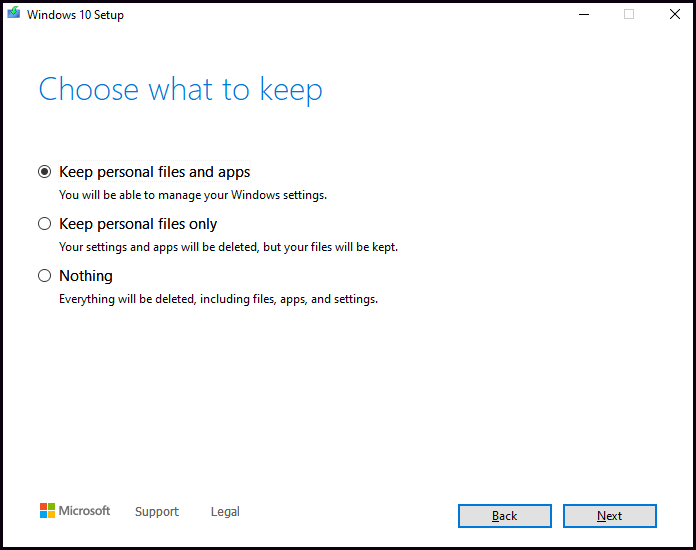
After finishing the above steps one by one, now you just need to wait for the computer to restart.
Factory Reset Windows 10 from Command Prompt FAQ
Summary
Factory resetting Windows 10/11 from the Command Prompt can help fix system issues. Use the command systemreset -factoryreset to access Windows Reset options, allowing you to keep your files or remove everything.
Before resetting, back up important files to avoid data loss. If this method fails, consider other reset options like “Reset this PC” or reinstalling Windows. For MiniTool ShadowMaker issues, email [email protected] for assistance.
About The Author

Position: Columnist
Charlotte is a technology columnist with a strong focus on the Windows operating system, specializing in disk management, backup, and data recovery. She is passionate about analyzing computer errors, identifying root causes, and delivering practical solutions. In her free time, she stays updated on the latest developments in computer systems and hardware while continuously learning new technologies to broaden her expertise. Her writing style is clear and easy to understand, making complex technical topics accessible even to users with limited computer knowledge.
User Comments :