
Quick Answer
Microsoft Surface black screen issues usually occur due to battery problems, display driver errors, firmware glitches, Windows update conflicts, or hardware faults.
To fix this issue:
- Force restarts the device
- Charge the battery
- Disconnect all accessories
- Try hot keys
- Test an external display
- Boot into Safe Mode
- Reset Your Surface via USB Recovery Image
If the Surface still does not turn on, recover important files before performing advanced repairs.
Common Symptoms of Microsoft Surface Black Screen
Microsoft Surface black screen issues do not always look the same. Common symptoms include:
- Microsoft Surface screen black but keyboard lights up
- Microsoft Surface black screen with cursor
- Microsoft Surface black screen with cursor
- Microsoft Surface stuck on Microsoft logo
- Microsoft Surface turns on but display remains blank
- Microsoft Surface screen randomly goes black
- Microsoft Surface black screen after Windows update
- Microsoft Surface screen flickers before turning black
Identifying the symptom helps narrow down the cause and choose the correct fix.
Why Is My Microsoft Surface Screen Black?
Several software and hardware issues can cause the Microsoft Surface black screen of death issue.
| Possible Cause | Description |
| Battery or power problems | The device does not receive enough power. |
| Corrupted Windows updates | System files become damaged. |
| Sleep mode bugs | Surface cannot wake the display correctly. |
| Display driver issues | Graphics drivers fail after updates or crashes |
| External device conflicts | The display output is misconfigured with external devices. |
| Hardware damage | Screen, motherboard, or cable problems. |
How to Fix Surface Black Screen Issues
We can never promise 100% success but these methods are effective in many instances. Try them one by one when your Surface Pro 7 screen goes black randomly or the issue of black screen appears on any Surface device.
Fix 1. Disconnect All Accessories
This is the first thing you can do to check if connected peripheral devices may be blocking your Microsoft Surface from turning on as normal.
Disconnect any devices that have been plugged into your Surface, including a mouse, keyboard, external hard drive, Surface Dock, etc. Then, power on the Microsoft Surface to see if the black screen disappears. If yes, chances are that one of the accessories is the issue. You can connect them to the Surface one by one to check which one is at fault. If this won’t work, try the other ways below.
Fix 2. Charge the Device Properly
If you are using a device for a while without plugging in, the battery may run out of power. As a result, Microsoft Surface black screen appears. Use the power cord that came with your Surface to charge your device. Next, turn on a Microsoft Surface laptop to see if the issue is solved.
If the Surface charging light does not go on, your charger may go wrong, and change one to connect it to your laptop and the power source.
Fix 3. Try Hot Keys
Your Surface may go to sleep and refuses to wake up, so you meet the issue of Microsoft Surface screen black but keyboard lights up. Don’t worry and you can do something about it.

If a keyboard is connected to your Microsoft Surface, press Windows + Ctrl + Shift + B at the same time. But if you use it in tablet mode, quickly and simultaneously press the Volume up and Volume down buttons three times. If you are lucky enough, you can hear a short beep and the system will refresh the screen after a few seconds.
If this cannot fix Microsoft Surface Pro black screen, try the next solutions.
Fix 4. Do a Forced Reset
This is a very effective way to fix Microsoft Surface black screen of death. See how to do a forced reset for Surface Pro:
- Press and hold the Power button on your Surface for 30 seconds and then release it.
- Press and hold the Volume up and Power buttons at the same for at least 15 seconds and release them.
- The Surface logo may flash on the screen. You need to hold these two buttons down for at least 15 seconds.
- Wait 10 seconds after releasing buttons.
- Press the Power button to reopen Surface and you can see the Surface logo.
This way is only recommended for Surface Pro models. If you are using Surface 2, Surface 3, or other models, press and hold the Power button for about 10 seconds until the screen turns off, then release the button. Next, turn your Surface back on by pressing the Power button, and then you should see the Surface logo.
If the issue of Microsoft Surface black screen with logo still appears after these methods, you can try to reset the Surface using USB Recovery Image. See how to do this task.
Fix 5. Connect an External Monitor
An external display helps determine whether the issue is related to the screen itself. Here are the steps:
Step 1. Connect your Surface to an external monitor or TV.
Step 2. Press Win + P to open the Project menu.
Step 3. Keep pressing P (while holding the Windows key) to cycle through the options:
- Duplicate
- Extend
Step 4. If the external monitor works, there may be an issue with the display driver or LCD. If it doesn’t work, it could indicate a system or hardware problem.
Fix 6. Start Surface in Safe Mode
Safe Mode loads Windows with only essential components. Therefore, start Surface in Safe Mode to fix the issue.
Step 1. Boot into the Windows Recovery Environment.
Step 2. Select Troubleshoot > Advanced options > Startup Settings > Restart.
Step 3. Press the number 4 or F4 to select Safe Mode.
If the screen works in Safe Mode, software conflicts are likely to be to blame. Identify and remove the culprit. If it doesn’t work in Safe Mode, try using Startup Repair to fix corrupted boot files.
Step 1. Enter the recovery environment
Step 2. Select Troubleshoot > Advanced Options > Startup Repair.
Step 3. Allow Windows to scan and repair startup problems.
Fix 7. Reset Your Surface via USB Recovery Image
This way can help to reset the laptop to its factory settings. But you should know that all the data on your Surface will be deleted. Thus, this is the last method you should use. If you haven’t backed up your PC, now get important files to have a backup.
Back up Important Data Before Surface Resetting
How to back up files when the issue of Microsoft Surface black screen happens? It is easy as long as you run a professional and free backup software. Here, we strongly recommend using MiniTool ShadowMaker. It allows you to get a bootable edition using Media Builder to back up and restore the PC when the machine fails to load to the desktop.
Just click the following button to get MiniTool ShadowMaker and install it on a normal PC. Then, create a bootable USB drive/disc and boot the Surface with a black screen from the created bootable medium to enter the MiniTool recovery environment. Then, start a backup.
MiniTool ShadowMaker TrialClick to Download100%Clean & Safe
Step 1: Launch MiniTool ShadowMaker and go to the Backup page.
Step 2: Click Source > Folders and Files, check all the items you want to back up, and click OK.

Step 3: Click Destination to choose an external hard drive or USB drive as the storage path.
Step 4: Click Back up Now to execute the data backup task.
If you use the Backup feature for backup, you need to perform image recovery to use files in it after resetting your Surface. If you want to directly use data without recovery, you can use the Sync feature to run a backup. To know more information about these two functions, refer to this post - Backup vs Sync: What Are the Differences Between Them.
After getting your vital data from the hard drive, now you can take action to reset the Microsoft Surface to default settings.
Surface Resetting
To reset your laptop when meeting Microsoft Surface Pro black screen, you need to use a recovery drive for this work. What if you don’t have such a drive? See the following instructions:
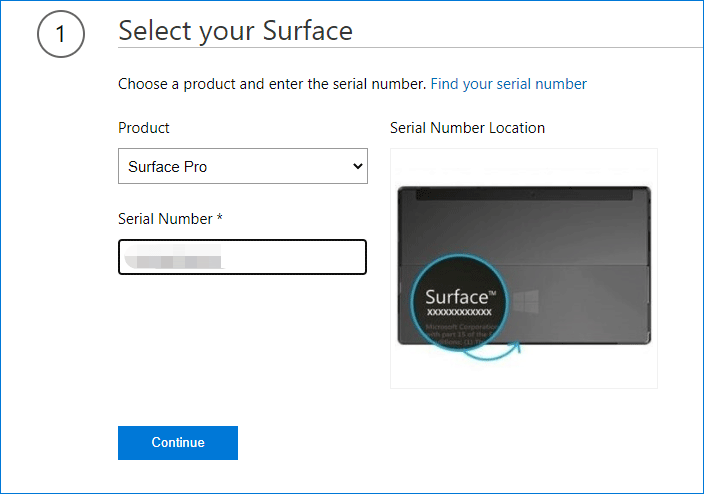
Step 1: Visit the page of Surface Recovery Image Download.
Step 2: Choose a Surface product and enter the serial number, then click Continue.
Step 3: Download a recovery image and save it to a safe location.
Step 4: Insert your USB flash drive to a PC and extract all the contents from the download recovery image to this USB drive to get a recovery drive.
Step 5: Shut down your Surface and connect the recovery drive to it.
Step 6: Press and hold the Volume-down (-) button and press the Power button.
Step 7: Release the Volume-down button when you see the Surface logo.
Step 8: Surface can start the recovery software on the USB recovery drive. Choose the language and keyboard layout to go on.
Step 9: Choose Troubleshoot > Recover from a drive. Then, finish the resetting process by following the on-screen wizards.
In addition, there are some other ways to reset the Surface. To know more details, refer to our previous post - How to Reset a Surface Pro? Try 3 Simple Ways for Factory Reset.
If all of these ways cannot help you to solve Microsoft Surface black screen with cursor/logo, perhaps there is something wrong with the hardware. Just seek professional help.
![[Solved] Surface Pro Won’t Turn on or Wake up from Sleep](https://images.minitool.com/minitool.com/images/uploads/2020/01/surface-pro-wont-turn-on-thumbnail.jpg)
How to Recover Data from Microsoft Surface with Black Screen
If the Surface still does not start after troubleshooting, recovering important files should become the next priority before performing more extensive repairs.
MiniTool Power Data Recovery can scan inaccessible drives and recover documents, images, videos, and other files from damaged or unbootable systems.
To recover data from a black screen, you need to obtain the Bootable Edition. Visit the MiniTool Store to choose the appropriate edition and then create a bootable USB drive. Boot your Surface device from this drive, and you can begin the data recovery process.
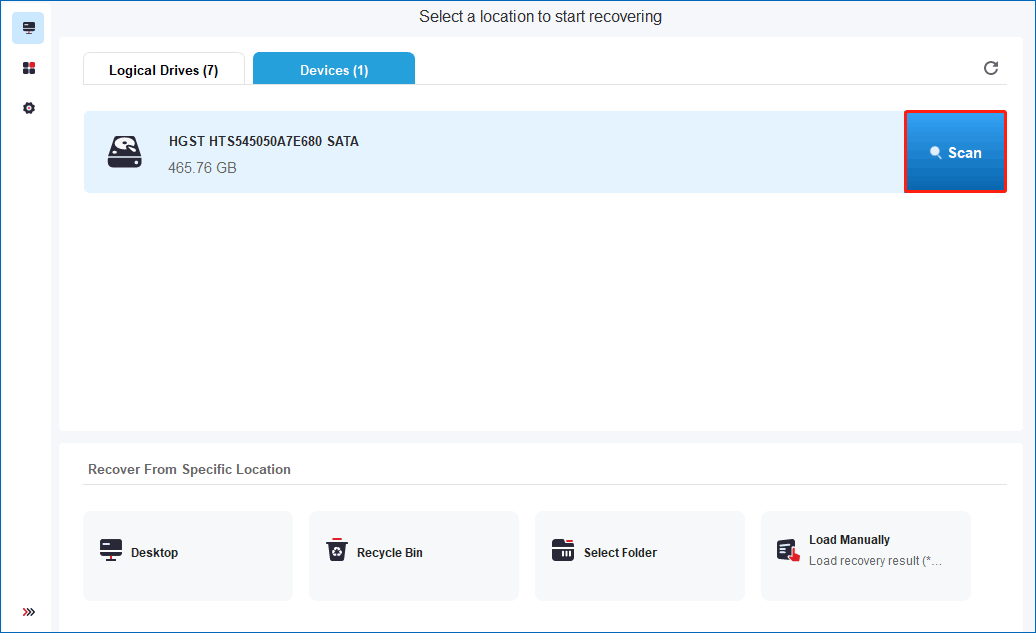
Step 1: Open MiniTool Power Data Recovery to its main interface.
Step 2: Under the Devices tab, choose the hard drive that includes your important files and click the Scan button to start a scan.
Step 3: The scan time varies based on the number of files. Wait patiently.
Step 4: After finishing the scan, choose the files you need and click the Save button. Usually, you can save data to your external hard drive.
Now, you succeed in recovering existing, lost, or deleted data from Microsoft Surface with the black screen issue.
How to Prevent Surface Black Screen Issues
You can reduce the chance of future black screen problems by following several maintenance practices:
- Keep Windows and firmware updated
- Avoid sudden shutdowns
- Monitor battery health
- Disconnect unnecessary accessories
- Create scheduled backups regularly
MiniTool ShadowMaker supports automatic backups, incremental backups, and system image creation to help protect important files.
MiniTool ShadowMaker TrialClick to Download100%Clean & Safe
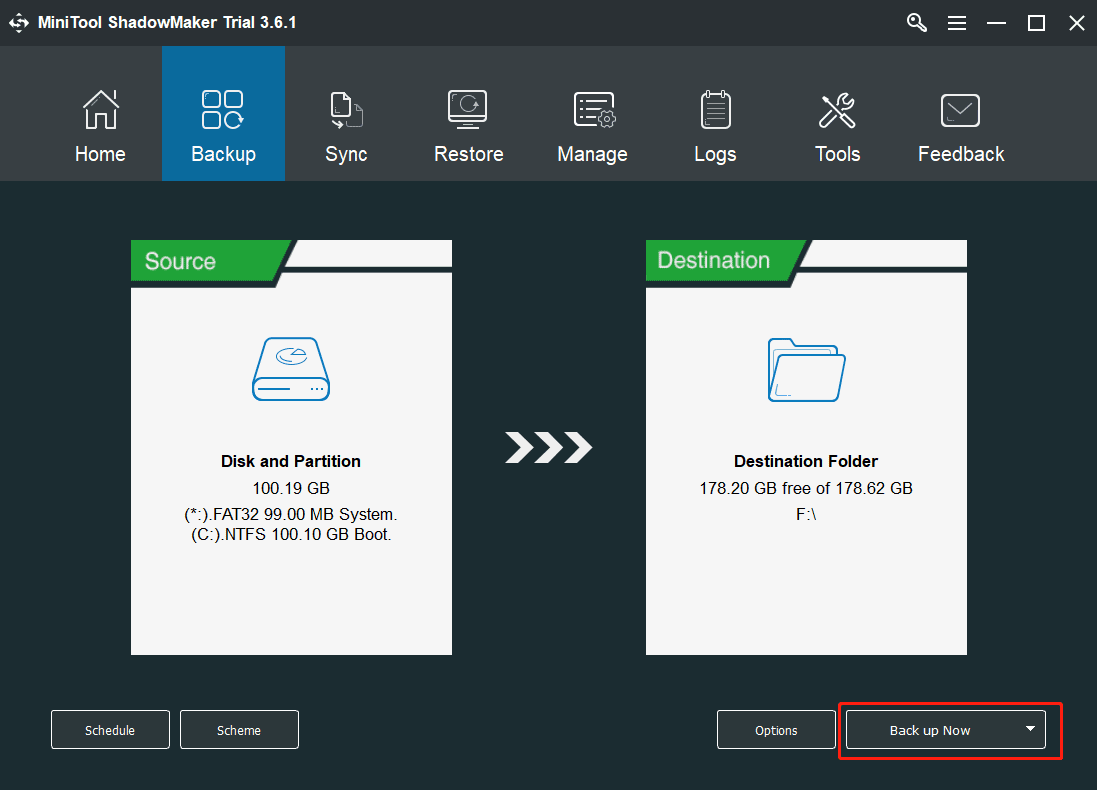
Step 1: Launch MiniTool ShadowMaker Trial Edition on your Surface and click Keep Trial to continue. This edition allows you to free use all the features for 30 days.
Step 2: In the Backup tab, system partitions and a destination path are selected. If you want to change a path for an image file, click Destination to select one. You just need to click Back up Now to start the system backup.
Microsoft Surface Black Screen FAQ
Bottom Line
That concludes our guide on fixing the Microsoft Surface black screen issue. If your device is experiencing this problem, try the solutions outlined above.
To protect your important data, take immediate action to back up your current files, recover lost data, and create a system image for future recovery.
If you have questions or feedback regarding MiniTool software, please email us at [email protected]. Did you find another way to fix a Surface Pro stuck on a black screen with a logo or cursor? Let us know in the comments below! Thank you.
About The Author

Position: Columnist
Charlotte is a technology columnist with a strong focus on the Windows operating system, specializing in disk management, backup, and data recovery. She is passionate about analyzing computer errors, identifying root causes, and delivering practical solutions. In her free time, she stays updated on the latest developments in computer systems and hardware while continuously learning new technologies to broaden her expertise. Her writing style is clear and easy to understand, making complex technical topics accessible even to users with limited computer knowledge.
User Comments :