
Quick Answer:
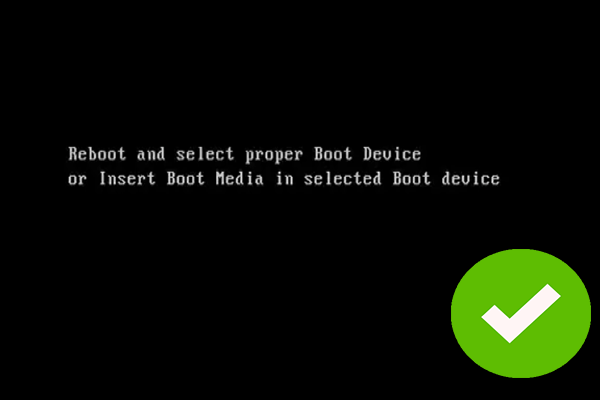
If your Windows 10/11 PC is stuck on the loading screen with spinning dots, a black screen, or a loading circle, it is usually caused by corrupted boot files, failed Windows updates, driver issues, or incorrect BIOS settings.
To fix it, try these solutions in order:
- Unplug the USB Dongle
- Check the Boot Order
- Uninstall Recent System Updates
- Enter Safe Mode
- Run Startup Repair
- Repair Master Boot Record
- Do System Restore
- Clear CMOS Memory
- Replace CMOS Battery
- Check Computer RAM
- Clean Reinstall Windows 10/11
Why Is Windows 10/11 Stuck on the Loading Screen
Windows may freeze on the loading screen for several reasons, including:
- Failed Windows updates
- Corrupted Master Boot Record (MBR)
- Damaged system files
- Driver issues, especially GPU drivers
- Incorrect BIOS/UEFI settings
- Faulty RAM or storage devices
- External USB devices interfering with boot
Common symptoms include:
- Black screen with loading circle
- Windows boots to a black screen
- PC stuck before the login screen
- Windows stuck on spinning dots
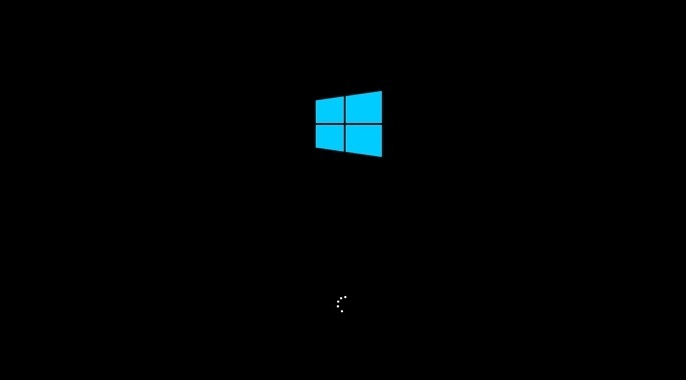
This issue often occurs after a Windows update, driver installation, unexpected shutdown, or BIOS change.
If Needed: Recover Files Without Loading Windows
If your PC contains important data and Windows cannot boot normally, recover files before performing advanced repairs or reinstalling Windows.
You can:
- Use a bootable media to rescue files
- Use Command Prompt and Notepad to copy files
Method 1. Use Bootable Data Recovery Media
Before starting, prepare:
- A working computer
- A USB flash drive that does not contain important files
Professional data recovery software can help recover files from an unbootable computer. Some of them provide a bootable recovery environment that allows you to access files even when Windows cannot start normally.
For example, MiniTool Partition Wizard supports creating bootable recovery media to rescue files from PCs stuck on the loading screen.
MiniTool Partition Wizard FreeClick to Download100%Clean & Safe
Process 1. Create a bootable USB drive.
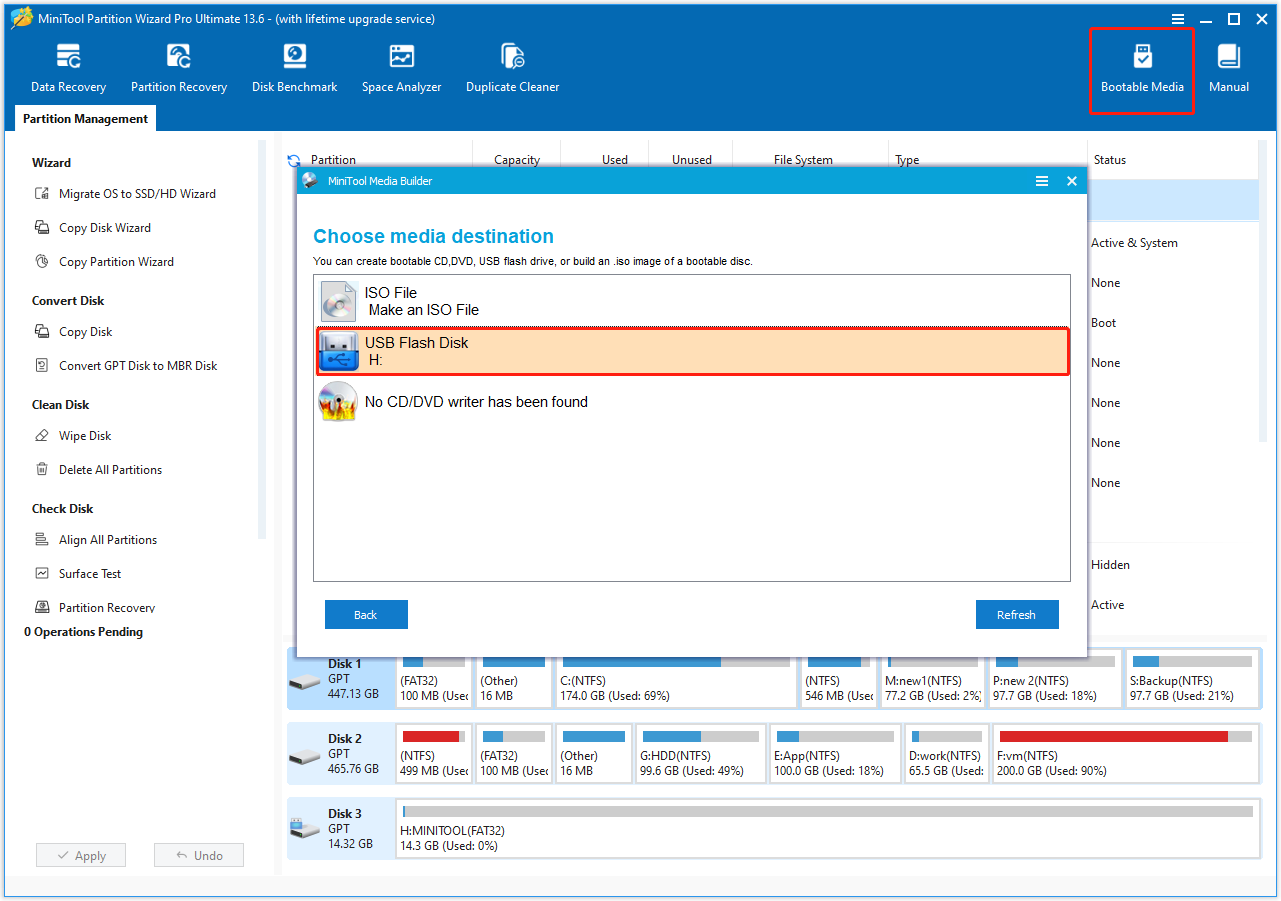
Step 1. On the working computer, launch MiniTool Partition Wizard and click Bootable Media. Then choose WinPE-based media with MiniTool plug-in.
Step 2. Connect a blank USB drive to your computer, then select it as the media destination.
Process 2. Start your computer from the bootable disk.
Step 1. Remove the bootable drive from the working PC and connect it to the problematic computer.
Step 2. Enter BIOS and set the USB drive as the first boot device, and boot from it.
Step 3. Follow the on-screen instructions to launch MiniTool Partition Wizard.
Process 3. Recover files.
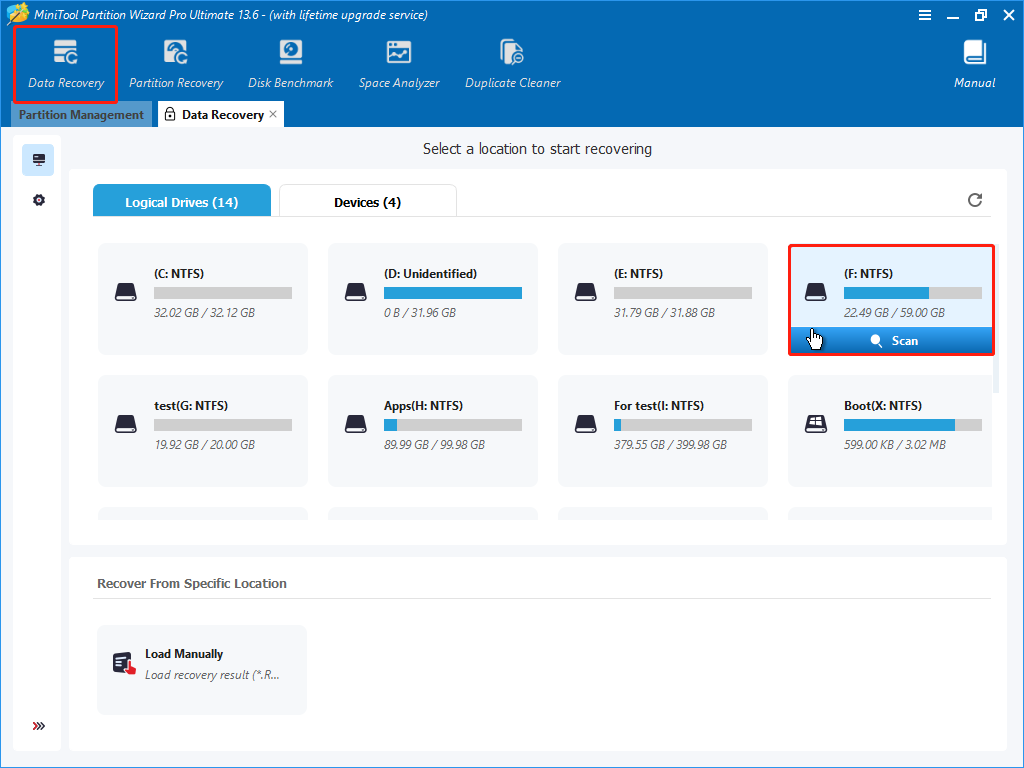
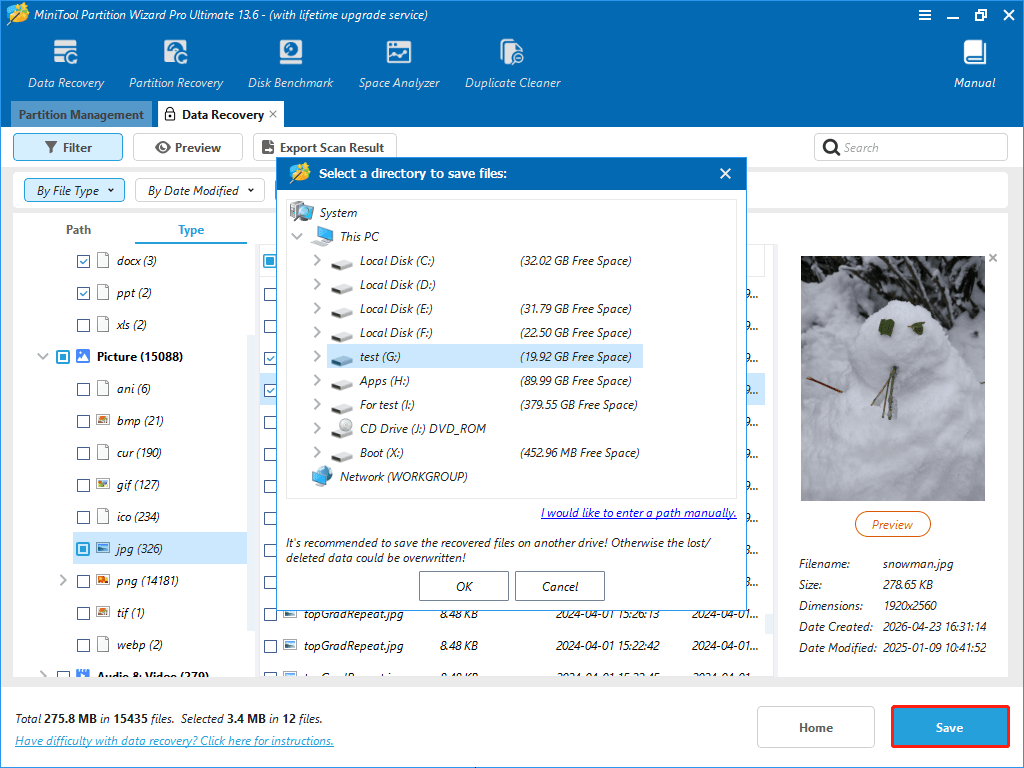
Step 1. On the main interface of MiniTool Partition Wizard, click Data Recovery, then select the drive from which you need to recover files and click Scan.
Since system reinstallation removes files from the system drive, I select the system partition to scan. Note that the system partition may not appear as C: in WinPE.
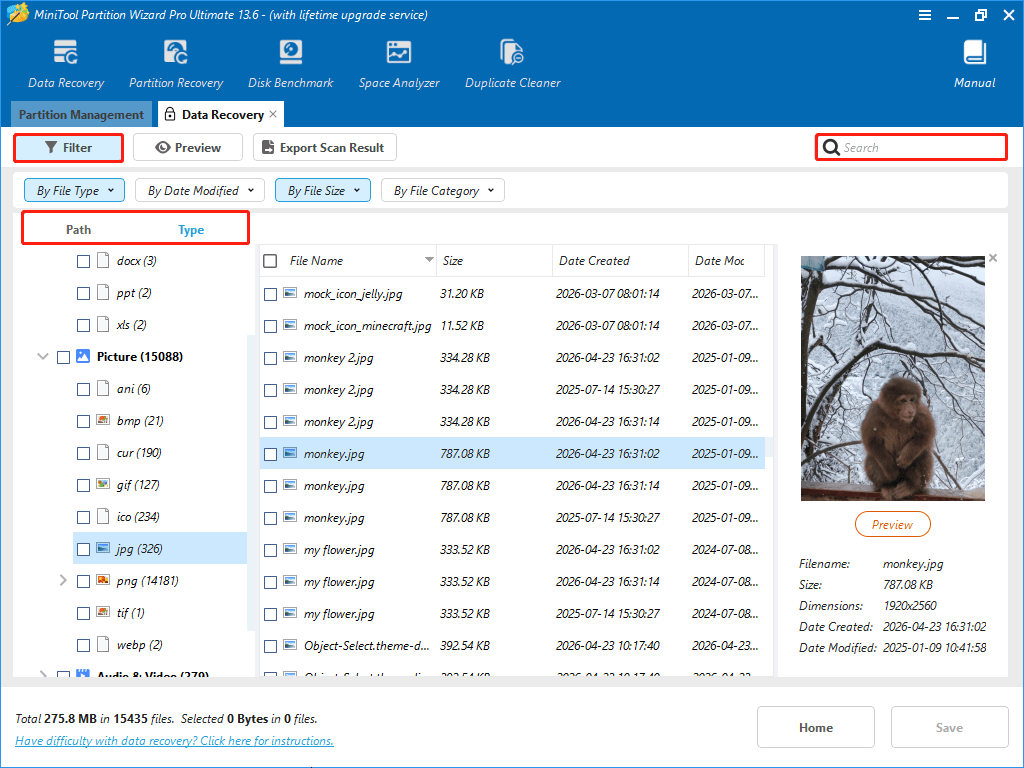
Step 2. After scanning, find and preview the found files, and select the files you want to recover.
- Path: Displays files by their original file location.
- Type: Categorizes files by file type, such as documents, pictures, videos, or archives.
- Filter: Filters files according to file type, modification date, size, and category.
- Search: Enter a file name to search for specific files quickly.
Step 3. Save recovered files to the USB drive or a network location.
Method 2. Use Notepad to Copy Files Without Booting Windows
Windows allows you to recover files without booting into the operating system by using the Notepad tool in the Windows Recovery Environment (WinRE).
Step 1. Connect a removable drive to store recovered files.
Step 2. Boot the problematic PC to WinRE. Then click Troubleshoot > Advanced options > Command Prompt.
Step 3. Type notepad and press Enter.
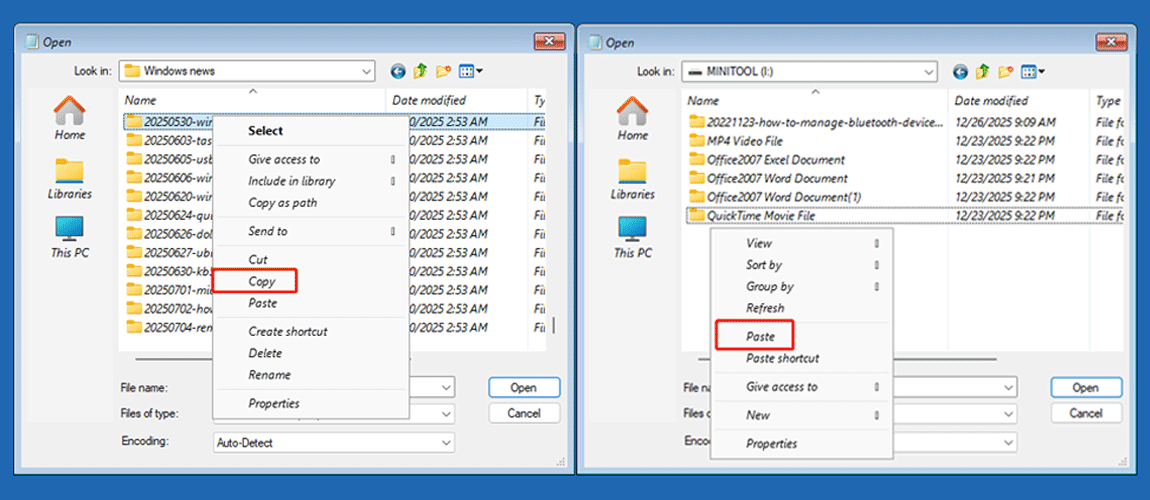
Step 4. Click File > Open > This PC.
Step 5. Select the files you want to recover, right-click, and copy them.
Step 6. Navigate to This PC and paste the copied files to the removable disk. Repeat this process until all important files are copied.
After recovering important data, you can continue troubleshooting the frozen loading screen safely.
How to Fix Windows Stuck on Loading Screen
Method 1: Unplug the USB Dongle
Applies to: Windows stuck after connecting new USB hardware.
If Windows is stuck on the loading screen, try disconnecting all the unnecessary USB dongles. Here, a USB dongle means the device that is connected to your computer with a USB cable, including
- USB flash drives
- External hard drives
- SD card readers
- Wireless mouse receivers
Method 2: Check the Boot Order
Applies to: PC boots to a black screen after BIOS reset or hardware changes.
Incorrect boot priority may cause the PC to load the wrong device. Enter BIOS and verify that the system drive is the first boot device.
If not, use the arrow keys on your keyboard to set it as the first boot drive.
Method 3: Uninstall Recent System Updates
Applies to: Computer stuck on loading screen after system updates.
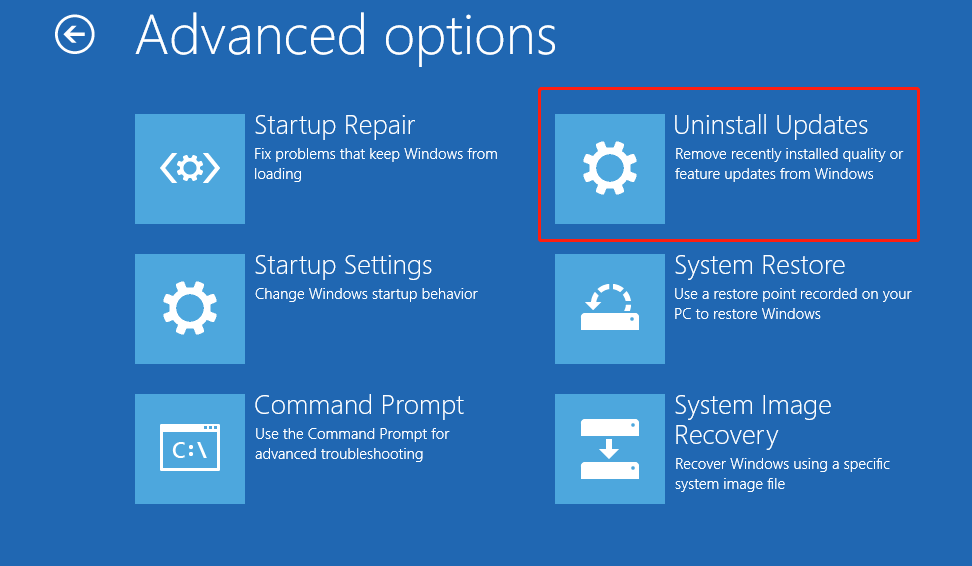
A failed Windows update may corrupt startup files and cause your PC to get stuck on the loading screen. You can uninstall recent updates from the WinRE without booting the system normally.
Restart the PC and repeatedly press F8, F9, F12, or the recovery key specified by your computer manufacturer before Windows starts loading to enter WinRE.
Select Troubleshoot > Advanced options > Uninstall Updates, and then uninstall the recently installed updates.
Method 4: Enter Safe Mode
Applies to: Driver conflicts or software-related boot issues.
Safe Mode loads Windows with minimal drivers and services, eliminating conflicts from corrupted device drivers or other reasons.
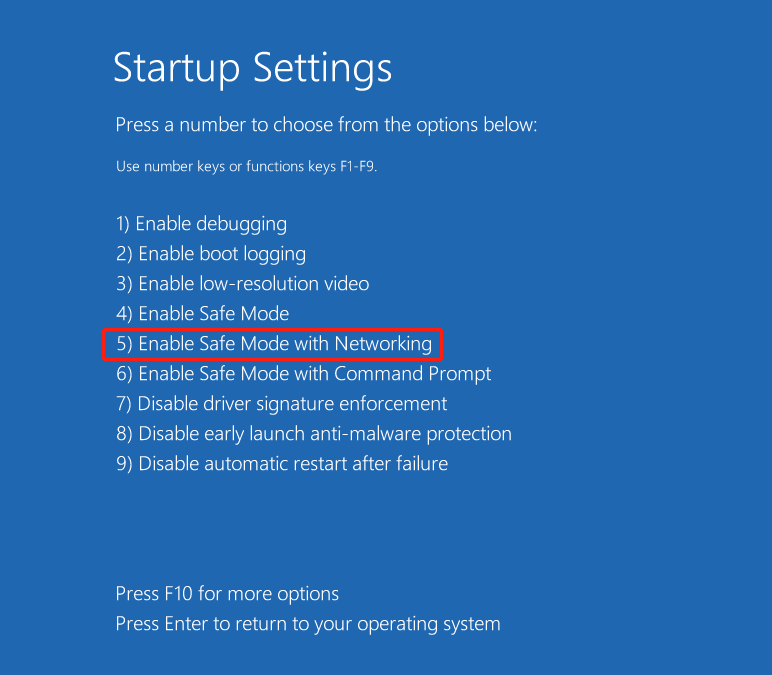
In WinRE, click Troubleshoot > Advanced options > Startup Settings > Restart.
Then press F5 on your keyboard to enable Safe Mode with Networking.
In Safe Mode, you can:
Method 5: Run Startup Repair
Applies to: Corrupted boot files or failed startup configuration.
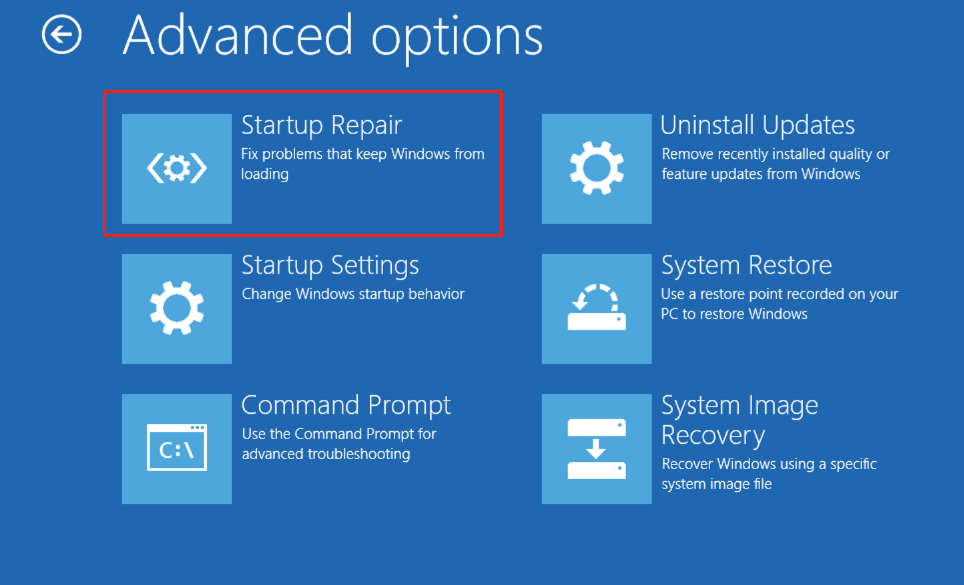
Startup Repair is a built-in repair tool that can automatically detect and fix boot problems. You can run it from WinRE:
Click Troubleshoot > Advanced options > Startup Repair.
Windows will attempt to repair startup files automatically.
Method 6: Repair Master Boot Record
Applies to: Windows stuck on black loading screen after boot corruption.
Corrupted boot records can prevent Windows from loading. In WinRE, click Troubleshoot > Advanced options > Command Prompt to open the command-line tool, then run the following commands:
- bootrec /fixmbr
- bootrec /fixboot
- bootrec /rebuildbcd
Once the commands are executed, restart your PC and check if it boots normally.
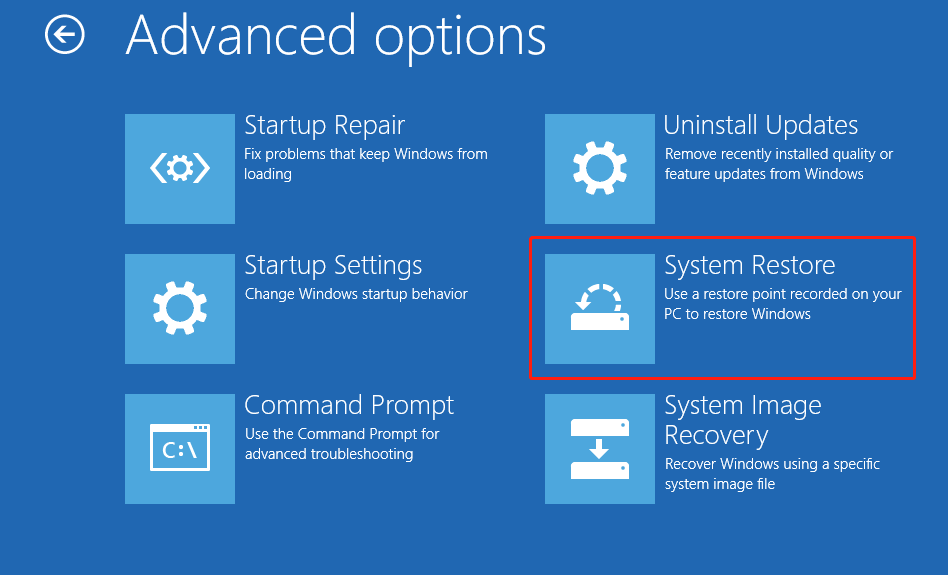
Method 7: Do System Restore
Applies to: Problems caused by updates, drivers, or configuration changes.
If the above methods can’t fix the issue, you can also do a System Restore, which will take your computer back to a previous working state.
In WinRE, click Troubleshoot > Advanced options > System Restore. Then choose a restore point created before the frozen loading screen started.
Method 8: Clear CMOS Memory
Applies to: Boot failures after BIOS changes or overclocking.
Misconfiguration of the BIOS may be the cause of Windows 10 freezing on loading screen. So you can clear the BIOS memory on the computer motherboard, which can return the BIOS settings to the factory settings.
Refer to the Intel guide for instructions on how to clear the CMOS to reset the BIOS settings.
Method 9: Replace CMOS Battery
Applies to: Older desktops with recurring boot issues.
If your computer has been used for more than three years, you should consider replacing the CMOS battery. Real cases are showing that if the CMOS battery is powered off for an extended period of time, the “Windows 10 hangs at loading screen” issue may happen when you boot your computer.
Method 10: Check Computer RAM
Applies to: Random startup loops or unstable boot behavior.
The “PC stuck on boot screen” issue may also happen if the computer RAM is loose. Under these circumstances, you should cut off the power to your computer, open the computer case, and reinstall the RAM.
After that, you can restart your computer to check whether it can boot normally.
Method 11: Clean Reinstall Windows 10/11
Applies to: Severe system corruption or unrecoverable boot issues.
If all of the above methods are unavailable to solve the frozen loading screen, consider performing a clean reinstallation of Windows.
A clean installation removes corrupted system files, deletes all personal files, and restores Windows to a fresh state.
Refer to the Microsoft Windows clean installation guide for detailed instructions.
Bottom Line
To sum up, Windows 10/11 stuck on the loading screen is usually related to corrupted boot files, failed updates, driver conflicts, BIOS misconfiguration, or hardware issues.
In most cases, the problem can be fixed with Safe Mode, Startup Repair, bootloader repair, System Restore, or hardware checks.
In addition, you can leave your related questions in the comment zone. Meanwhile, if you have your own ideas and suggestions, you can also share them with us or send an email to [email protected].
About The Author

Position: Columnist
Shirley holds a bachelor’s degree in English and has been an editor at the MiniTool Team for many years. She specializes in IT-related content, with a focus on data recovery, file backup, disk management, and other technical topics. She is committed to delivering clear, accurate, and practical solutions to help users resolve common computer issues.
User Comments :