
Error: .exe Has Stopped Working
“.Exe” is the abbreviation for “executable file”, a file type in the Windows system, indicating installed programs or applications. When you double-click it, it will automatically execute and run.
Each Windows application, installed program, and downloaded game has an “.exe” component, which is the main program file. However, when a program stops running or suddenly closes, you may receive an error message saying “exe has stopped working”.
There are a lot of causes that may lead to this exe error, such as (but not limited to):
- Malware Attack
- Corrupted System Files
- Issues with Compatibility Files
- Problems with Temporary Files
- Outdated Driver
- More.
Fortunately, you can take the following measures to diagnose and solve this problem:
How to Fix .Exe Stopped Working on Windows 10/11?
Solution 1: Restart the Faulty Programs/Your PC
Insufficient system resources might potentially cause the .exe file to stop running. You can close all the processes running in the background to free up more resources and then relaunch the faulty software.
To do so:
Step 1. Press Ctrl + Alt + Delete and choose Task Manager.
Step 2. In the Processes tab, click on the background programs and click End task to stop them one by one, including the troubled one.
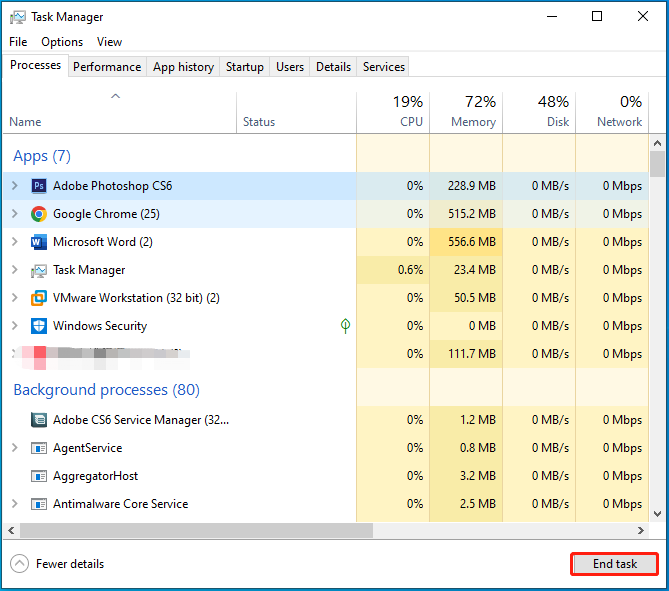
Step 3. Reopen the specific app and see if it still throws you the error message.
If yes, you can also try restarting your PC and launching the app again.
Solution 2: Execute the App in Compatibility Mode
Some programs originally designed to run on older versions of Windows may not function well on the latest version of Windows. Therefore, you can choose a specific version of the Windows system to run the program.
Let’s see how to set the application to run in compatibility mode.
Step 1. In Desktop, right-click on the program icon and select Properties from the drop-down menu.
Step 2. Go to the Compatibility tab > check Run this compatibility mode for > click the down icon to select the specific version > hit OK.
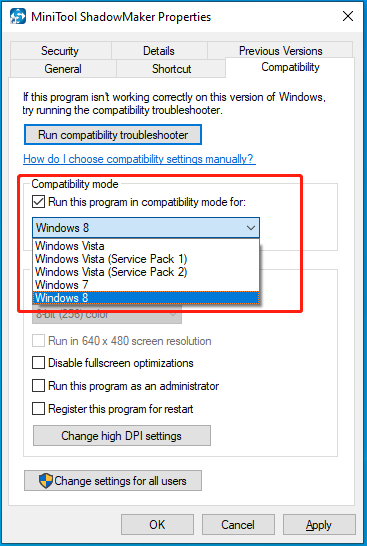
Now you can open the problematic application to see if it goes well.
Solution 3: Run the Program as Administrator
You can try to run the program in administrative mode. This will enable the application to obtain special permissions. Without any restrictions, the app will perform better and respond more quickly.
Here’s how to run the problematic app as an administrator:
Step 1. Right-click the faulty app icon and select Properties.
Step 2. Navigate to the Compatibility tab > tick Run this program as an administrator in the Settings section.
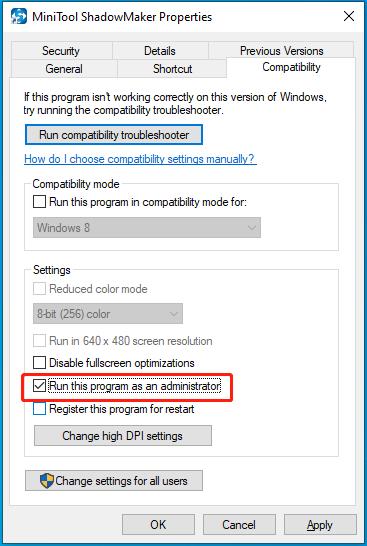
Step 3. Then click on OK to save the changes.
Open the program and test if it works normally.
Solution 4: Configure Data Execution Prevention Settings
Data Execution Protection (DEP) can protect your computer from viruses and other security threats. However, it might also be the underlying cause of executable files not functioning properly. To solve this problem, you need to manually change the DEP settings.
Here are the steps:
Step 1. In the Search bar, type Control Panel and hit Enter.
Step 2. Click the down icon beside View by in the top right corner > set to Category > choose System and Security > System.
Step 3. Locate Advanced system settings in the right pane.
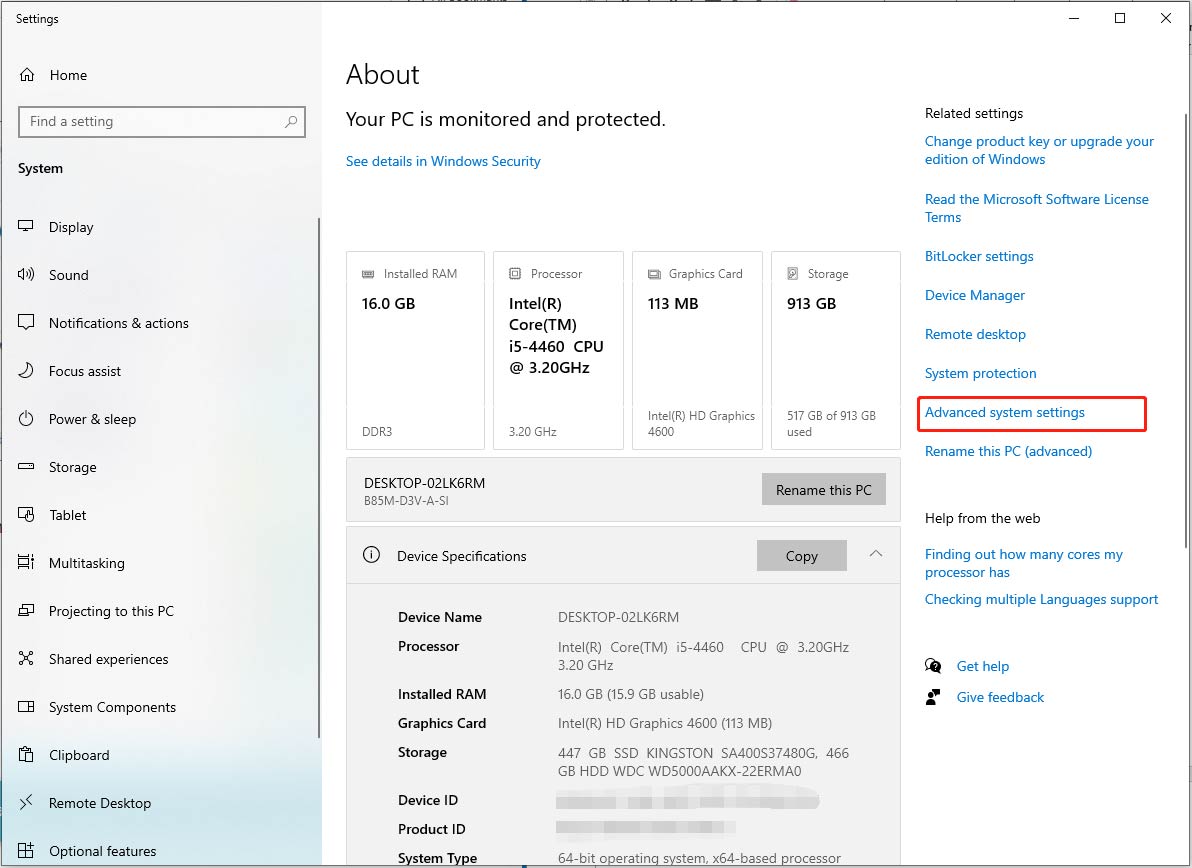
Step 4. In the System Properties window, select the Advanced tab > hit Settings from the Performance tab.
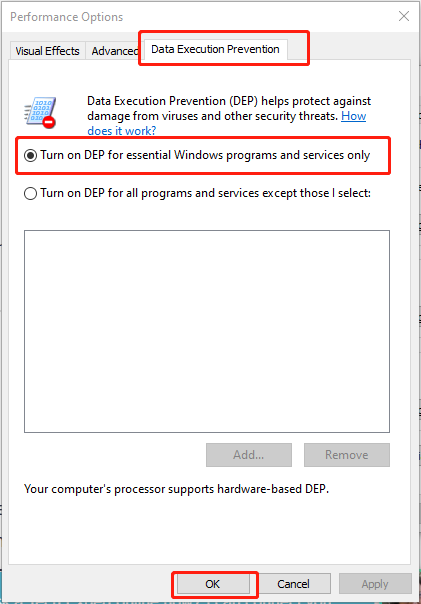
Step 5. In Performance Options, choose the Data Execution Prevention tab > select Turn on DEP for essential Windows programs and services only > click OK to apply the settings.
Now go to your program and see if the error is gone.
Solution 5: Delete Temporary Files
In some cases, such as when the computer suddenly restarts or a program is unexpectedly closed, temporary files may remain in the system. These unremoved files will occupy disk space.
When running an .exe file, the system may attempt to access certain resources or paths that have been occupied by temporary files. This can cause the program to fail to start properly or result in error messages like “exe has stopped working”.
This way, deleting temporary files is necessary. Let’s see how to do that:
Step 1. Press Win + I to bring up Settings.
Step 2. Choose System > Storage and then wait for the system to detect how much storage is used.
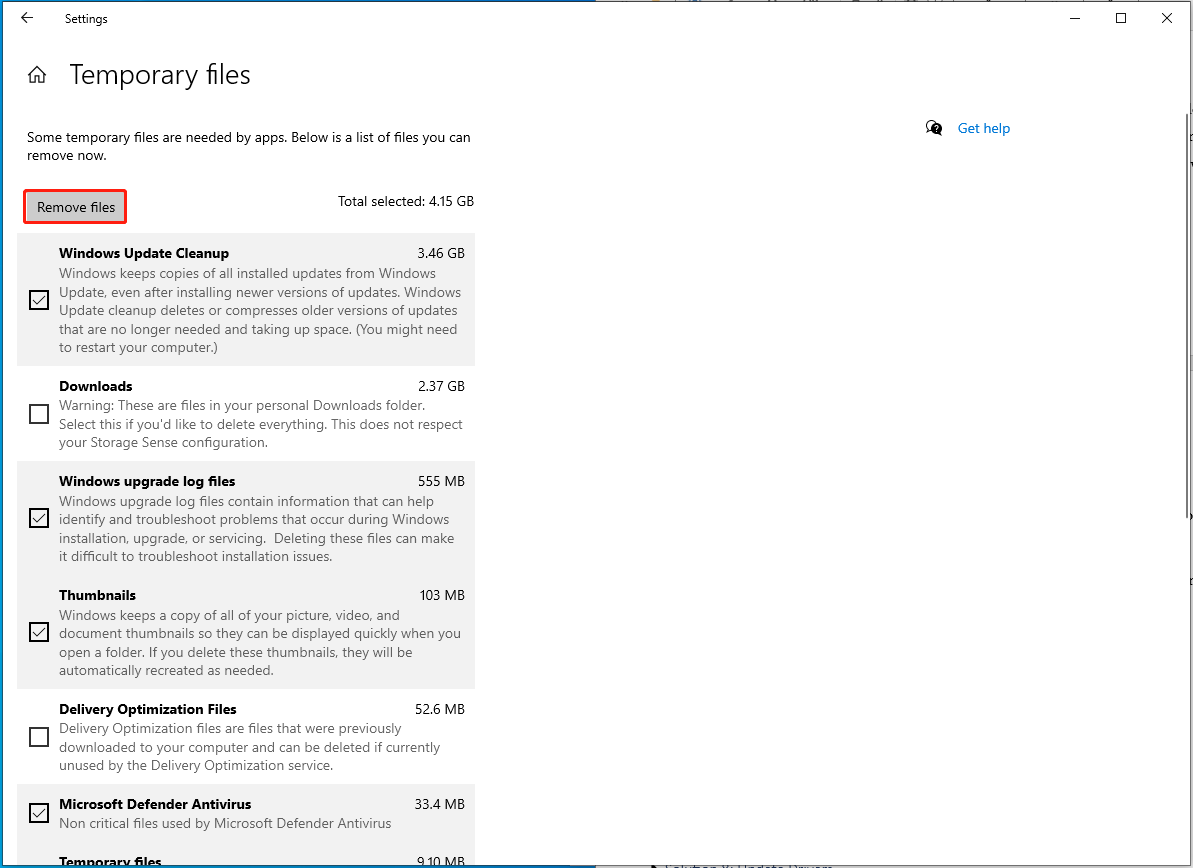
Step 3. After that, tap on Temporary files. Then you’ll see a list of files you can remove.
Step 4. Check the items you want to delete and hit Remove files.
After making the changes to take effect by restarting, try to run the program again.
Solution 6: Scan for Malware/Virus
Malware or viruses may sometimes cause .exe files to fail to run. Thus, you should conduct a comprehensive system scan. Use antivirus software to identify and remove any malware that might be causing this issue.
Here are the steps to perform a Windows Security malware scan.
Step 1. Search for virus & threat protection in the search box and then select the best match.
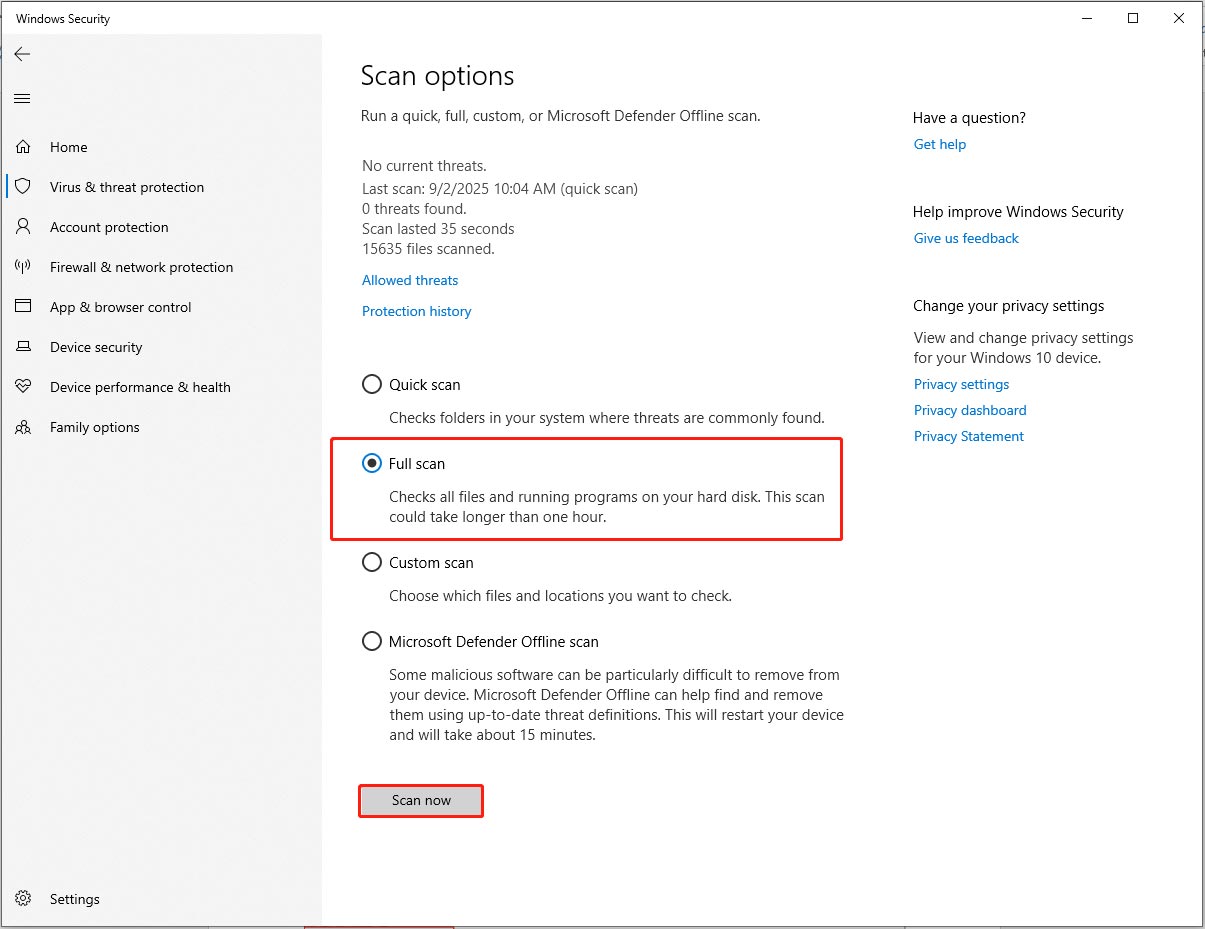
Step 2. Click the Scan options link under Current threats > choose Full scan > hit Scan now to start the process.
Solution 7: Run SFC and DISM
Application.exe has stopped working may stem from corrupted or missing system files. You can run the System File Checker (SFC) utility to scan for and repair these files. After using SFC, you also need to run the Deployment Imaging and Servicing Management (DISM) tool to repair the Windows image.
Follow the steps:
Step 1. Type cmd in Windows Search and hit Run as administrator.
Step 2. In Command Prompt, input sfc /scannow and press Enter.
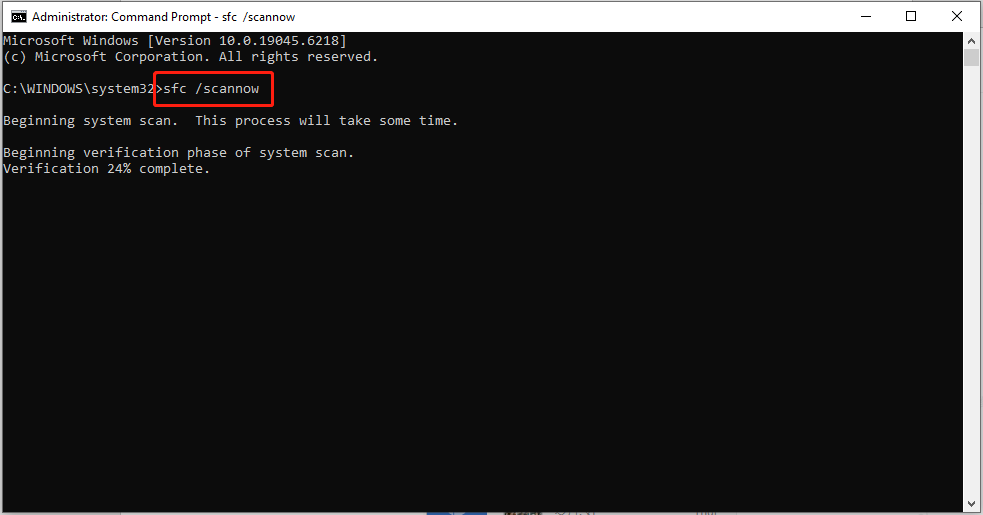
Step 3. After that, copy & paste the following command in the command window, followed by the Enter key.
DISM /Online /Cleanup-Image /RestoreHealth
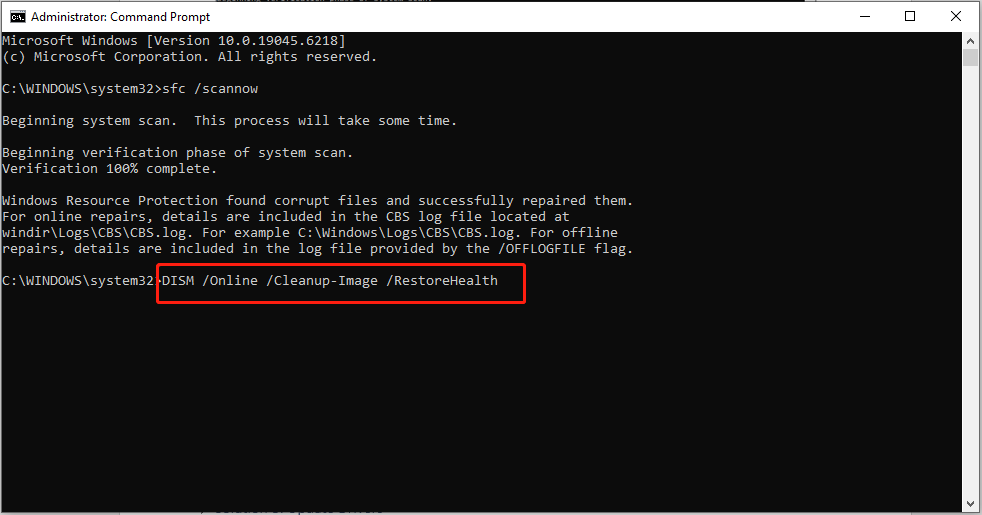
Wait for the process to complete and then restart your PC.

Solution 8: Update Drivers
The driver ensures that your computer can operate smoothly and enables effective communication between hardware and software. Outdated drivers, however, may cause various problems, such as the application.exe stopping responding.
In this case, it’s time to check and update the display driver for your PC. Here are the instructions:
Step 1. Press Win + X to choose Device Manager from the pop-up menu.
Step 2. Expand Display adapters > right-click on your driver > choose Update driver.
Step 3. Select Search automatically for driver and then follow the on-screen prompts to finish updating the driver.
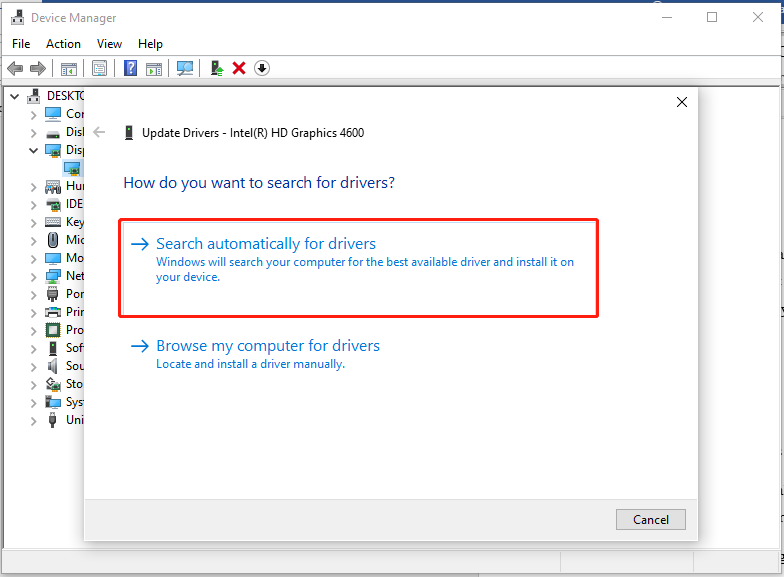
Step 4. Restart your device and go to the program that gives you the exe error to check if it works well.
Solution 9: Modify the Registry
Incorrect settings in the Windows Registry might prevent .exe files from opening. You can try to solve this issue by modifying the registry:
To do that:
Step 1. Press Win + R to launch the Run dialog box.
Step 2. Type regedit and hit Enter to open the Registry Editor.
Step 3. Copy and paste the path: HKEY_CLASSES_ROOT\exefile\shell\open\command.
Step 4. Double-click on (Default) in the right pane > change Value data to “%1” %* > hit OK.
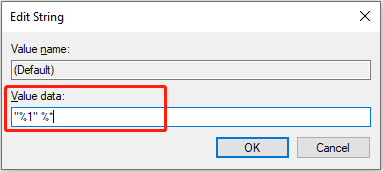
Step 5. Close Registry Editor and restart your computer.
Solution 10: Create a New User Account
This issue might be related to your user profile, such as incorrect account information, abnormal permission settings, or loss of personalization configuration. In such cases, creating a new user account could be an effective solution.
Here’s how to create a new user account on Windows 10/11:
Step 1. Right-click the Windows icon to open Settings.
Step 2. Select Accounts > Family & other users > Add someone else to this PC under Other users.
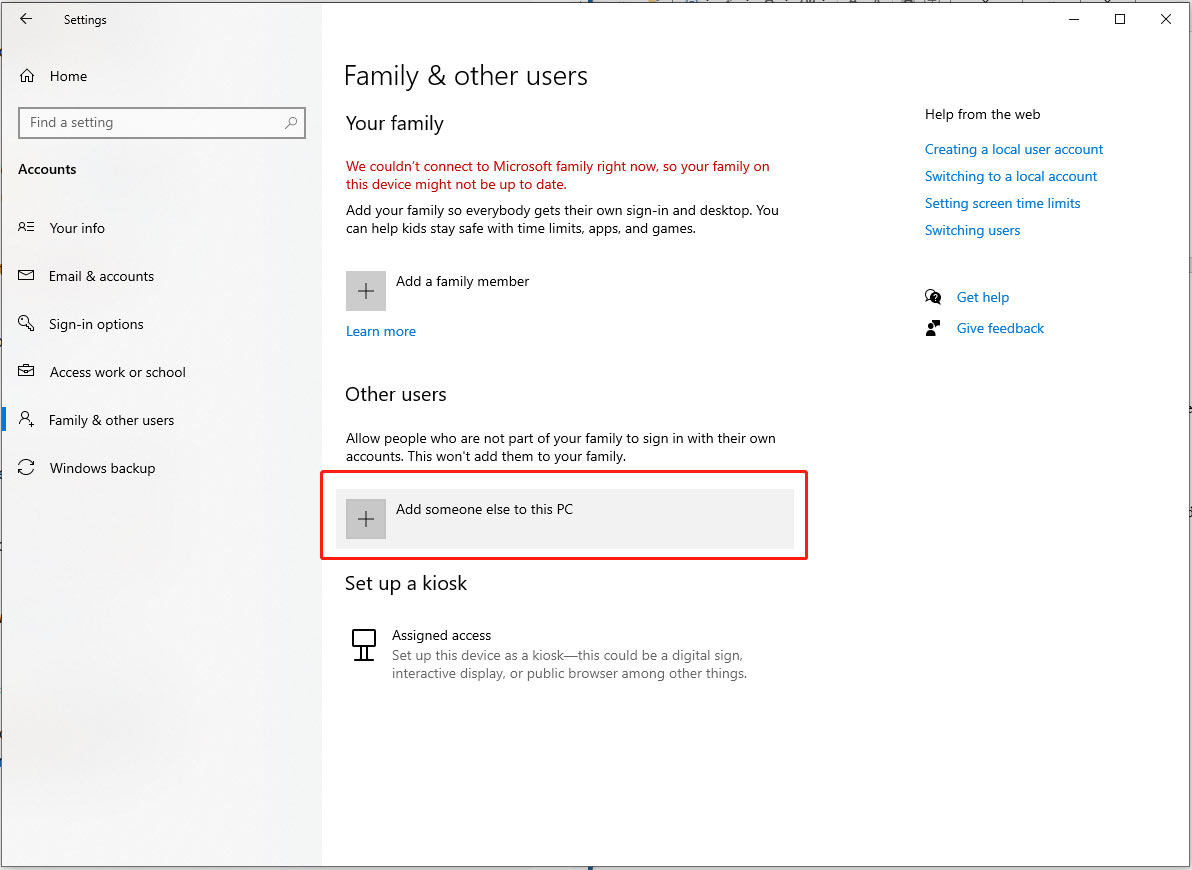
Step 3. In the new pop-up box, tap on I don’t have this person’s sign-in information.
Step 4. Next, click Add a user without a Microsoft account and enter the credentials for the new user account.
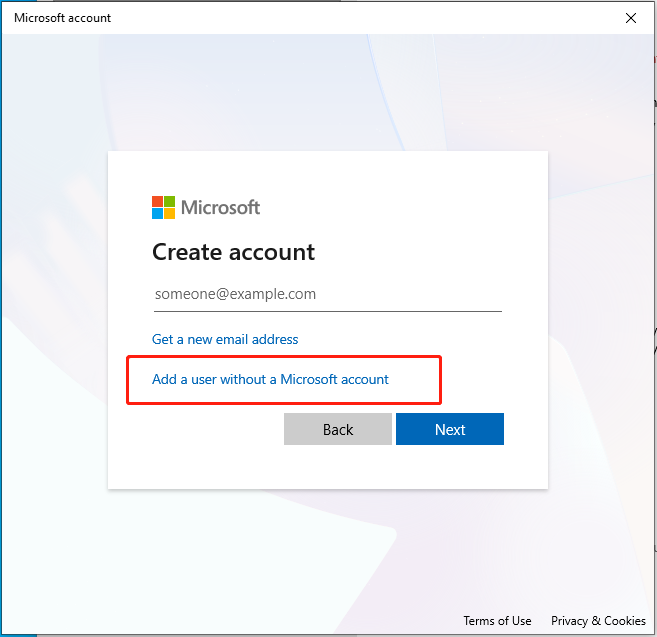
Step 5. Follow its instructions on the screen to complete the creation.
When you have added a new user account, log in to that account and test whether the executable file can run properly. If so, you can set it as an administrator account and transfer all your files to that account.
Solution 11: Reinstall the Software
If all the solutions above don’t do the trick, you should consider reinstalling the problematic application. Don’t forget to clear the remaining files.
To do that:
Step 1. Press Win + R, type appwiz.cpl, and then hit Enter to open Programs and Features.
Step 2. Right-click on the faulty program > choose Uninstall > follow the on-screen instructions to finish the uninstallation.
Step 3. Then type %appdata% in the Run window and click OK.
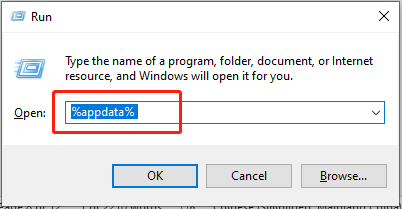
Step 4. Remove the folder that is related to the specific program.
Step 5. Download and install the latest version of that program from its official website.
Bonus Tip: Back up System with MiniTool ShadowMaker
Now, I believe you have been free from the error that .exe has stopped responding. In addition, you should also know that corrupted system files and malware can even cause your system to crash, so it’s highly advised to back up your system.
Everyone might prefer a handy tool to complete this process, especially for those who are not computer literate. In this case, MiniTool ShadowMaker serves a purpose when you need to streamline the data backup process.
This PC backup software supports backing up various items, including crucial files, the operating system, selected partitions, and even the whole disk.
With the backups, you are able to rescue your computer in case of hard disk failures, system crashes, virus infection, black screen of death, etc.
Besides backup, this program creates a one-to-one copy of your hard drive, allowing you to migrate Windows from HDD to SSD or clone SSD to larger SSD.
Now, let’s see how to back up the system with MiniTool ShadowMaker:
Step 1. Download, install, and then launch this freeware. Click on Keep Trial to enter the main interface.
MiniTool ShadowMaker TrialClick to Download100%Clean & Safe
Step 2. In this Backup page, specify what to back up in the SOURCE section (The system has been selected by default).
Then click DESTINATION to select where to store the backup image.
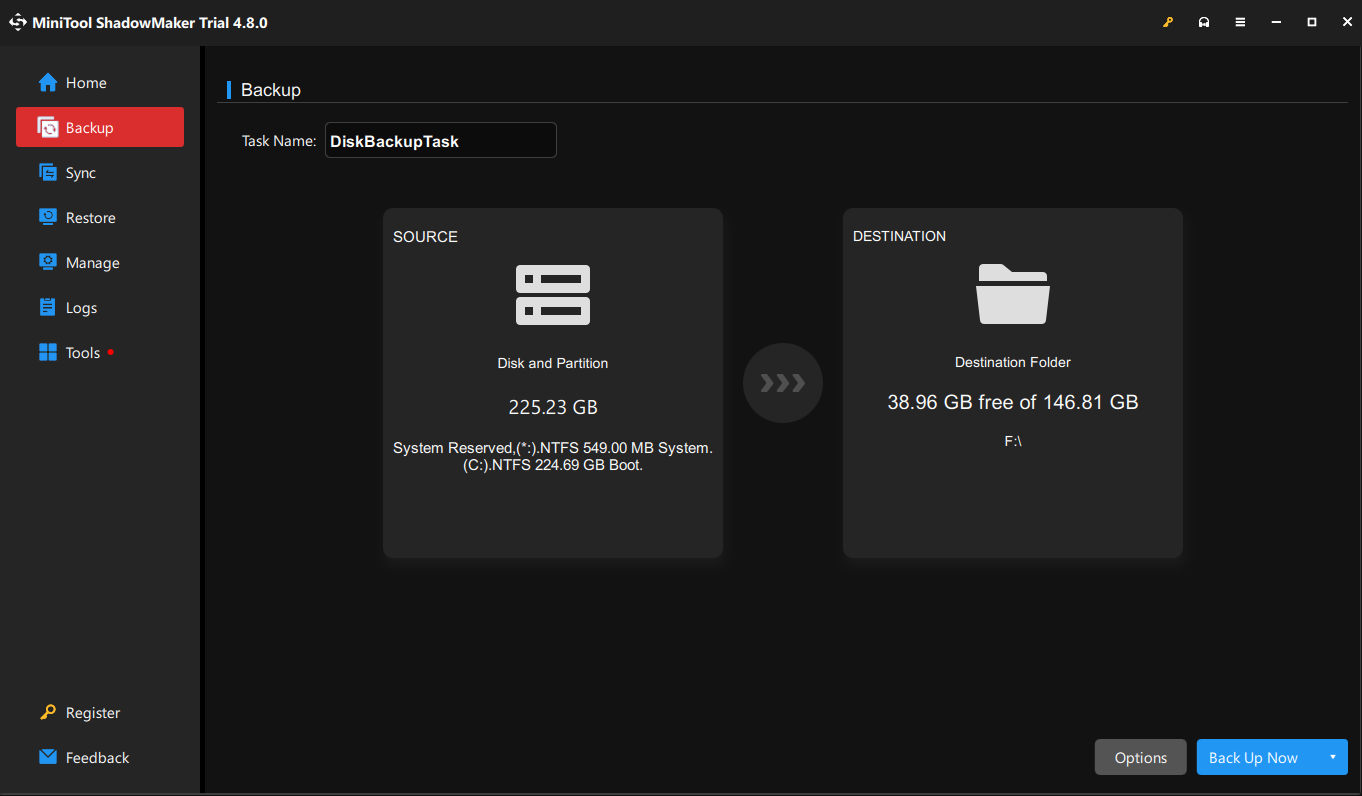
Step 3. After making your choice, click on Back Up Now to start the process at once.
In the End
Has application.exe stopped working? This guide demonstrates how to solve this problem step by step. These instructions are easy to understand and follow. Also, please feel free to create backups using MiniTool ShadowMaker.
For any constructive suggestions about MiniTool ShadowMaker, please share them with us via [email protected]. We will spare no effort in delivering the best products to you!
.Exe Has Stopped Working FAQ
2. Perform an SFC scan
3. Repair with Windows PowerShell
4. Change File Explorer options
5. Update device drivers
2. Corrupted drivers.
3. Overheating.
4. Insufficient RAM.
5. BIOS Settings.
6. Faulty external devices.
7. Viruses.
8. Corrupted or missing system files.
9. Software errors.
2. Make your system up to date.
3. Check for malicious programs.
4. Check your keyboard.
5. Clean boot your computer.
2. Update device drivers.
3. Repair corrupted system files
4. Check memory.
5. Use the program compatibility troubleshooter.
6. Run a scan for viruses.
User Comments :