
Windows Defender not turning on is usually caused by service issues, antivirus conflicts, or system corruption. This guide from MiniTool explains the most effective fixes to restore Windows Security and keep your PC protected from viruses and malware.
Quick Answer
Windows Defender may not turn on because of disabled security services, third-party antivirus conflicts, corrupted system files, or incorrect system settings. You can usually fix the issue by restarting Defender services, removing conflicting antivirus software, repairing Windows files, or changing related settings.
Why Is Windows Defender Not Turning On
Windows Defender is the built-in antivirus protection offered by Microsoft in Windows 10 and Windows 11. It helps safeguard your computer against viruses, malware, and other security threats.
If Windows Defender fails to turn on, you may encounter the following issues:
- Windows Security cannot enable real-time protection.
- Defender settings are either unavailable or disabled.
- Windows displays security-related error messages.
- Virus protection is unexpectedly turned off.
The issue usually happens because of the following reasons:
| Possible Cause | Why It Happens | Recommended Fix |
| Third-party Antivirus Conflict | Another antivirus program disables Defender | Remove conflicting antivirus software |
| Outdated Windows Version | Missing updates cause compatibility issues | Install Windows updates |
| Disabled Defender Services | Required Windows security services are stopped | Restart Windows Security services |
| Corrupted System Files | Damaged Windows components affect Defender | Run SFC and DISM scans |
| Group Policy Restrictions | Defender is disabled through system policies | Change Group Policy settings |
| Registry Changes | Incorrect registry values prevent Defender from running | Restore Defender registry settings |
Understanding the cause helps you choose the right fix faster.

How to Fix Windows Defender Not Turning On
To fix Windows Defender not working, start with simple fixes such as restarting services and removing antivirus software, then use SFC, DISM, Group Policy, or Registry fixes if needed.
Fix 1: Remove Third-Party Antivirus Software
When a compatible third-party antivirus is detected, Microsoft Defender Antivirus automatically disables its real-time protection to avoid conflicts and system slowdowns. Thus, the first thing you can try is to disable your other security programs.

If that is not working, the best way is to completely remove them. To do this, go to Control Panel > Programs and Features in Windows 7 or navigate to Control Panel > Programs > Uninstall a program in Windows 11/10/8.
Then find your third-party program, right-click on it and choose Uninstall or Uninstall/Change to remove it to get rid of Windows Defender not turning on issue.
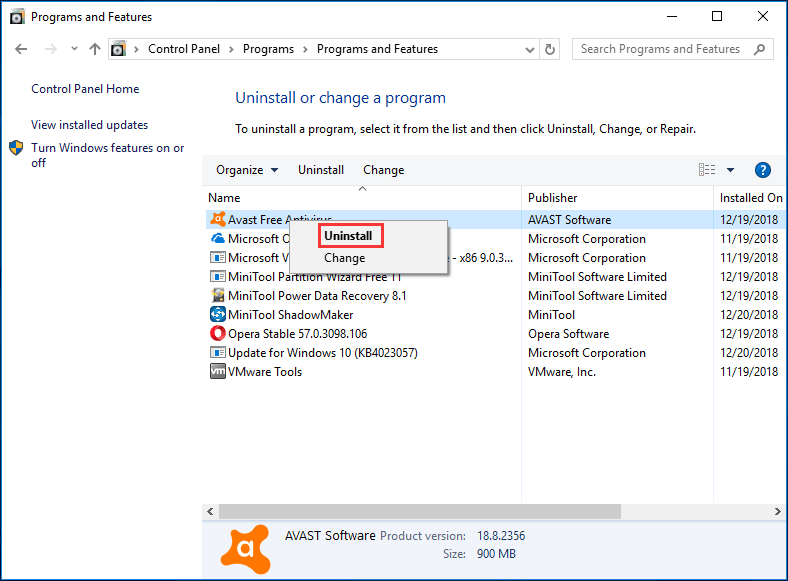
Alternatively, you can use a professional removal tool to uninstall your security applications, remove all files (including undetected files) and registry entries associated with the application, which may also prevent you from running Windows Defender.
Finally, restart your PC and try launching Windows Defender again to see if it can be turned on for virus, spyware and other threats protection.
MiniTool System Booster TrialClick to Download100%Clean & Safe
Fix 2: Restart Windows Security Services
Windows Defender depends on several background services. If these services are disabled or stopped, Defender may fail to start.
Step 1: Press Win + R, type services.msc, and hit Enter.
Step 2: Locate Windows Defender Antivirus Service (or Microsoft Defender Antivirus Service) and Security Center.
Step 3: Right-click each service and select Restart. If they are stopped, right-click, select Properties, set the Startup type to Automatic, and click Start.
Step 4: Restart your PC and check whether Windows Defender works again.
Fix 3: Run DISM and SFC to Repair System Files
Corrupted Windows system files can prevent Windows Defender from starting correctly. Running DISM and SFC can repair damaged Windows components and restore missing system files.
Follow these steps:
Step 1: Search for Command Prompt and select Run as administrator.
Step 2: Run the DISM command first:
DISM /Online /Cleanup-Image /RestoreHealth
Step 3: Wait until the process completes.
Step 4: Then run System File Checker:
Step 5: Restart your computer and check whether Windows Defender turns on.
If SFC reports that some files could not be repaired, run the SFC command again after restarting Windows.
Method 4: Install the Latest Update
An outdated Windows operating system may cause the issue of Windows Defender not turning on. Some users reported that they had been able to fix the issue simply by installing the latest Windows update – latest signature updates are necessary for Windows Defender to keep your PC secure.

Back up Files or Windows OS before an Update
To back up crucial files, you can choose the professional backup software for Windows 11/10/8/7, MiniTool ShadowMaker since it allows you to back up files into an image and sync files or folders to other safe locations. Now, get MiniTool ShadowMaker Trial Edition on your computer and then install it for file backup.
MiniTool ShadowMaker TrialClick to Download100%Clean & Safe
Step 1: Run MiniTool ShadowMaker Trial.
Step 2: In the Backup page, go to Source > Folders and Files to choose important files that you want to back up.
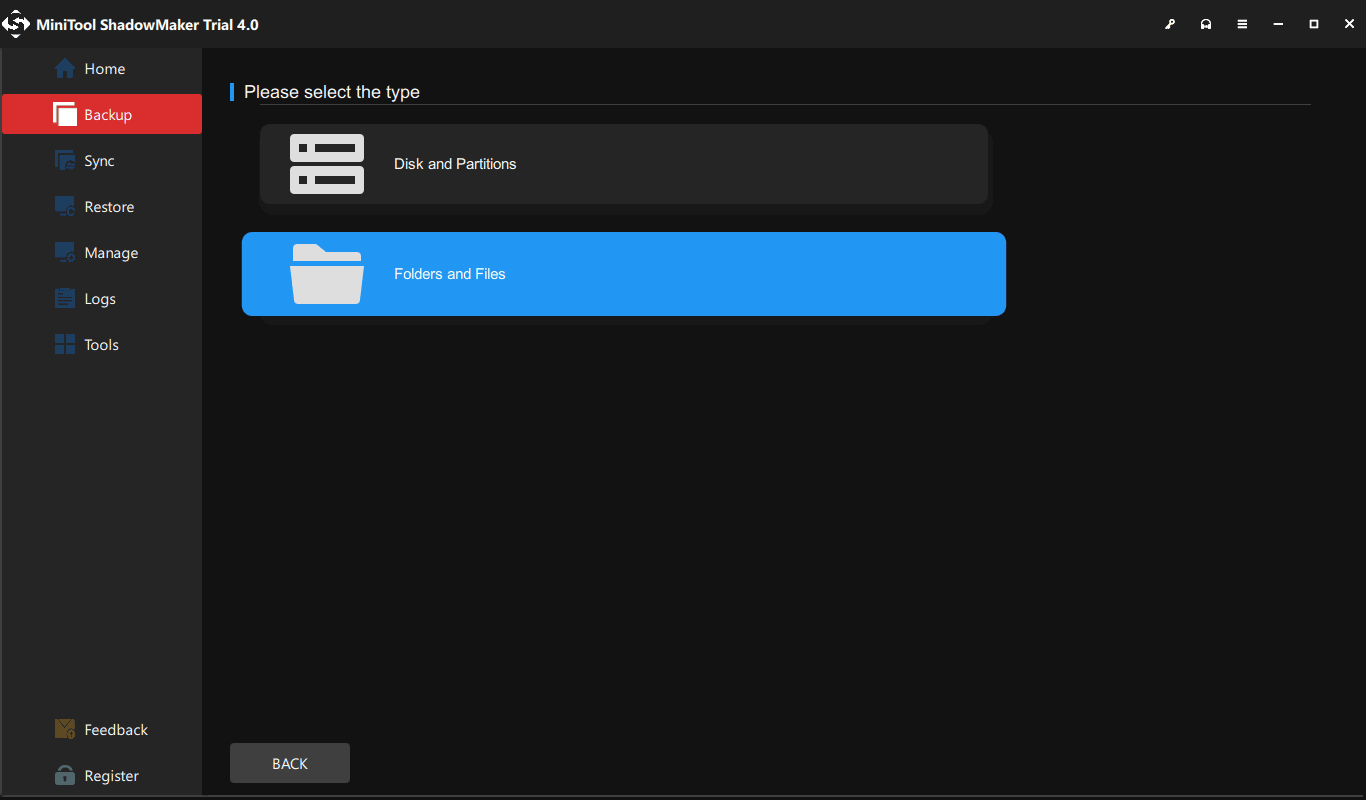
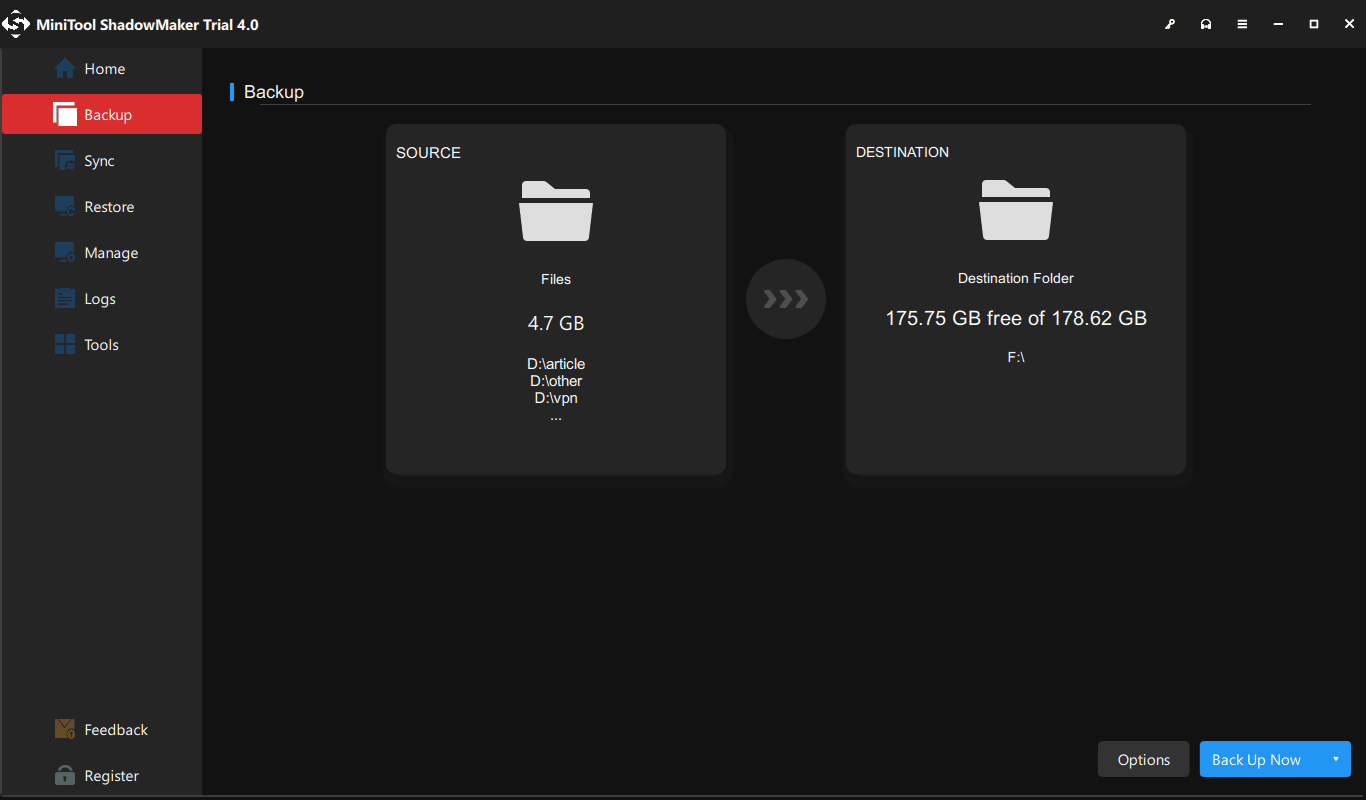
Then go to Destination to choose the place where you need to save the backup. Here an external hard drive, USB drive, NAS, etc. can be available.
Step 3: After finishing all the selections, click the Back Up Now button to start the backup operation.
In addition, you can take full advantage of the Sync feature to synchronize your important files. This tutorial – How to Sync Folders Windows 10 to External Drive? 3 Tools Are Here shows you detailed operating steps.
Upgrade Windows OS
Now, it is time for you to install the latest Windows operating system. How to perform a Windows update? Here is the guide:
Step 1: In Windows 7, go to Control Panel and click Windows Update. In Windows 8, go to Control Panel > System and Security > Windows Update. In Windows 10, navigate to Settings > Update & security to enter the Windows Update interface. In Windows 11, go to Settings > Windows Update.
Step 2: Click Check for updates. If there are available updates, install them and restart your PC.
After completing Windows updates, the problem of Windows Defender not turning on maybe disappeared.
Method 5: Change Your Group Policy
Sometimes, Windows Defender won’t turn on in Windows 10/11/8/7 because it is turned off by your group policy. This can be a problem but you are able to fix it simply by changing the group policy.
To do that, follow the step-by-step guide:
Step 1: Open the Run dialog by clicking Win + R keys on the keyboard.
Step 2: Type gpedit.msc and press the OK button.
Step 3: In the Local Group Policy Editor interface, go to the left pane and navigate to Computer Configuration > Administrative Template > Windows Components > Windows Defender Antivirus.
Step 4: In the right pane, double-click on Turn off Windows Defender Antivirus.
Step 5: In the pop-up window, choose Not Configured, click the Apply and OK button.
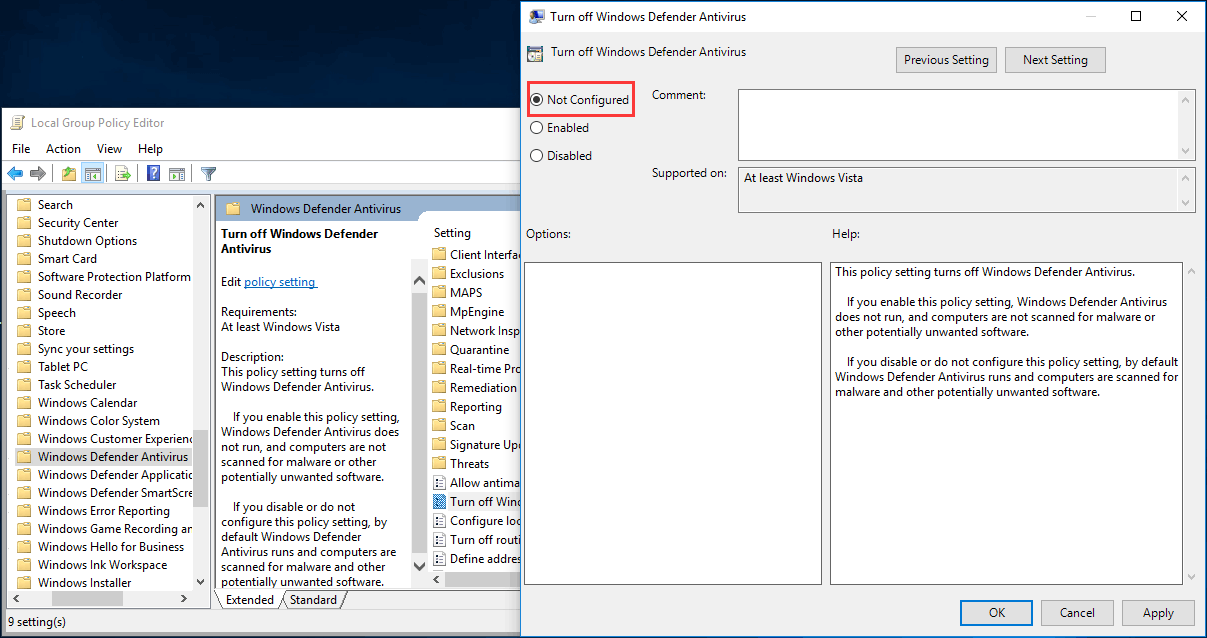
After these changes are brought into effect, the issue of Windows Defender not working due to the group policy being turned off should be solved, and you can run it to protect your PC.
Method 6: Modify Windows Registry
When you fail to enable Windows Defender in Windows 11/10/8/7, the problem may be related to your registry. Then, you can change it to fix this issue.
Step 1: Input regedit in the text box of the Run window.
Step 2: In the Registry Editor interface, go to
HKEY_LOCAL_MACHINE\SOFTWARE\Policies\Microsoft\Windows Defender
Step 3: Find DisableAntiSpyware key. If this key is not listed, please right-click the blank, choose New and DWORD (32-bit) Value to create it.
Step 4: Right-click on it and set its Value data to 0.
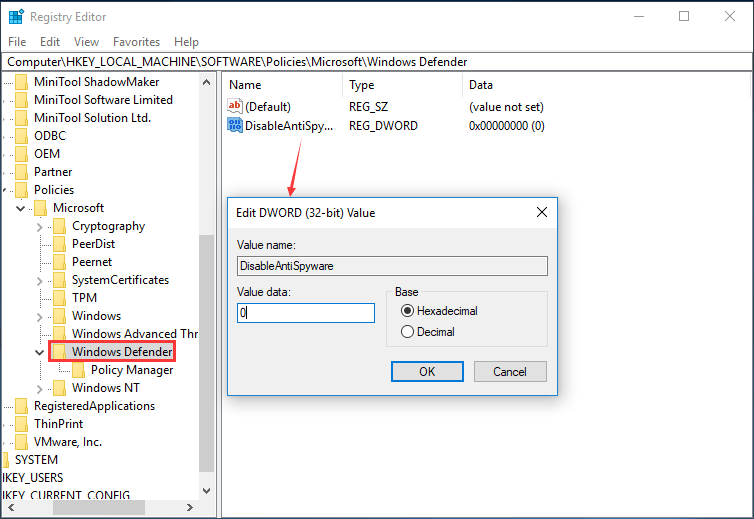
After you have changed Windows Defender using Registry Editor, you can check if Windows Defender Antivirus not turning on is solved.
Method 7: Perform a Clean Boot
If you start the Windows system in normal start-up operation, there might be many third-party applications running in the background. These applications can cause software conflicts and interfere with Windows. As a result, you can’t turn on Windows Defender in Windows 11/10/8/7.
To repair the Windows Defender issue, you can perform a clean boot. This method is quite simple and you can do by following these instructions:
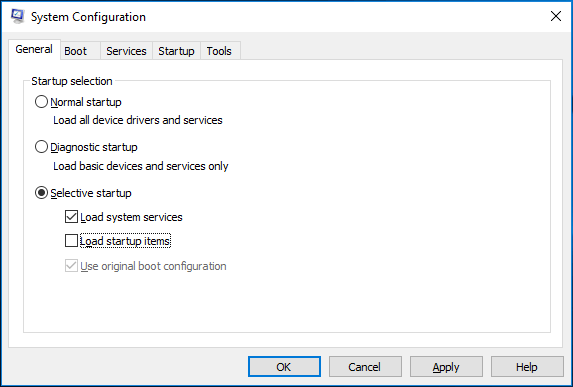
Step 1: Launch the Run window, and enter msconfig in the textbox.
Step 2: In the System Configuration interface, go to the General tab, choose Selective startup and uncheck Load startup items.
Step 3: Under the Services tab, tick Hide all Microsoft services and click Disable all.
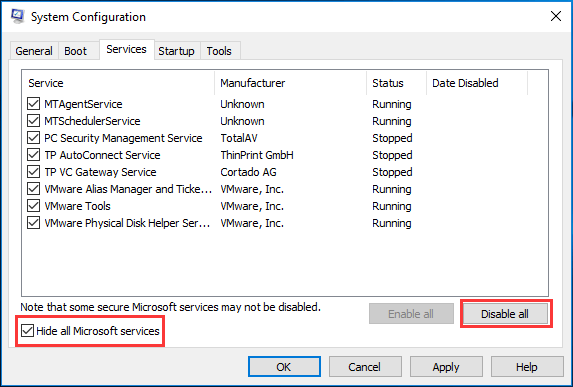
Step 4: Click the OK and Restart button to reboot your PC.
Now, all of the possible ways to fix Windows Defender not turning on have been shown to you. Just try them one by one to fix Windows Defender in Windows 11/10/8/7. If you think these ways are helpful, you can also share them on Twitter to let more people know.
When Windows Defender Still Won’t Turn On
If Windows Defender remains disabled after attempting the fixes above, the issue may involve deeper Windows problems.
You can try:
- Use System Restore
- Perform a Windows repair installation
- Reset Windows while keeping your files
How to Prevent Windows Defender Issues in the Future
To avoid this problem again:
- Keep Windows updated regularly
- Check system settings after major updates
- Avoid installing multiple antivirus programs
- Run periodic system scans
- Create regular backups
Use MiniTool ShadowMaker to Protect Your PC from Viruses and Other Threats
In order to protect your computer against spyware, ransomware, adware, viruses and other threats, you can try another way that is to use MiniTool ShadowMaker to back up your computer.
MiniTool ShadowMaker, one of the best backup software for Windows 11/10/8/7 users, is really worth recommending. In addition to backing up your important files (as mentioned above), it can help you easily and effectively back up your Windows operating system, disk, and partition. If your system ever goes wrong, you can use the backup to restore it to a normal state.
Additionally, it supports disk cloning, which helps you transfer all the content on a disk to another for the entire disk data backup. For system disk cloning, the cloned drive can be used to boot the PC in case of a system crash.
Are you interested in this backup software? Now get MiniTool ShadowMaker Trial Edition (30 days trial) from the following button.
MiniTool ShadowMaker TrialClick to Download100%Clean & Safe
Step 1: Run this free backup software, continue to use the Trial Edition and choose the local backup mode.
Step 2: After entering the Backup page, you can see this program will back up your Windows system by default since the system partitions and destination path are chosen. Of course, you can click the Source and Destination module to decide what you want to back up and where you need to save the image.
Next, just click the Back up Now button to execute the operation in the Manage page.
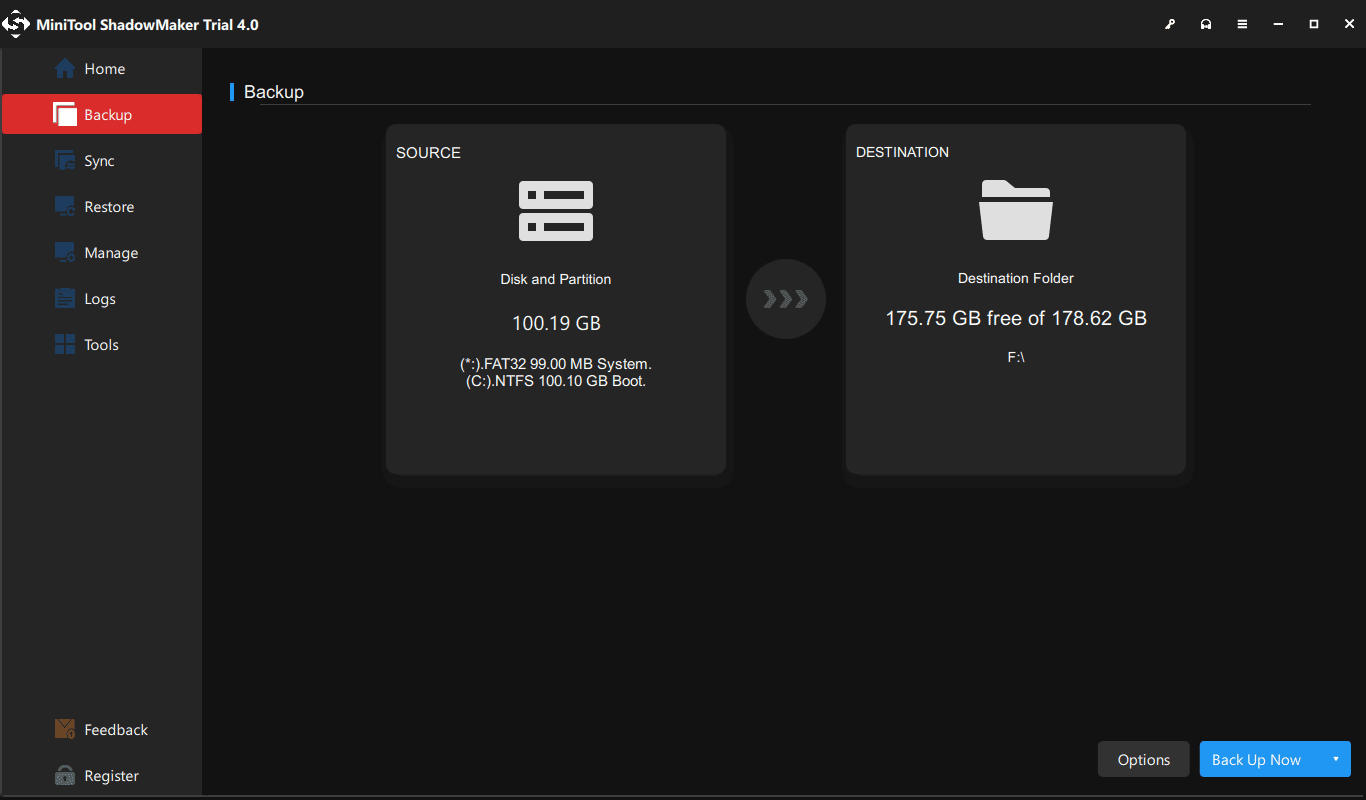
In addition, you can choose the entire system disk to create a hard drive image. Or go to Tools page to use its Clone Disk feature to perform a disk cloning for backup.
Related article: How to Clone a Hard Drive to SSD in Windows 11/10/8/7?
Windows Defender Not Turning on FAQ
To combat this issue, Microsoft has included a built-in feature called Tamper Protection, which is designed to prevent unauthorized programs from changing your security settings.
Conclusion
If Windows Defender isn’t turning on, it often results from service problems, conflicts with other antivirus programs, or system corruption. Solutions include restarting relevant services, uninstalling third-party antivirus software, or running system repair tools such as SFC and DISM.
For extra security, MiniTool ShadowMaker can automatically back up your important files or the entire Windows system, ensuring your data remains protected. For any inquiries about MiniTool software, please reach out to us at [email protected].
About The Author

Position: Columnist
Charlotte is a technology columnist with a strong focus on the Windows operating system, specializing in disk management, backup, and data recovery. She is passionate about analyzing computer errors, identifying root causes, and delivering practical solutions. In her free time, she stays updated on the latest developments in computer systems and hardware while continuously learning new technologies to broaden her expertise. Her writing style is clear and easy to understand, making complex technical topics accessible even to users with limited computer knowledge.
User Comments :