
Understanding Hard Drive Beeping
A Hard Disk Drive (HDD) is an electro-mechanical data storage device. It consists of rapidly rotating platters, an actuator arm, read/write heads, a controller board, and a spindle. Because of its mechanical moving parts, an HDD produces various sounds.
If you hear whirring, light ticking, or spin-up/spin-down whine, it is normal.
Common Normal HDD Sounds
- Whirring/Hum: When platters spin at high speeds, typically 5400 or 7200 RPM, a continuous, steady hum or whirring sound occurs.
- Light clicking/ticking/chirping: This sound is produced as the read/write heads move across the disk to access data.
- Spin-up/Spin-down whine: It appears when the computer wakes up or turns on, as the drive reaches its operational RPM.
However, if the noise sounds abnormal or becomes very loud suddenly, such as repetitive clicking, grinding, or beeping, it may indicate drive failure.
In this article, we will focus on the hard drive beeping issue and how to address it.
What Is Hard Drive Beeping
A beeping sound from an HDD disk indicates a serious, typically mechanical failure. It signifies that the internal components are unable to operate properly, meaning imminent or total drive failure.
Reportedly, this issue is more common on Seagate drives. Additionally, hard drive beeping can appear on other drive brands, such as LaCie and Western Digital (WD), including internal and external drives.
Why Is My Hard Drive Beeping
The reasons for the beeping sound are various, including:
- Stuck heads: This is the most frequent cause. In an HDD, the heads hovers above the platters to read and write data. However, if the heads fail to park properly and get stuck on the platter’s surface, the motor stops spinning, producing a beeping sound. This often happens if a disk is dropped or bumped.
- Insufficient power: There may not be enough electricity to spin the motor, triggering a beeping sound. This can occur due to an inadequate power supply, faulty cables, or weak ports.
- Spindle motor malfunction: The motor that spins the platters may seize, bend, or fail due to physical damage or wear. As a result, the platters cannot move and emit a beeping sound.
- Printed circuit board (PCB) failure: The electrical components on the controller board are damaged or shorted, preventing the drive from spinning up properly and resulting in a beeping sound.
Can a Beeping Hard Drive Be Fixed
Occasionally, a beeping drive can be resolved by simple external adjustments, especially when insufficient power is the cause.
However, it often indicates a mechanical issue that requires professional intervention to resolve. For example, manually open the drive in a certified cleanroom to remove dust, move stuck heads, or replace the motor/PCB.
Software solutions cannot fix a beeping hard drive.
How to Deal with a Beeping Hard Drive
To address Seagate hard drive beeping, take immediate actions, perform critical troubleshooting steps, and follow additional tips.
Critical Immediate Actions
#1. Avoid Freezer Tricks
Don’t put your hard drive in the freezer. This is a myth, as it can cause condensation and permanent internal corrosion on the drive components, resulting in irreversible data loss.
Although this trick is a last resort for fixing stuck read/write heads from the 1990s, modern data recovery experts do not recommend it today.
#2. Don’t Keep Trying to Power It On
Continuing to power on a beeping drive is dangerous, as each attempt can cause the heads to grind into the platters. This is the fastest method to make data unrecoverable.
#3. Don’t Open the Drive
Opening the hard drive outside a cleanroom environment can expose its internal components to dust and contaminants. This can cause a head crash and irreversible damage, rendering the data unrecoverable.
Recommended Troubleshooting Steps
If the drive is not critically damaged, it may not receive sufficient power to spin up or down. Take some safe steps, such as trying a different computer, switching to a USB Y-cable, or using a different port.
#1. Try Another Computer
If you are not sure whether a power issue is causing the Seagate external hard drive to beep, try the drive on another computer. If the drive still beeps, try a different cable or port to rule out the issue.
#2. Replace the Cable
Sometimes, using a new or known-good cable can fix the beeping sound. Or, try a USB Y-cable to eliminate the sound.
A USB Y-cable is a specialized cable that uses two connectors on the host side to provide additional power to a peripheral device.
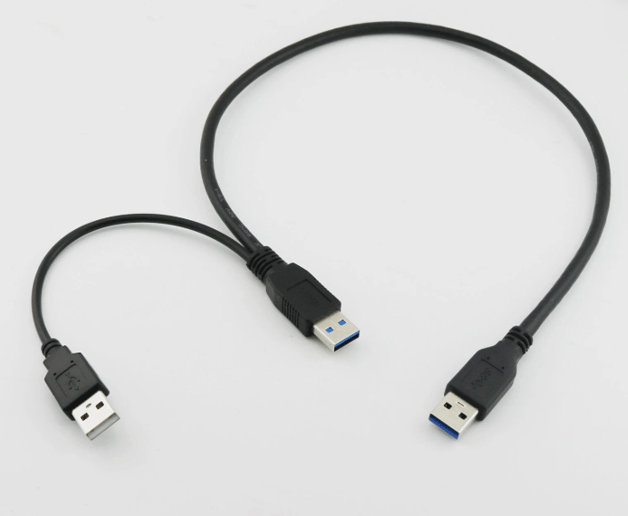
(Image from eBay.)
To use this cable, plug the single end into the drive, and plug the two connectors into the rear USB ports on your computer. This can effectively prevent connection failure.
Avoid a USB hub, as it shares the limited power, providing less power to external hard drives
#3. Use a Different Port
On a desktop, the front USB ports (connected to the motherboard via internal cables) provide less power, resulting in external hard drive beeping.
Try to connect the drive directly to the rear USB ports. These ports are soldered to the motherboard, indicating they offer the maximum, consistent, and stable power output.
#4. Remove an External Hard Drive from Enclosure
Sometimes the USB-to-SATA converter board in the external casing may be faulty due to overheating, power surges, or physical damage. The hard drive is still functional.
To resolve hard drive beeping, remove the drive from the casing and connect it directly to a PC’s SATA port.
Follow these steps:
Step 1: Check the enclosure for screws to remove them. If no screws are present, use a plastic tool or prying tool to pry the casing.
Step 2: Slide the hard drive out, unscrew the bracket, and unplug the SATA-to-USB board from the drive.
Step 3: Shut down the computer, unplug the power cable, and open the computer case.
Step 4: Insert the hard drive into an empty drive bay.
Step 5: Connect the SATA data cable and SATA power cable.
Step 6: Close the PC case, plug in the power, and turn on the PC.
Then check for a beeping sound.
Additional Tips and Considerations
If Seagate external hard drive beeping persists after the steps above, back up your important data while circumstances allow.
#1. Back Up Important Data
A beeping hard drive signifies the drive is experiencing a critical mechanical failure. To ensure data security, backups are essential.
It is recommended to back up only the most important files first, not the entire drive, because the drive may fail at any time.
For data backup, use the professional PC backup software, such as MiniTool ShadowMaker. It offers all-in-one backup solutions that let you back up files, folders, systems, disks, and partitions.
Follow the instructions to back up important files to a USB drive.
Step 1: Connect the beeping external hard drive and a USB flash drive to your computer.
Step 2: Download, install, and launch MiniTool ShadowMaker.
MiniTool ShadowMaker TrialClick to Download100%Clean & Safe
Step 3: Navigate to the Backup tab. Then, click the SOURCE section, choose Folders and Files, browse and select the files you wish to back up, and click OK.
Step 4: Click the DESTINATION section, select the USB drive, and click OK to confirm.
Step 5: Choose Back Up Now > OK to perform the backup task.
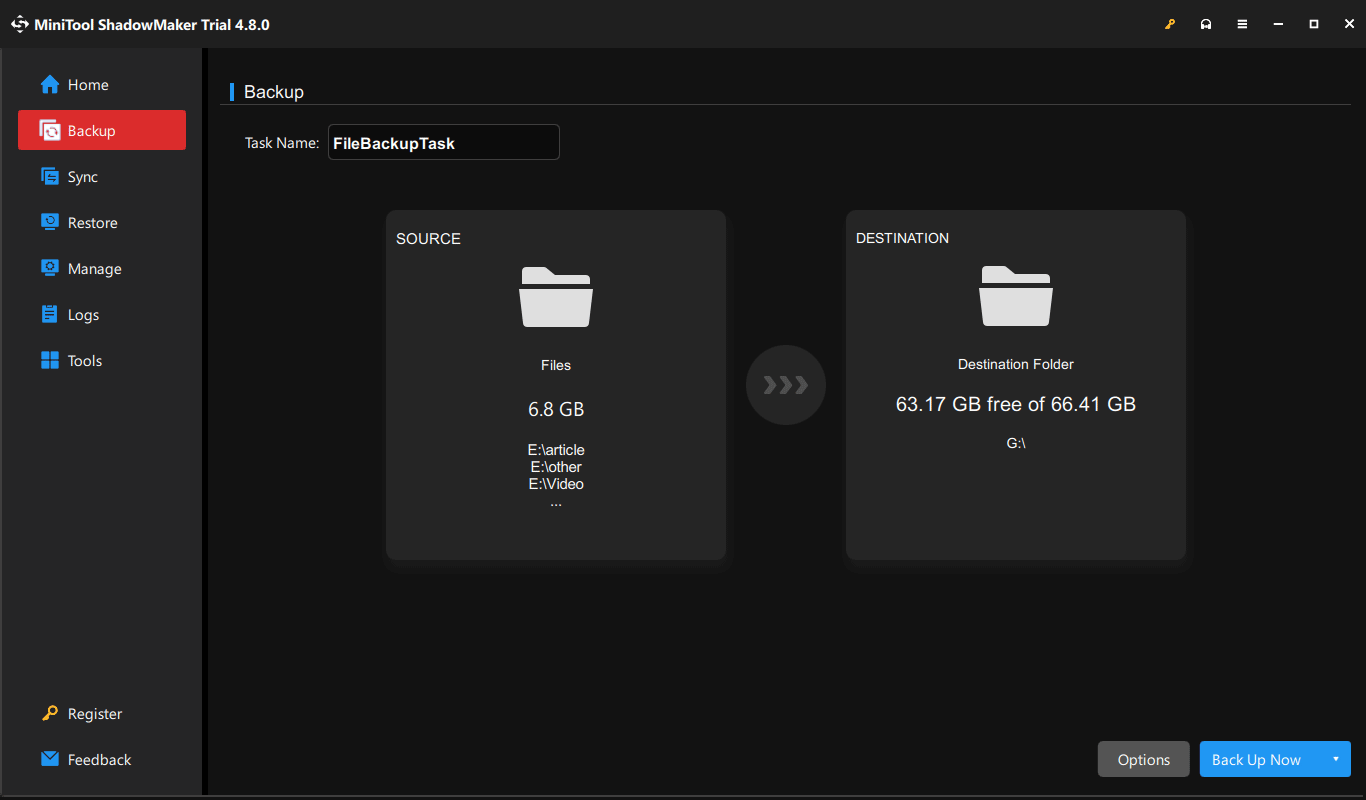
The software will begin the file backup process. Check the result in Manage.
Once the backup is finished, remove the beeping drive immediately. If the disk is under warranty, contact the manufacturer’s support site (e.g., Seagate Support) to see if you can obtain a replacement.
#2. Seek Help from Professional Data Recovery Services
Hard drive beeping is a severe, often fatal physical failure, where the motor has seized, or the read/write heads are stuck on the platters.
In most cases, this physical issue requires professional help for repair.
If the computer doesn’t recognize the drive containing important data, a professional recovery service is the best option.
The recommended services include Secure Data Recovery, Gillware, DriverSavers, and so on. They offer a particle-free environment (certified ISO-5 Class 100 cleanroom) and use specialized tools to handle various mechanical failures.
For a beeping hard drive, engineers will take the following key steps, including:
- Evaluate to confirm the root cause, usually stiction (stuck heads), a seized motor, or a shorted PCB.
- Open the drive in a cleanroom and use special platter burnishing tools to polish the platters clean.
- Safely lift and unstick the heads or replace the damaged heads with compatible ones from a donor drive.
- Image or clone the data onto a new, healthy drive.
Most reputable labs report a high success rate for mechanical failures, often exceeding 90%, provided you stop using the drive immediately when the beeping begins.
Prevention and Future Strategies
To avoid a beeping hard drive in the future, implement the following steps.
Follow the 3-2-1 Backup Rule
Data backup is an effective method for preventing data loss due to mechanical failure. Backing up data to an external hard drive alone is not enough, as the drive can fail.
Combining a local backup with a cloud backup is highly recommended; this is an example of the 3-2-1 backup strategy. This rule requires you to keep 3 copies of data on 2 different media types, with 1 copy offsite.
For a local backup, run the backup software such as MiniTool ShadowMaker to back up data to an external drive. Follow the steps above.
Moreover, it is crucial to perform regular backups. To enable this feature in this software, click Options > Schedule Settings, set the toggle to On, and configure a plan.
Alt=The MiniTool ShadowMaker window with selected schedule settings section for automatic backups.
For a cloud backup, refer to the backing up a computer to the cloud guide.
Monitor Drive Health and Temperature
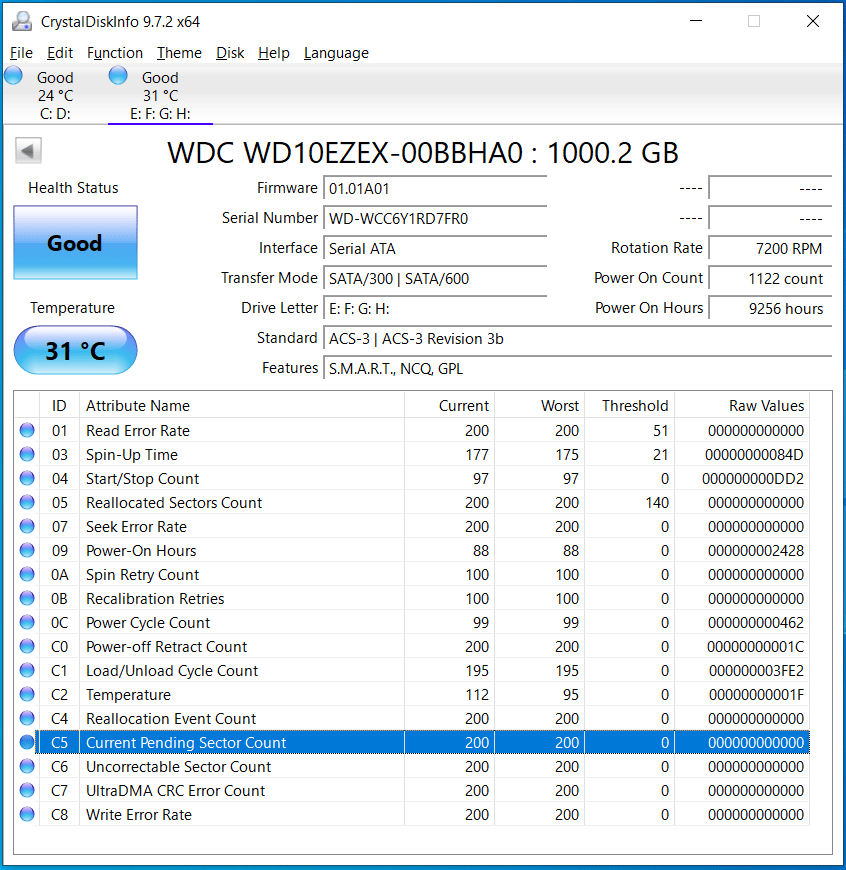
Periodically running tools like CrystalDiskInfo to monitor the drive’s health is important. This can help detect issues before a drive becomes fatal.
Additionally, the utility displays the drive’s temperature, allowing you to keep it cool in time to prevent overheating.
Take Care of the Drive
This involves:
- Safe ejection: Before disconnection, safely remove your external hard drive.
- Physical protection: When powering on the drive, don’t move, drop, or bump it.
- Power management: Ensure external hard drives can receive sufficient power. It is recommended to use a USB Y-cable or a rear USB port.
- Regular cleaning: To ensure stable connections, clean USB ports and connectors regularly. Avoid excessive dust.
Swap to an SSD
Compared to an HDD, an SSD doesn’t generate any noise since it doesn’t have moving parts. Moreover, it provides high durability and rapid speed.
If your budget is enough, consider purchasing an external SSD.
Wrapping Things Up
Seagate hard drive beeping can occur for various reasons. If it is caused by insufficient power, try another cable or port to resolve it.
However, if a mechanical failure is the cause, follow the instructions to back up data or seek professional help from data recovery services.
Moreover, contact us at [email protected] if you experience issues while using MiniTool ShadowMaker.
Hard Drive Beeping FAQ
1. Strange noises such as clicking, grinding, whirring, clacking, beeping, and so on.
2. Sudden PC slowdowns or constant freeze/crashes.
3. Frequent errors when saving or moving files.
4. Bad sectors.
5. SMART errors.
If the HDD is physically damaged, it cannot be repaired and professional data recovery is required.
About The Author

Position: Columnist
Vera has been working at the MiniTool Team for over 10 years as a technical editor and content writer. She mainly focuses on disk and partition management, data recovery, Windows backup and restore, and PC troubleshooting. Through in-depth software testing and hands-on experience, she has helped users solve a wide range of computer problems and better protect their data on Windows devices.
User Comments :