
Backups are essential for recovery and keeping your data safe. However, they are not immune to ransomware threats. How to protect your backups from ransomware? What to do if ransomware attacks your backups? This post will discuss these issues.
Ransomware is one of the most dangerous cyber threats today. Attackers encrypt your files and demand payment to restore access. In many cases, even if the victim pays the ransom, the attackers still won’t release the files. If your backups are unprotected, you could lose everything. This guide explains how to protect your backups from ransomware.
How Does Ransomware Attack Backups
If you can easily restore your data from backups, you will not pay the ransom. Traditional ransomware only encrypts current files, and you can restore them using backups. Modern ransomware proactively searches for and encrypts/deletes backups to ensure you cannot recover files. Here are the 4 common methods that ransomware attacks your backups.
1. Attack backup software vulnerabilities
Many systems have security vulnerabilities that ransomware exploits. Unpatched backup software, default passwords or weak credentials, and excessive privileges may cause the backups being attacked.
2. Lurk in your computer and attack the backups
Advanced ransomware does not encrypt immediately, but infects backups first. After entering the system, it remains silent (days or even weeks). During this period, it infects all backups. Eventually triggers encryption, cause all backups unrecoverable.
3. Ransomware also target cloud backups
Cloud backups (such as Google Drive, Onedrive, etc.) are not completely secure. Ransomware can use leaked cloud credentials to delete backups, disable version control, and encrypt synchronized cloud backups.
4. Double extortion strategy
In addition to encrypting files, hackers also threaten to leak data, and backups are often the source of data leaks. They steal data first including sensitive information in backups, and encrypt backups. Then, threaten to release data. Even if you recovers the files, you may still be forced to pay the ransom.
6 Key Strategies to Protect Backups from Ransomware
How to prevent your backups from ransomware attacks? The following are the 5 key stratigied.
1. Follow the 3-2-1 Backup Rule
To secure your backups against ransomware attacks, you should follow the 3-2-1 backup rule, which is the gold standard for backup security:
- 3 copies of your data (original and 2 backups)
- 2 different storage types (such as external drive or cloud)
- 1 offsite backup (physically or cloud-separated)
To ensures others remain safe even if ransomware encrypts one backup, you can choose data backup software to perform a local backup, especially backing up it to an external hard drive. To finish that, you can run the Windows backup software – MiniTool ShadowMaker.
You to back up files, folders, disks, partitions, and even the operating system to different locations. You can easily restore your backup files using the Restore feature. Besides, this tool also supports moving Windows to another drive.
MiniTool ShadowMaker TrialClick to Download100%Clean & Safe
Step 1: Install and launch MiniTool ShadowMaker, then click Keep Trial.
Step 2: Go to the Backup page and choose the backup source. Click OK.
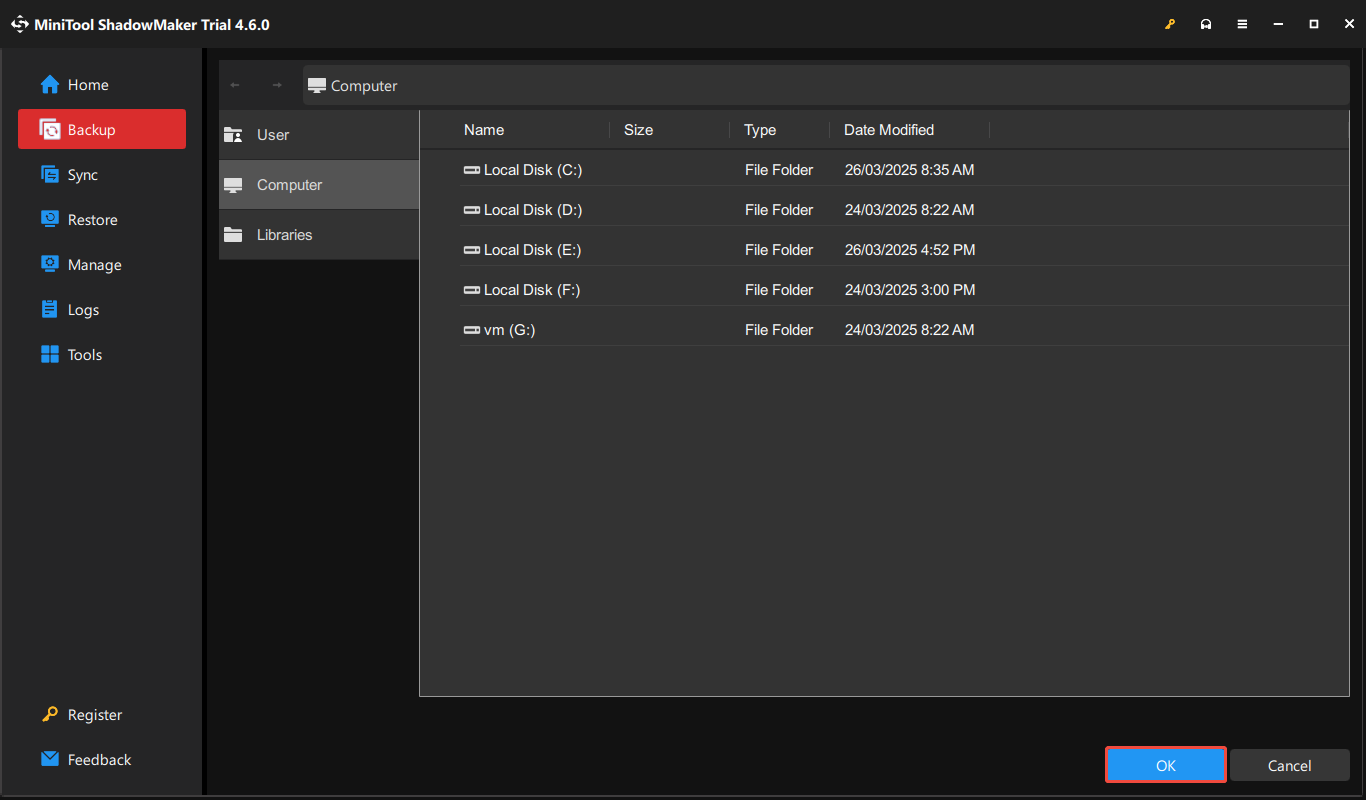
Step 3: Click the DESTINATION part and choose a location to save the backup image. Click OK to save changes.
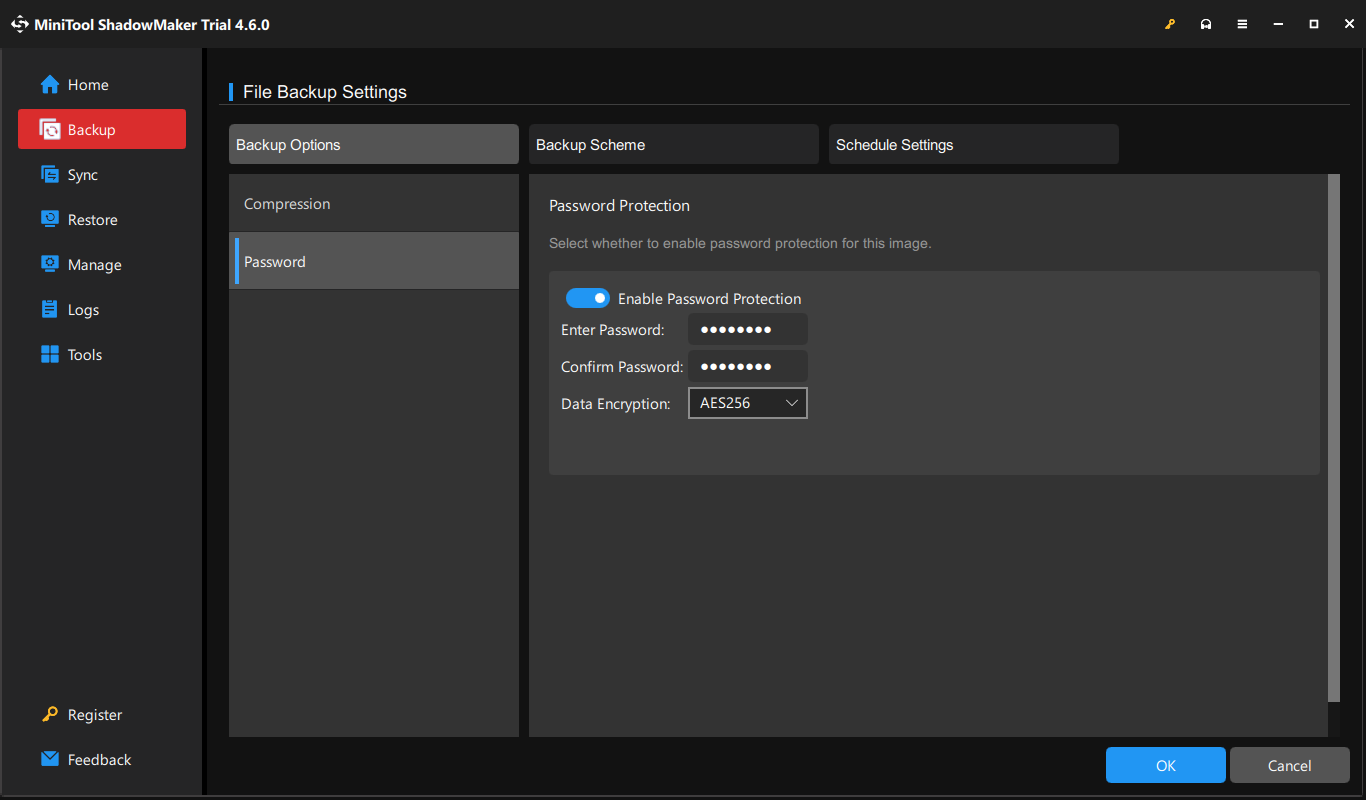
Step 4: Click Options and go to the Backup Options part. Click the Password tab and enable password protections. Enter and confirm password.
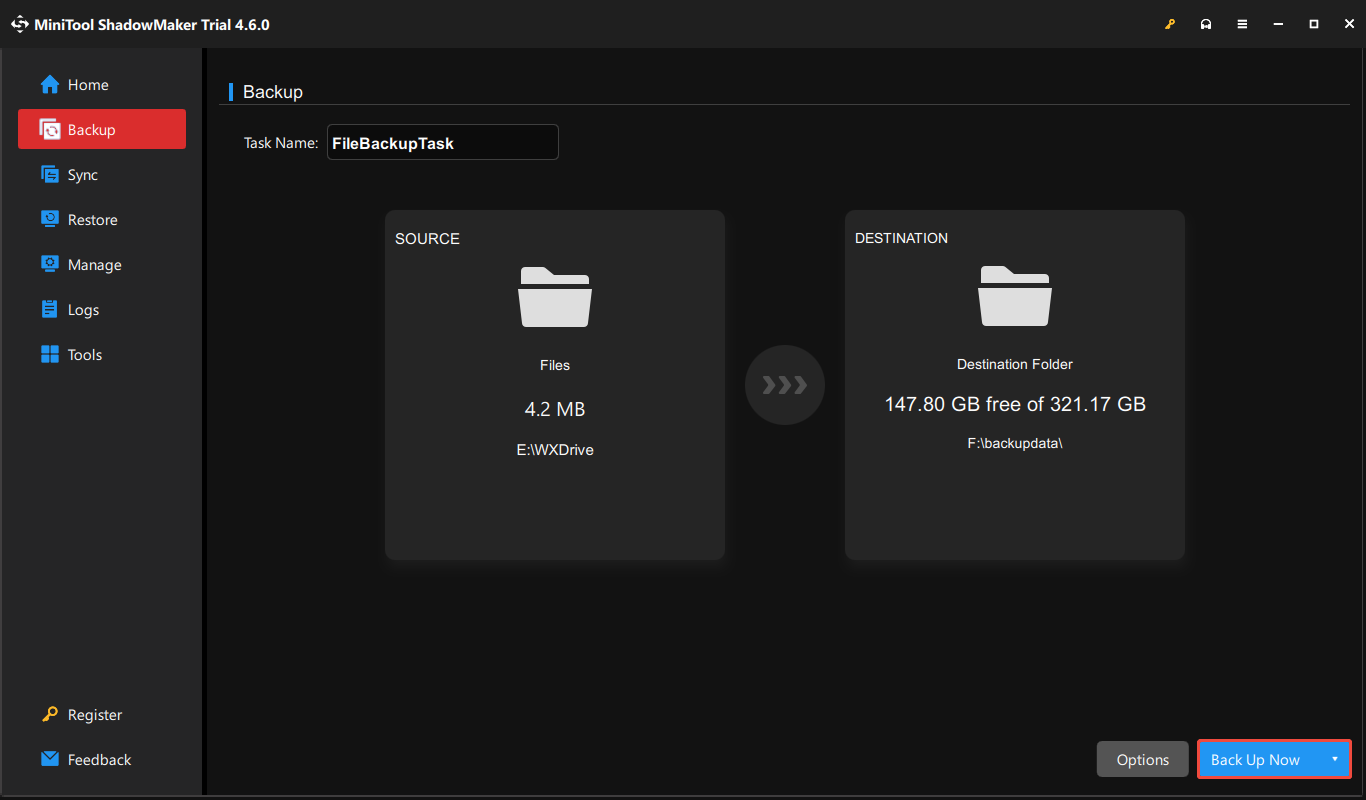
Step 4: After you have confirmed the backup source and destination, then click Back Up Now to start to back up your files.
2. Use Immutable Backups
Use immutable backups can prevent ransomware from encrypting them since immutable backups cannot be altered or deleted for a set period.
Most disk-based backup systems protect data at the block level and use changed block monitoring to protect files that are modified. However, ransomware changes many storage blocks, so your system may end up backing up files that are now encrypted. Immutable storage ensures that backups remain unchanged.
3. Isolate Backup Systems
Isolation is a key requirement at protecting nackups from ransomware. This could well be done provided internally by separate backup networks and separate admin.
- Physical separation – Store backups on a separate network.
- Air-gapped backups – Disconnect drives after backup.
- Limited access – Only allow authorized users to manage backups.
4. Secure Backup Access
To prevent your backups from ransomware attacks, you should secure bakup access.
- Multi-factor authentication (MFA) – Prevents unauthorized access.
- Least privilege principle – Only admins can modify backups.
- Monitor backup logs – Detect unusual activity.
5. Perform Regular System/software updates
Ransomware exploits vulnerabilities in your system, and not performing regular software updates is the easiest vulnerability to exploit. Since the data you back up needs to be the cleanest and most up-to-date, it is crucial to regularly back up all systems and keep them up to date.
6. Test Restores Regularly
Regularly testing recovery ensures that your backups are accurate and your data is complete, preventing the possibility of surprises when disaster strikes. Whether you use cloud storage or local storage, a test recovery verifies that your backup media is functioning properly and your data is accessible.
What to Do If Ransomware Attacks Your Backups
If your backup is attacked by ransomware, there are 3 things need to do:
1. Determine which systems are affected and isolate them immediately. Isolate infected devices from the local network to prevent further spread.
2. If you are unable to disconnect affected devices from the network, shut them down right now to stop ransomware infections.
3. Perform the ransomware recovery and strengthen backup security.
Final Thoughts
This post is mainly talking about how to protect your backups from ransomware, so if you want to avoid ransomware attacks, then you can try the tips mentioned above. I hope that this post will be useful to you.
User Comments :