
When the “Nintendo Switch not reading the microSD card” issue occurs, follow this MiniTool guide to restart the console, check the card’s compatibility, or clean any debris. If that does not work, try checking for a system update on your console. If all methods fail, back up or recover your files and then format the card.
A common issue reported in forums is that the Nintendo Switch can’t read the microSD card. Here is a real example:
“Switch not recognizing SD card, but PC is! My Switch has said ‘SD card has been removed’ (when it hasn’t). Yesterday, it finally stopped recognizing it all. Thanks for any help or advice!”nintendolife.com
If you are facing this frustrating situation, read on to learn about the “Nintendo Switch not reading the microSD card” issue and the reasons that trigger the problem.
The Nintendo Switch is a widely used gaming console that supports microSD cards for expanding storage for games and screenshots.
However, in some cases, the console may fail to detect or read the inserted card.
Problem: Nintendo Switch Not Reading the microSD Card
The card read issue may present several symptoms, including:
- The microSD card is not recognized by the Nintendo Switch.
- The microSD card can’t be read by the Nintendo Switch.
- The microSD card is inaccessible on the Nintendo Switch.
Each of these problems prevents access to your game data stored on the microSD card. Fortunately, this guide outlines the potential causes and offers effective solutions. Start by exploring the possible reasons behind the problem.
Common Causes for Nintendo Switch Not Recognizing the microSD Card
There are several reasons your SD card may not be read by your Nintendo Switch. Some common issues include:
- The microSD card may not be properly inserted.
- The microSD card might not be compatible with the Nintendo Switch.
- The Nintendo Switch could encounter temporary glitches.
- There may be dust or debris in the console’s card slot or on the card contacts.
- The Nintendo Switch might require a software update.
- The file system on the microSD card might be corrupted.
- The microSD card could be physically damaged.
After learning the common reasons for the “Nintendo Switch not reading the microSD card” issue, proceed to the methods to resolve it.
Basic Steps to Check What Causes the Unreadable microSD Card Issue
Here are some simple steps to try if the Nintendo Switch does not detect or read the inserted microSD card.
Step 1. Restart the Console
Inserting the microSD card while the Nintendo Switch is either turned on or in sleep mode may cause the console not to recognize it properly.
In this case, try restarting the console to reset the system.
Steps to power off the Nintendo Switch:
Step 1. Press and hold the POWER button located on the top of the console for three seconds.
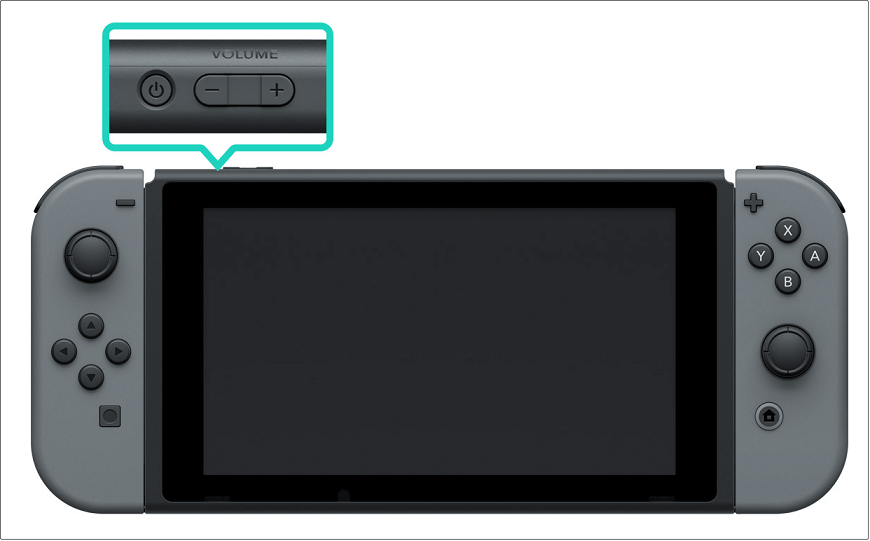
Image source: nintendo.com
Step 2. Choose Power Options from the menu.
Step 3. Select Turn Off (For Nintendo Switch)/Power Off (For Nintendo Switch 2) to power off the Switch.
After powering off the console, press the POWER button again to turn the Nintendo Switch back on.
If the microSD card is still not read by the Switch after restarting the console, proceed to the next solution.
Step 2. Reinsert the microSD Card
In this part, you need to check if you have inserted the microSD card into your Switch correctly.
Here’s the breakdown on how to reinsert the microSD card into the console:
#1. For Nintendo Switch:
Step 1. Power off the Nintendo Switch console, then carefully swing the stand open to access the microSD card slot.
Step 2. Carefully press down on the top of the microSD card until you hear a clicking sound, then slide it out of the microSD card slot.
Step 3. Make sure the microSD card is properly positioned with the label facing out from the console.
Step 4. Insert the microSD card into the slot and gently push down until it clicks into position.
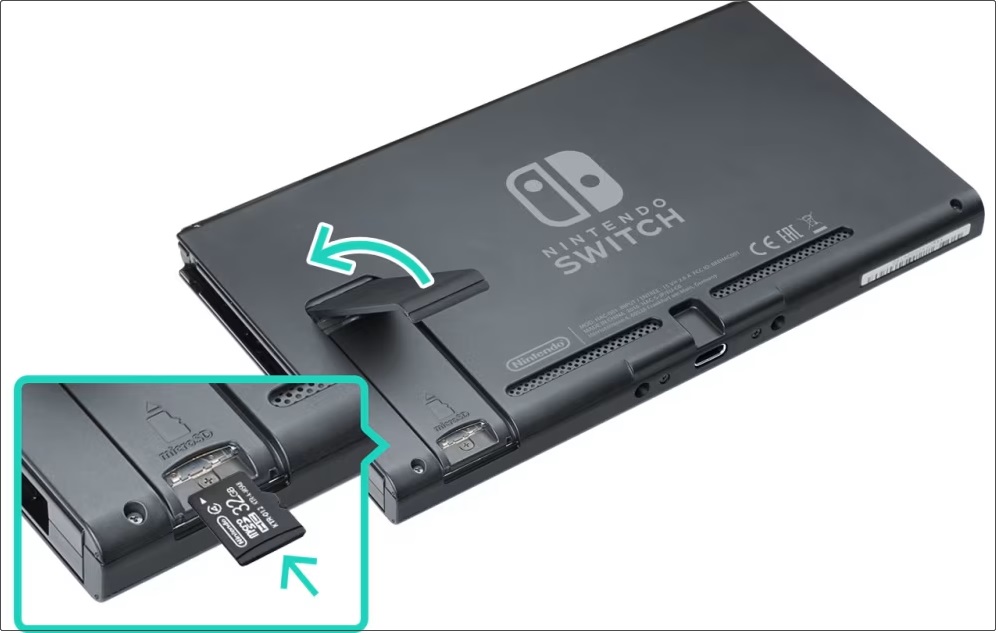
Image source: nintendo.com
#2. For Nintendo Switch 2:
Step 1. Power off the Switch 2 console.
Step 2. Carefully swing the adjustable stand open to show the microSD Express card slot.
Step 3. Push down on the top of the microSD Express card until you hear a click, then slide it out of the card slot.
Step 4. Make sure the microSD Express card is properly positioned with the label facing away from the Switch 2.
Step 5. Insert the microSD Express card into the slot and gently push down until it clicks securely into position.
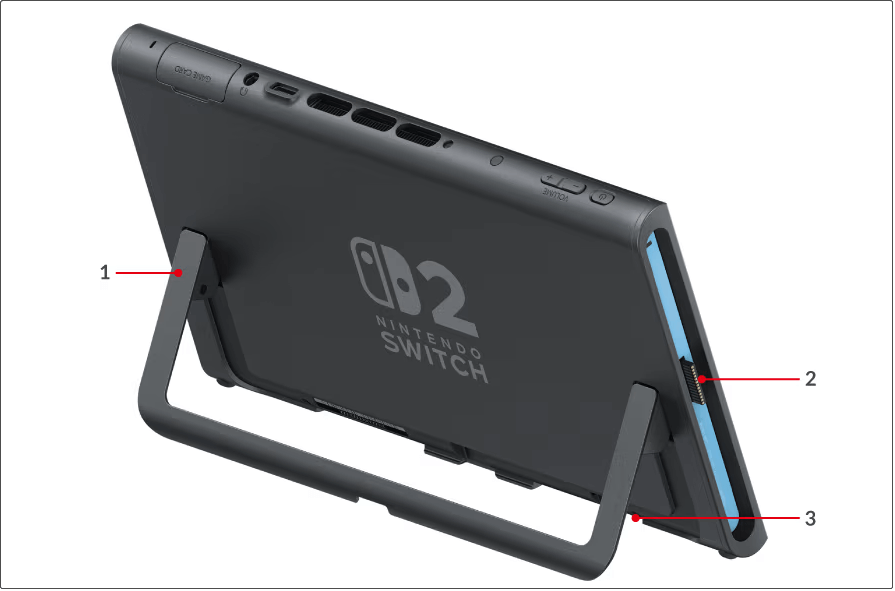
Image source: nintendo.com
#3. For Nintendo Switch – OLED Model:
Step 1. Power off the Nintendo Switch and open the adjustable stand to access the microSD card slot.
Step 2. Push down on the top of the microSD card until it clicks, then slide it out.
Step 3. Check that the label of the new microSD card is facing away from the console.
Step 4. Insert the microSD card into the slot and push down until it clicks.
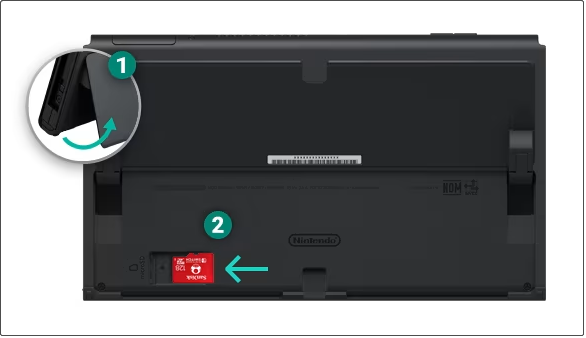
Image source: nintendo.com
#4. For Nintendo Switch Lite:
Step 1. Power off the Nintendo Switch Lite and open the microSD card slot cover.
Step 2. Push down on the microSD card until it clicks, then slide it out.
Step 3. Check that the label of the new microSD card faces away from the system.
Step 4. Insert the new card until it clicks, then close the slot cover.
Step 3. Verify that the Card Is Compatible with the Nintendo Switch
If after reinserting, the card still does not work normally, make sure your microSD card works with the Nintendo Switch.
The compatibility of microSD cards for Nintendo Switch 2 differs from that of the original Nintendo Switch.
| Nintendo Switch 2 | Nintendo Switch | |
| microSD card | No | Yes |
| microSD Express card | Yes | Yes |
The Nintendo Switch supports the following types of microSD cards:
- microSD (up to 2 GB)
- microSDHC (4 GB – 32 GB)
- microSDXC (64 GB – 2 TB)
Verify whether your microSD card is compatible with the Nintendo Switch console; if it isn’t, replace it with a compatible card to fix the “Nintendo Switch not reading the microSD card” issue.
Step 4. Check for any Dirt or Debris
If there is any dust or debris in the card slot or on the contacts, the console might fail to recognize the microSD card.
Therefore, you need to inspect for any grime and clean it.
How to clean the slot or contacts on the Nintendo Switch:
Step 1. Shut down the Switch.
Step 2. Take out the card from the console and check it for any dust or debris.
Step 3. Utilize a can of compressed air to gently remove any dust or debris from the slot. Wipe the metal contacts of the card with a soft, dry cloth.
Step 4. Insert the card back into the console correctly. Then, reboot the Switch and verify if it detects the card.
If the solutions above fail to resolve the “Nintendo Switch not reading the microSD card” issue, continue to get more effective solutions.
Fix 1. Update Nintendo Switch System
The Nintendo Switch typically downloads system updates automatically, but you may need to update manually in some cases.
If the microSD card isn’t recognized, a manual update may be necessary to ensure compatibility.
Here are the instructions for updating the system version on a Nintendo Switch console:
Step 1. Select System Settings from the HOME Menu.
Step 2. Scroll down in the System Settings menu and choose System.
Step 3. Choose System Update to begin the update process.
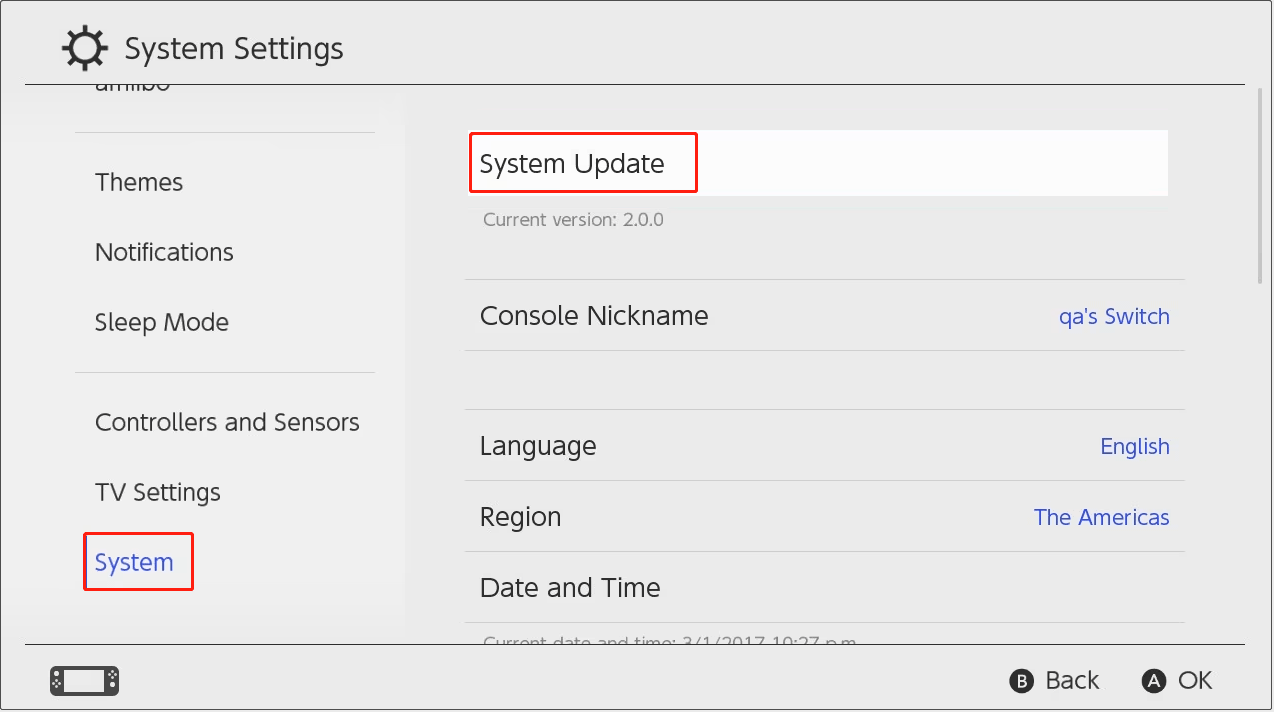
Image source: nintendo.com
During the update process, the system will first check to see if a new system update is available.
If an update is available, the download will automatically commence.
If the microSD card is still not detected after a system update, it may need to be formatted.
Fix 2. Format the microSD Card
If all methods fail and the microSD card is not accessible, try recovering your files and then format the card.
Action 1. Recover microSD Card Game Data Using MiniTool Power Data Recovery
If you don’t know which data recovery tool is best, MiniTool Power Data Recovery is a reliable option for recovering microSD card data.
There are some features about this microSD card data recovery tool:
- It performs effectively on Windows 11/10/8/8.1 and can help recover files from lost, deleted, or corrupted partitions.
- This tool is compatible with a range of storage devices, such as microSD cards, internal/external hard drives, USB flash drives, etc.
- It supports more than 2000 types of files, including photos, videos, documents, audio, and many other formats.
- This free data recovery tool can recover 1 GB of files for free.
MiniTool Power Data Recovery FreeClick to Download100%Clean & Safe
Now, follow these steps to rescue your data on the microSD card.
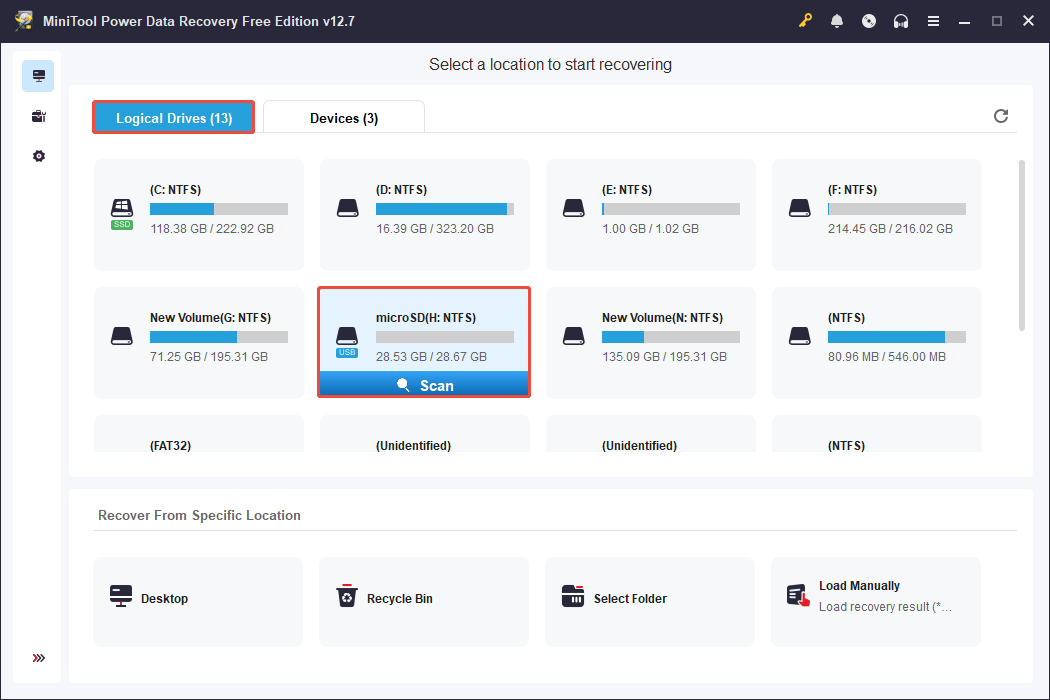
Step 1. Connect your microSD card to your PC using a card reader and open MiniTool Power Data Recovery to enter its home page.
By default, you will be located at the Logical Drives tab. In this section, select your microSD card, which will be marked with a USB icon, and click Scan.
Step 2. Once the scan process is completed, all found files will be displayed under Path according to their paths.
To locate the desired files easily, use the following features:
- Use Search to find a specific file by typing its full name or a keyword and pressing Enter.
- By clicking Filter, you can set criteria like file size, type, category, and modified date.
- To find videos or screenshots, switch to the Type tab and select Picture or Audio & Video.
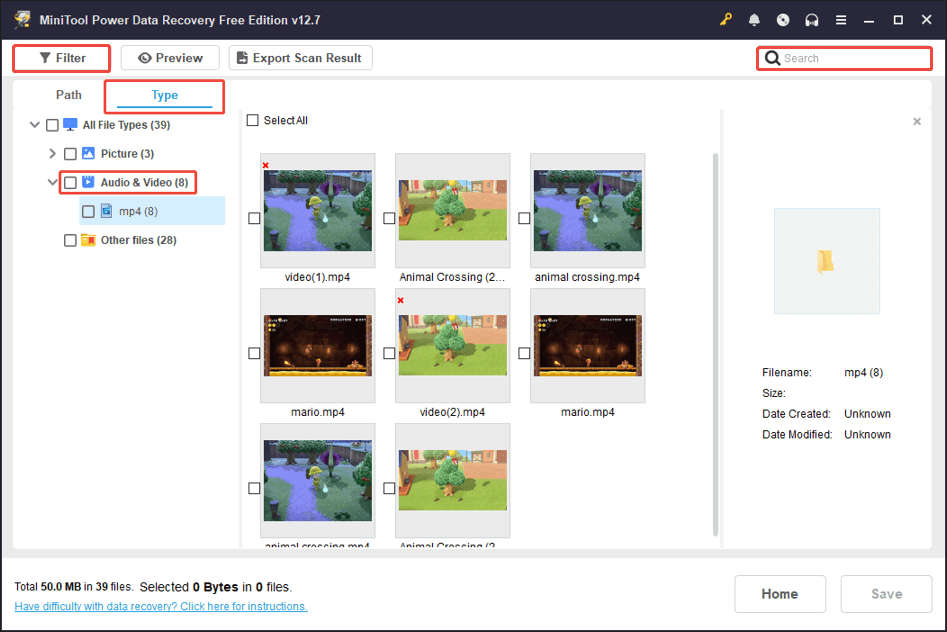
To preview a file, double-click it.
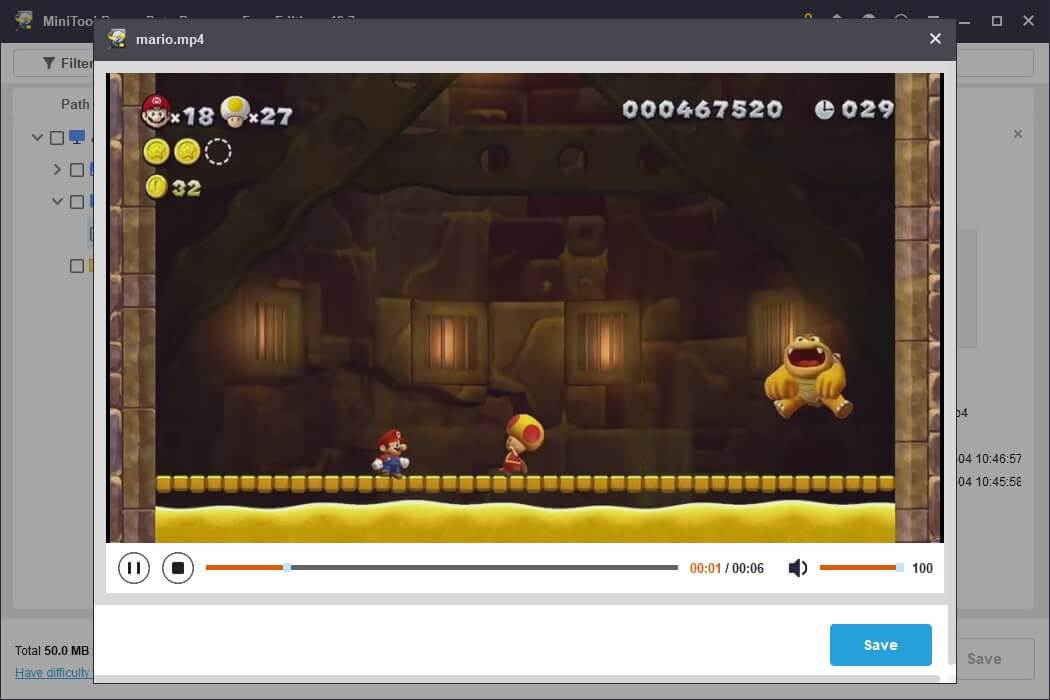
Step 3. Choose all the files you need and click the Save button. In the pop-up window, select a new location and click OK to save the files.
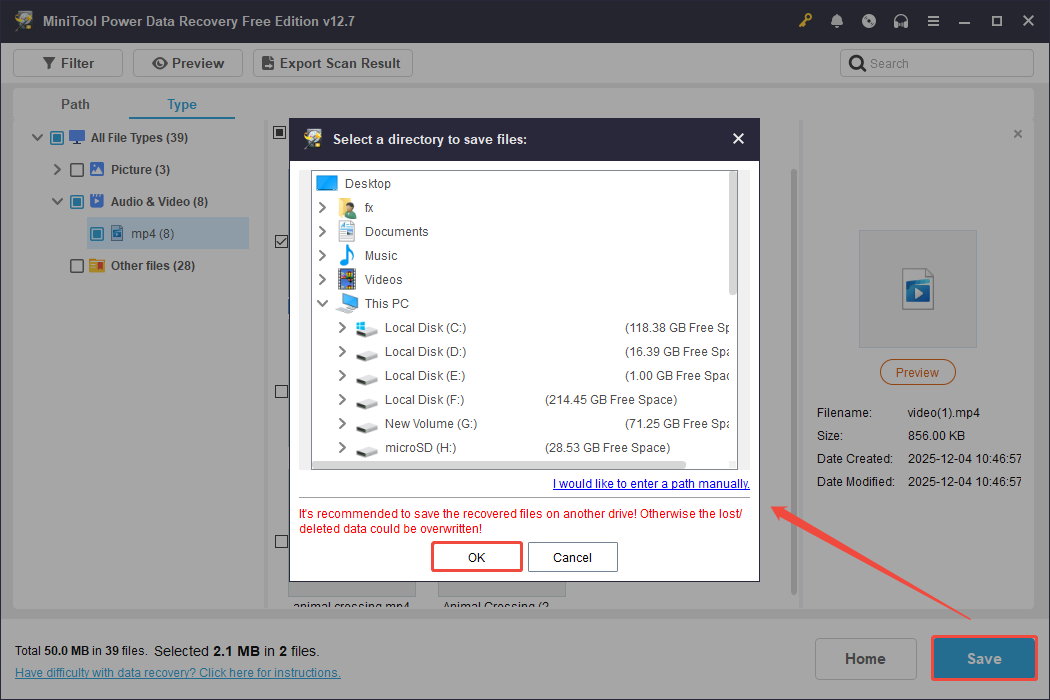
Please note that the free edition only provides 1 GB of file recovery capacity. To restore more files, you need to get a Personal edition.
Action 2. Format the microSD Card on Windows
Once you have recovered data from your microSD card, you can format it without losing any data.
Situation 1: The microSD card can be detected but not read by the Switch.
In this situation, opt for formatting your microSD card on the Nintendo Switch. Follow these steps:
Step 1. From the HOME Menu, select System Settings.
Step 2. Scroll down the options on the left and select System.
Step 3. Scroll down and select Formatting Options on the right-hand side.
Step 4. If prompted, type your Parental Controls PIN.
Step 5. Select Format microSD Card, then click Continue.
Step 6. The following message will be displayed:
“All data on the microSD card will be deleted. Data cannot be restored once it is deleted. Continue?”
To continue, select Format. The console will then restart.
Situation 2: The microSD card can’t be detected by the Switch, but it can be detected on the PC.
To format a microSD card, use File Explorer, Disk Management, or a third-party partition manager such as MiniTool Partition Wizard.
In this section, we will briefly outline how to format a microSD card in the File Explorer.
Step 1. Press Win + E to launch File Explorer. Next, click This PC in the left panel.
Step 2. Right-click on the microSD card and choose Format from the context menu.
Step 3. The microSD cards for the Switch are compatible with either FAT32 or exFAT file systems. Therefore, you need to choose one of these file systems in the subsequent pop-up window. Then, based on your needs, select or deselect the Quick Format option.
Step 4. Click on the Start button to begin the formatting process for the card.
Fix 3. Replace the microSD Card
If the microSD card is unrecognized by both the Nintendo Switch console and your computer, it is likely physically damaged and cannot be fixed. In this case, you’ll need to replace it with a new compatible card.
Wrap Up
In this post, we introduced four simple steps and three effective solutions to fix the “Nintendo Switch not reading the microSD card” problem.
While formatting the microSD card can be an effective solution, it will lead to data loss, and you may encounter issues with data recovery.
Therefore, we suggest using powerful MiniTool data recovery software to recover your Switch game data first.
If you have any questions when using MiniTool software, please send your emails to [email protected] or leave them in the comment zone.
User Comments :