
Crucial BX500 vs MX500, what are their differences and which one is better for you? This post from MiniTool will elaborate on the differences between Crucial BX500 and Crucial MX500. Besides, a MiniTool SSD upgrade tool will be shown.
Quick Answer
BX500 and MX500 are two popular SSDs from Crucial. BX500 is a budget-friendly entry-level option, used for basic storage or everyday PC upgrades. Crucial MX500 is a higher-end SATA SSD with a DRAM cache and longer lifespan.
Overview of Crucial BX500 and MX500
Crucial BX500
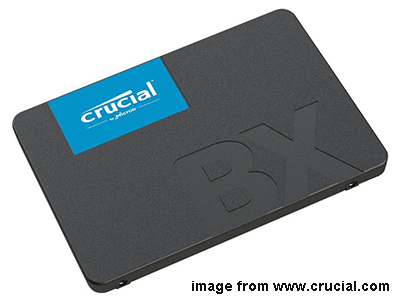
Crucial BX500 SSD is the successor to its popular BX300 line of SSDs. Crucial BX500 SSD skips over the 400-naming scheme, like the company’s mainstream MX500 brand. Compared with Crucial MX series, the Crucial BX series is a streamlined, no-frills SSD and has a few accessories and features.
The Crucial BX500 comes with 6 Gb/s or SATA III interface options and is available with 2.5 inch form factor. This Crucial BX500 SSD is also available in five different capacities and reaches up to 4TB. It is designed for budget-minded buyers, with a light-weight feature set and a low price to match.
Crucial MX500 SSD
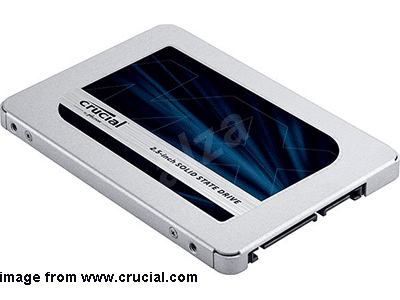
The Crucial MX500 is the first Crucial’s drive based on Micron’s 64-layer 3D TLC NAND and it is the second generation of Crucial’s mainstream MX series using TLC NAND. The Crucial MX500 SSD is available in both 2.5 inch and M.2 2280 form factors. It comes with four different storage capacities and can reach up to 2TB.
The Crucial MX500 SSD comes with good quality, speed and security that are backed by helpful service and support.
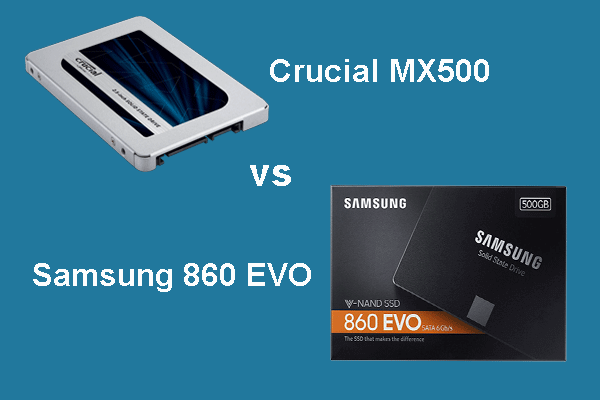
After knowing some basic information about Crucial BX500 and Crucial MX500, what are their differences and which one is better?
Crucial BX500 vs MX500: What Are the Differences?
To learn the differences between BX500 and MX500, refer to the following table.
| Feature | Crucial BX500 | Crucial MX500 |
| Interface | SATA 6.0 Gb/s | SATA 6.0 Gb/s |
| Form Factor | 2.5-inch | 2.5-inch and M.2 SATA |
| Sequential Read | Up to 540 MB/s | Up to 560 MB/s |
| Sequential Write | Up to 500 MB/s | Up to 510 MB/s |
| DRAM | DRAM-less | DRAM-equipped |
| Warranty | 3 years | 5 years |
| Capacity | Up to 4TB | Up to 4TB |
| Price | Generally lower | Generally higher |
| Best for | Budget upgrades and everyday use | System drives and heavier workloads |
1. Crucial BX500 vs MX500: Form Factor and Interface
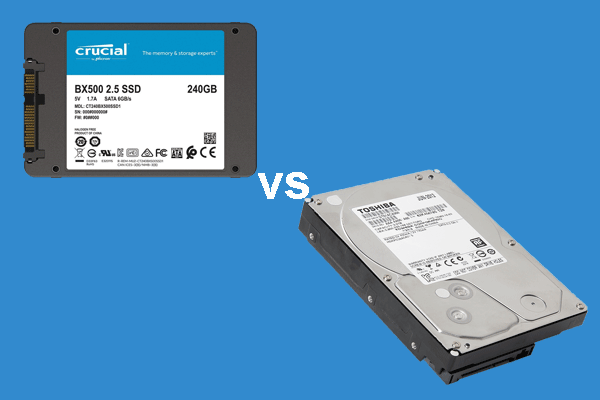
In solid-state drive, form factor decides and prescribes the size, shape and other physical specifications of a drive. The hard disk interface is the connection part between the hard disk and the host system. It is used to transfer data between hard disk cache and the host memory. Different hard disk interfaces determine the connection speed between hard disk and computer.
So, as for BX500 vs MX500, there are some differences among form factors and interface.
The Crucial BX500 comes with 2.5-inch form factor and SATA 6.0 Gb/s interface. While the Crucial MX500 SSD is available in m.2 and 2.5-inch form factors, with the SATA 6.0 Gb/s interface.
2. Crucial BX500 vs MX500: Capacity
When choosing a hard drive or a solid-state drive, hard drive capacity is a necessary factor to be considered since larger hard drive enables you to save more files.
Crucial BX500 comes with five different capacities, yet Crucial MX500 comes with different capacities. Both of them are available in capacities up to 4TB. The exact capacity options vary by model and form factor.
| Crucial BX500 SSD | Crucial MX500 SSD | |
| Capacity | 120GB, 240GB, 480GB, 1TB, 2TB, and 4TB | 250GB, 500GB, 1TB, 2TB, and 4TB |
So, as for Crucial MX500 vs BX500, there is no big difference in capacity. But Crucial BX500 provides more choices and you can choose any one based on your actual needs.
3. Crucial BX500 vs MX500: Performance
When choosing a hard drive or a solid-state drive, the performance would be one of the most important factors to be considered. An SSD with good performance may enable your computer to run faster and improve PC performance.
So, here, we will take about the performance of Crucial BX500 1TB and Crucial MX500 1TB.
| Crucial BX500 SSD 1TB | Crucial MX500 SSD 1TB | |
| Sequential Read | 540 MB/s | 560 MB/s |
| Sequential Write | 500 MB/s | 510 MB/s |
| Random Read | N/A | 95,000 IOPS |
| Random Write | N/A | 90,000 IOPS |
All statistics are from the official site of Crucial, but the random read and write speed of Crucial BX500 SSD are not mentioned. On sequential speeds, the two drives are relatively close.
A more significant distinction is that the MX500 uses a DRAM cache, whereas the BX500 uses a DRAM-less design. This makes the MX500 much better suited for heavier or sustained workloads. DRAM stores data maps for faster file retrieval and improved performance.
In addition, you can also choose to test the disk performance by yourself through the Disk Benchmark feature of MiniTool Partition Wizard.
MiniTool Partition Wizard FreeClick to Download100%Clean & Safe
If you want to boost the computer performance or increase the storage size of the computer, you can use these two Crucial SSDs to replace the original one.
4. Crucial BX500 vs MX500: Reliability and Warranty
As for Crucial BX500 vs BX500, we will show you the fourth aspect – reliability and warranty.
Both of them provide good reliability. The Crucial MX500 offers a longer 5-year warranty and significantly higher TBW (Terabytes Written) endurance. The Crucial BX500 provides a 3-year warranty and lower TBW.
5. Crucial BX500 vs MX500: Price
SSD prices can change based on AI and enterprise demand, NAND flash supply constraints, and currency & regional factors. Generally, the Crucial BX500 is cheaper than the Crucial MX500.
Which Is Better: Crucial BX500 or MX500?
- Use MX500 if: you want a reliable main drive for OS, games, and daily files.
- Choose BX500 if: you are on a strict budget, need a secondary storage drive, or perform light tasks.
How to Migrate System to Crucial BX500 or Crucial MX500 SSD?
If you have gotten the Crucial BX500 SSD or Crucial MX500 SSD, you can use it to replace the original hard drive so as to boost PC performance. To do that, you can choose to migrate system from HDD to SSD.
To clone OS from HDD to SSD, you can use a clone tool, such as MiniTool ShadowMaker, which enables you to upgrade hard drives without data loss.
With its Clone Disk feature, you can easily migrate all content, including system files, apps, and personal data, to another hard drive.
1. Download MiniTool ShadowMaker from the following button, install and launch it. Click Keep Trial.
MiniTool ShadowMaker TrialClick to Download100%Clean & Safe
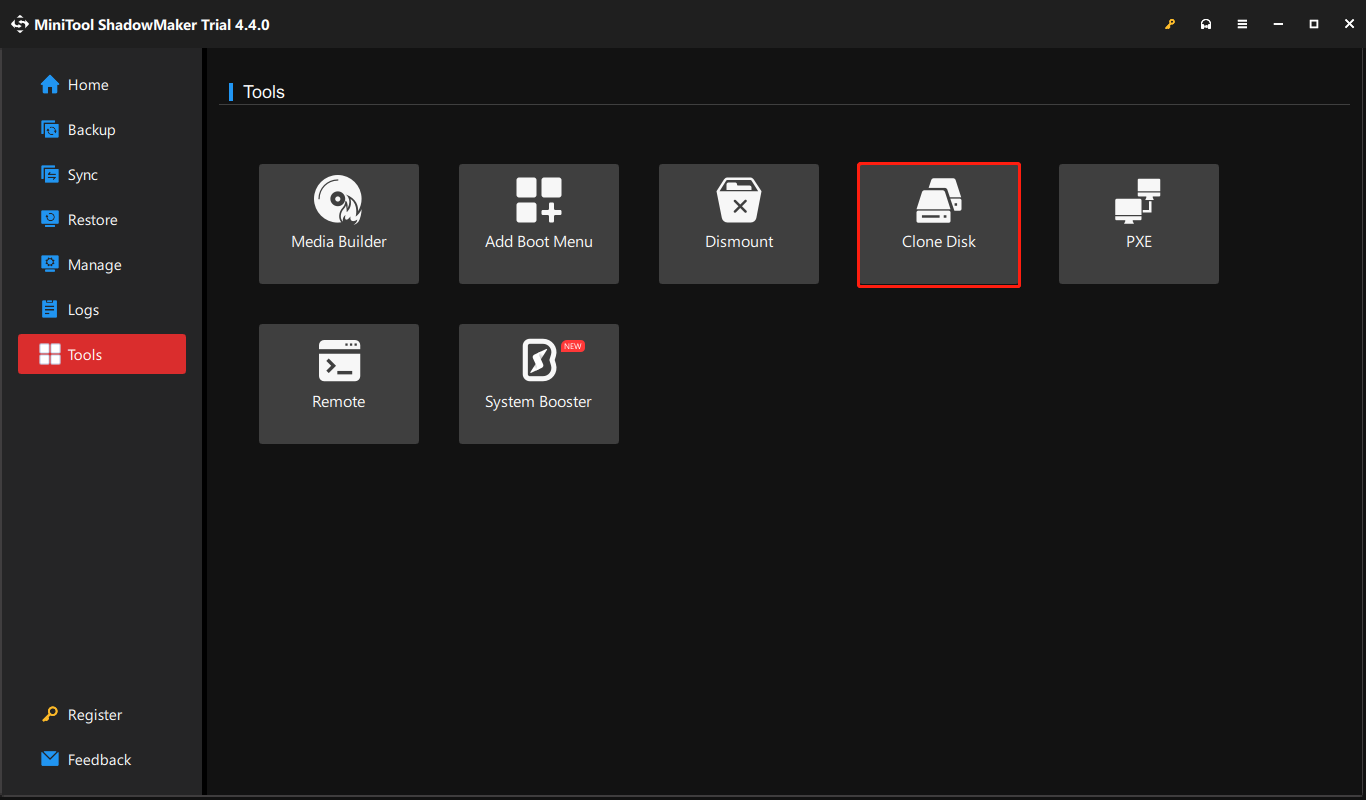
2. After entering its main interface, go to the Tools page. Then choose Clone Disk.
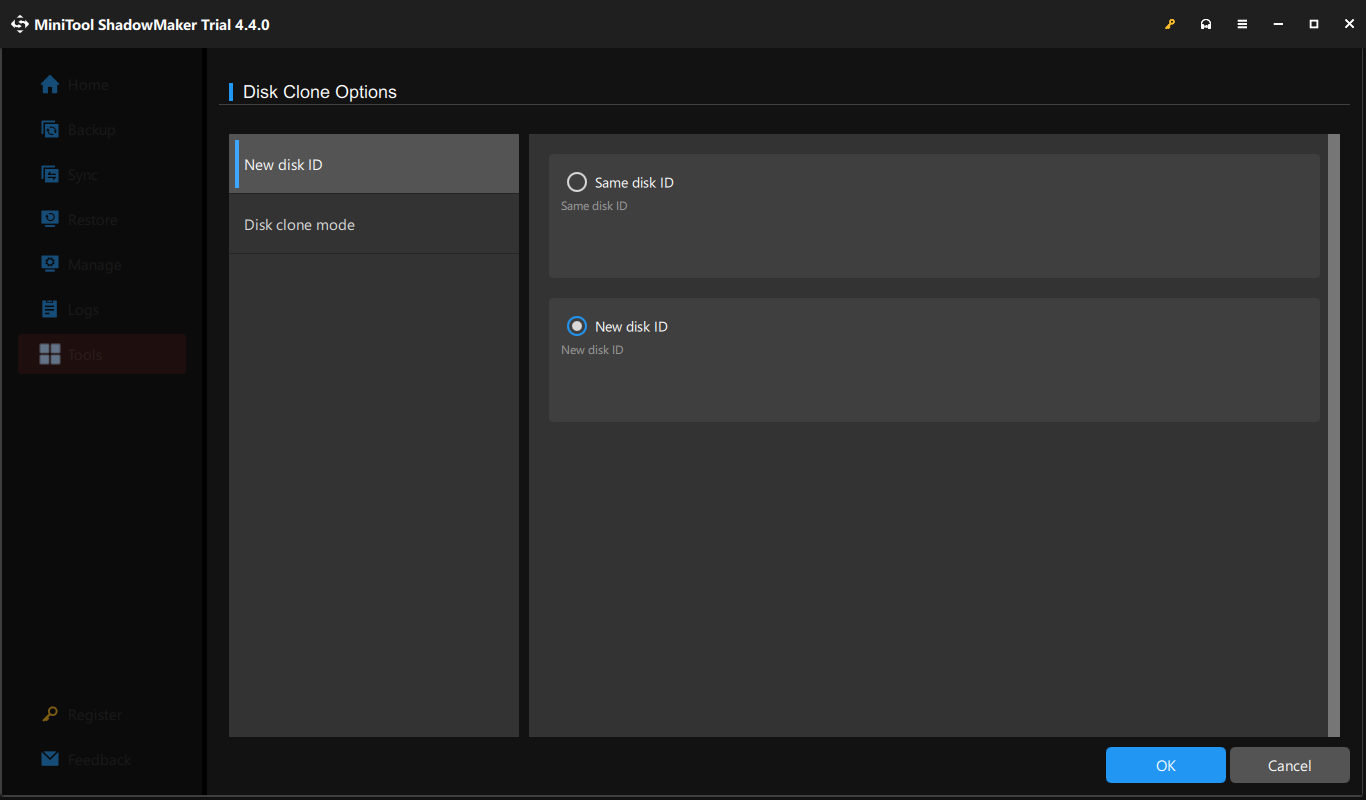
3. Click on Options in the lower left. In the New disk ID tab, choose from Same disk ID and New disk ID. The latter is selected by default to avoid disk signature collision.
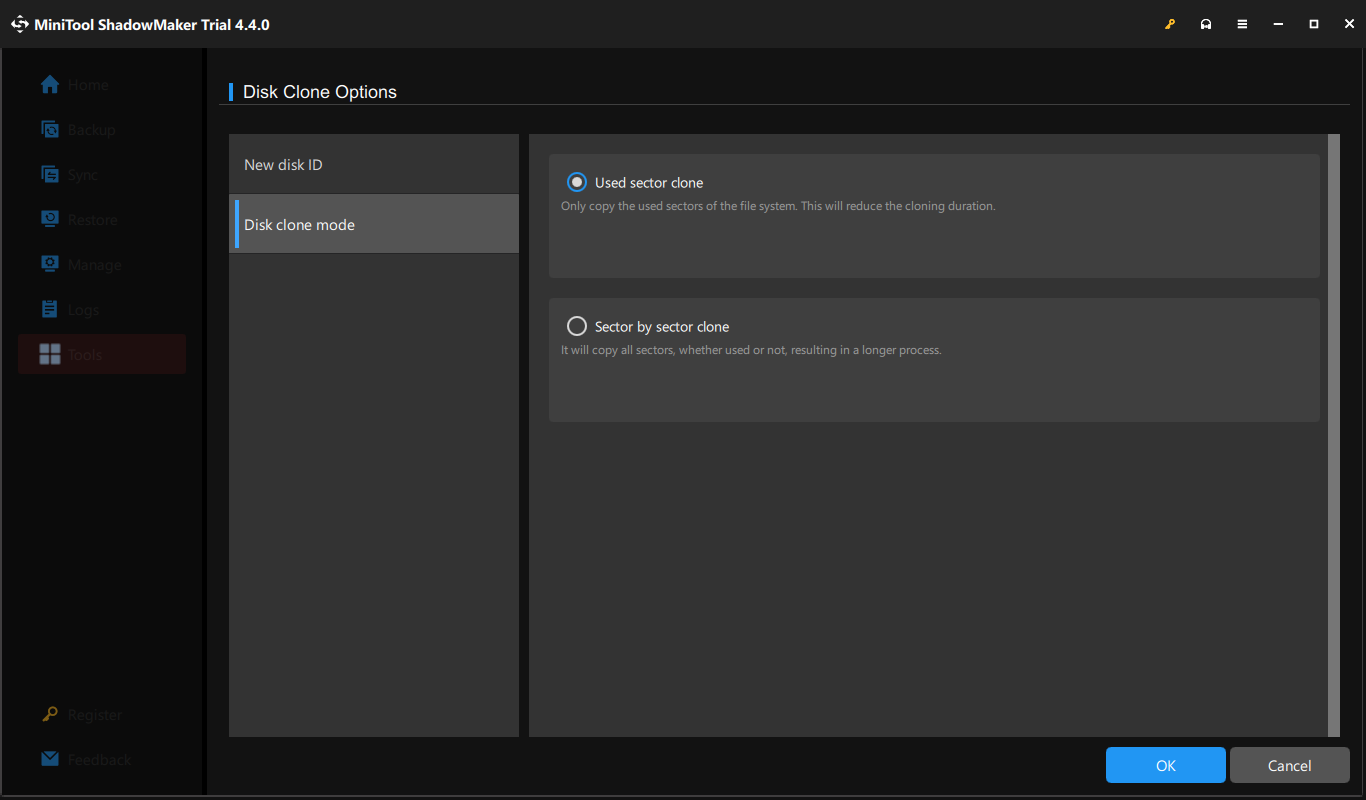
In the Disk Clone mode tab, there are two modes available for you – Used sector clone and Sector by sector clone. Select one according to your need.
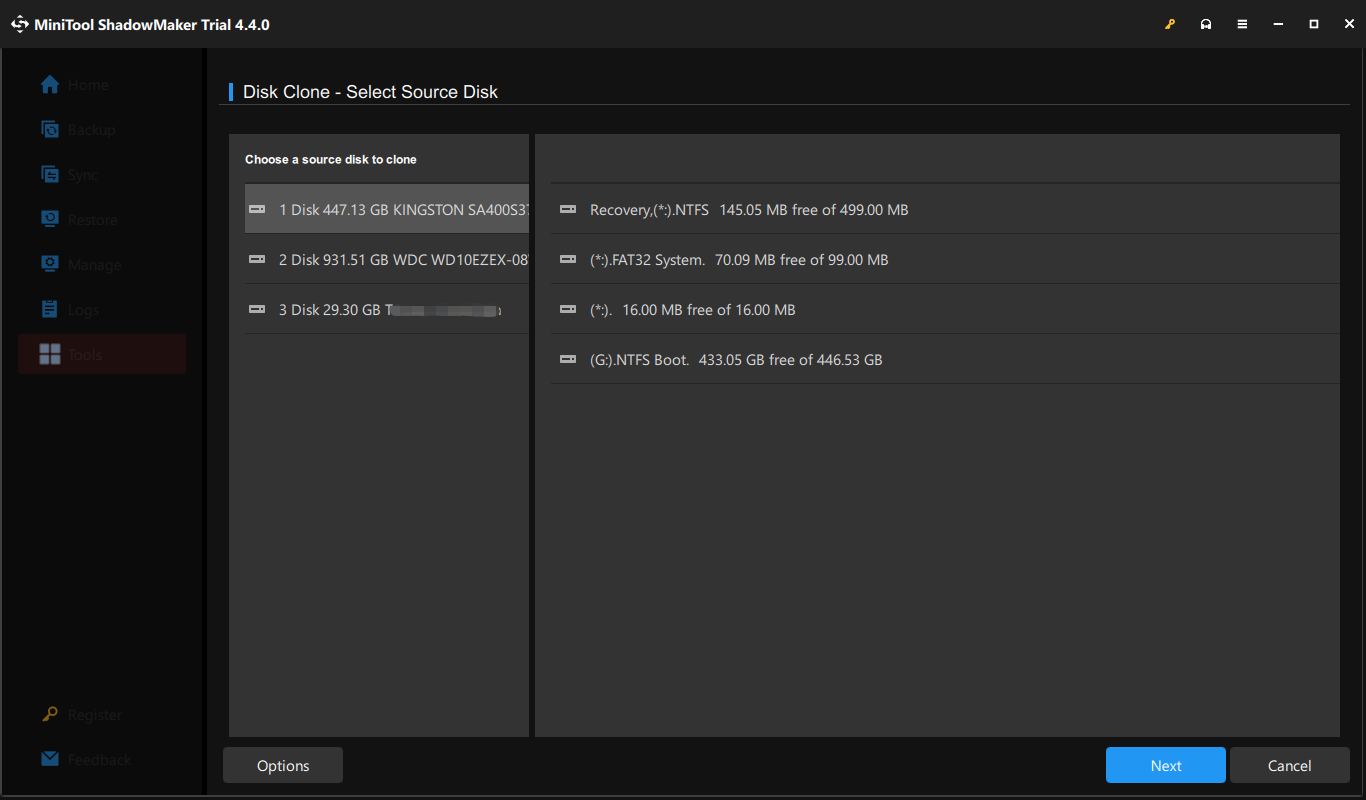
4. Select the disk clone source. If you want to clone the system disk, select it as the clone source. Then click Next.
5. Choose a target disk. Here, you should choose Crucial BX500 SSD or Crucial MX500 SSD as the target disk. Then click Start.
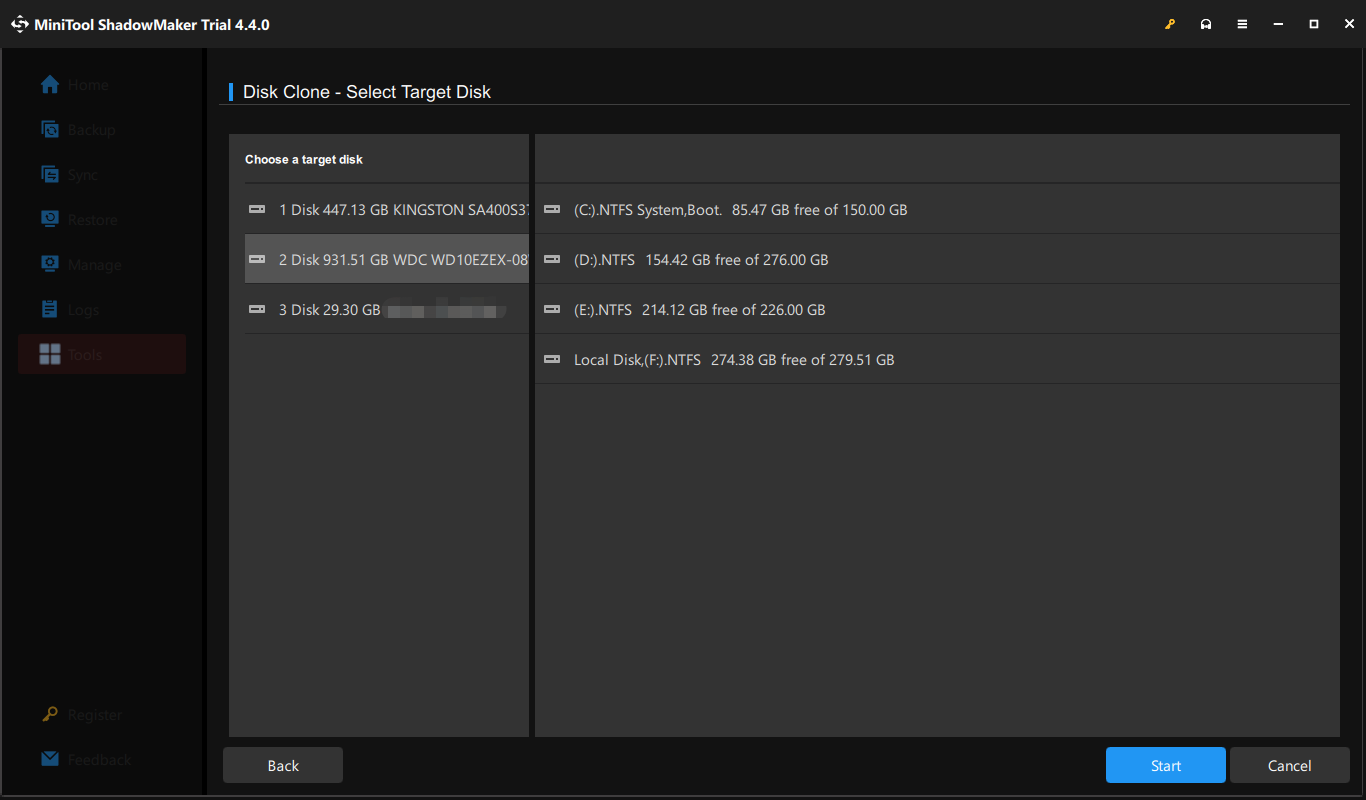
Then the disk cloning process will begin. Do not interrupt the cloning process until it is finished.
Once all steps are finished, you have successfully cloned the system to the Crucial MX500 SSD or Crucial BX500 SSD.
Bottom Line
To sum up, as for Crucial MX500 vs BX500, this post has shown their differences in 5 aspects. In my opinion, the Crucial MX500 SSD is better than Crucial BX500 SSD since it has better performance and provides a longer warranty.
If you have any different ideas about Crucial BX vs MX or any problem with MiniTool ShadowMaker, contact us via the email [email protected].
Crucial BX500 vs MX500 FAQ
About The Author

Position: Columnist
Vera has been working at the MiniTool Team for over 10 years as a technical editor and content writer. She mainly focuses on disk and partition management, data recovery, Windows backup and restore, and PC troubleshooting. Through in-depth software testing and hands-on experience, she has helped users solve a wide range of computer problems and better protect their data on Windows devices.
User Comments :