
The HP laptop running slow issue may be triggered by high CPU usage, low memory, disk issues, or too many startup programs. Here, MiniTool provides some methods to fix the issue, including disabling startup apps, clearing temporary files, and updating drivers.
Quick Answer: Why Is My HP Laptop So Slow?
If your HP laptop is running slow, the most common causes include:
- Too many startup applications
- Insufficient RAM
- Low disk space
- Malware or unwanted software
- Overheating
- Outdated Windows or drivers
- An aging HDD instead of an SSD
In many cases, you can improve performance by disabling unnecessary startup apps, freeing up storage space, scanning for malware, and updating Windows. For older laptops, upgrading to an SSD or adding more RAM often provides the biggest performance boost.
Why Is Your HP Laptop Running Slow
An HP laptop can slow down due to various reasons. Some problems are software-related, while others result from aging hardware. Finding the root cause allows you to select the most effective fix. The table below can help identify the likely cause.
| Cause | Common Symptoms | Recommended Solution |
| Too many startup programs | Slow boot time | Disable startup apps |
| Low RAM | Lagging during multitasking | Upgrade memory or close apps |
| Full SSD/HDD | Slow file access | Free up disk space |
| Malware | High CPU usage, pop-ups | Run a malware scan |
| Overheating | Loud fan noise, throttling | Improve cooling |
| Outdated drivers | Performance instability | Update drivers |
| Aging HDD | Long loading times | Upgrade to an SSD |
| System corruption | Random slowdowns | Repair or reinstall Windows |
How to Fix a Slow HP Laptop in Windows 11/10
Try the following solutions one by one until the issue is resolved.
Fix 1. Restart Your HP Laptop
Restarting clears temporary processes and refreshes system resources. Thus, try restarting your HP laptop to fix the HP laptop run slow issue.
- Save your work.
- Click Start > Power > Restart.
- Wait for Windows to load completely.
Fix 2. Disable Unnecessary Startup Programs
Many applications launch automatically when Windows starts, increasing boot times and consuming system resources.
To disable startup programs:
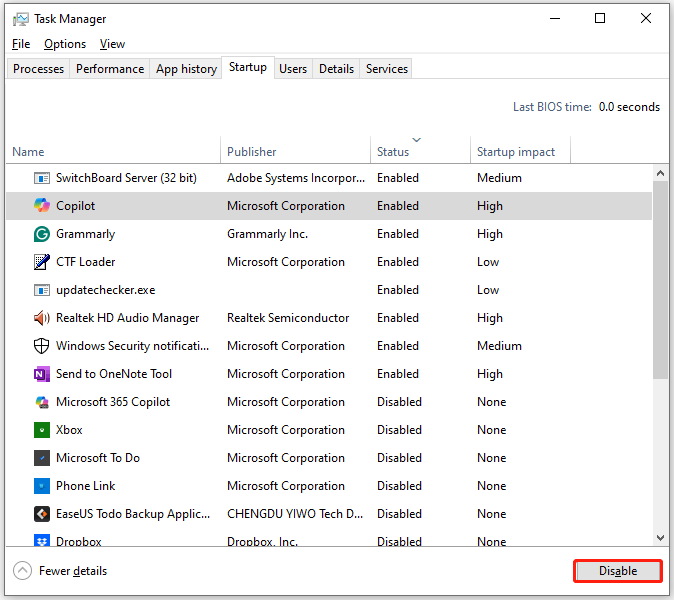
- Press Ctrl + Shift + Esc to open Task Manager.
- Select the Startup apps (Windows 11)/Startup (Windows 10)tab.
- Review the listed applications.
- Select the unnecessary program and Disable.
- Repeat this step for all the items that you want to disable.
Restart your laptop and check whether performance improves.
Fix 3. Free Up Disk Space
When your drive is nearly full, Windows has limited space for temporary files, updates, and virtual memory, which can slow down performance. Removing unnecessary files helps free up space and keep the system running smoothly.
Delete Temporary Files
- Press Win + R.
- Type %temp% and press Enter.
- Delete unnecessary files.
Run Disk Cleanup
- Search for Disk Cleanup.
- Select the system drive.
- Choose the files you want to remove.
- Click OK.
Uninstall Unused Programs
- Open Settings > Apps > Installed Apps.
- Remove software you no longer use.
Fix 4. Update Windows and Drivers
Outdated software may cause performance and compatibility issues. Therefore, update Windows and drivers to fix the HP laptop running slow and freezing issue.
Update Windows:
- Open Settings > Windows Update.
- Click Check for updates.
- Install available updates.
- Restart your laptop.
Update Drivers:
- Right-click Start and select Device Manager.
- Double-click the device category.
- Right-click the specific device and select Update driver.
- Choose Search automatically for drivers.
Fix 5. Scan for Malware
Malware can slow your laptop by consuming CPU, memory, and disk resources in the background. To perform a full security scan:
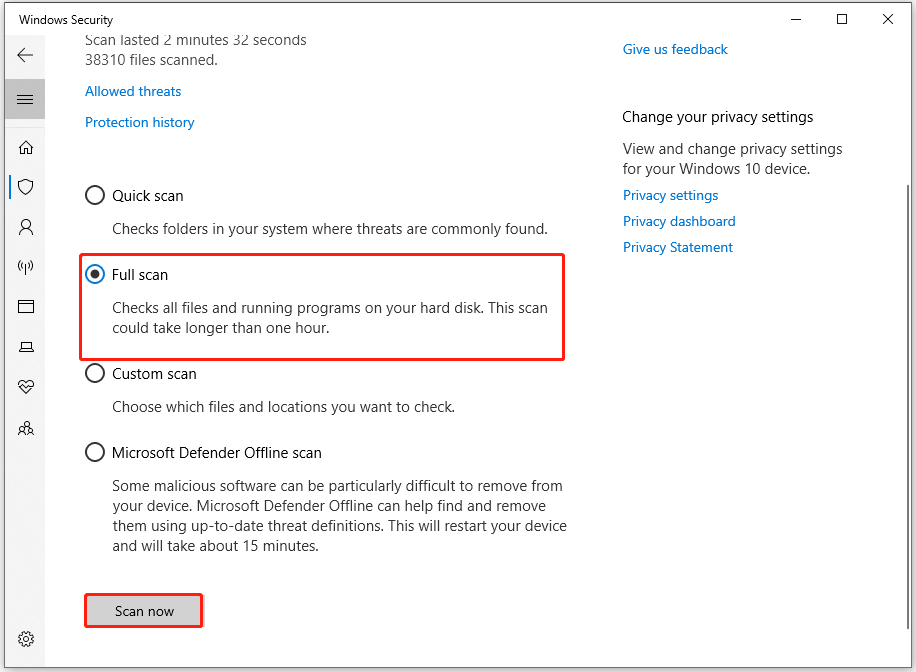
- Open Windows Security.
- Select Virus & Threat Protection.
- Click Scan Options.
- Choose Full Scan.
- Click Start Now.
Remove any threats that are detected.
Fix 6. Adjust Windows Performance Settings
Disabling Windows visual effects frees up system resources to significantly improve computer performance.
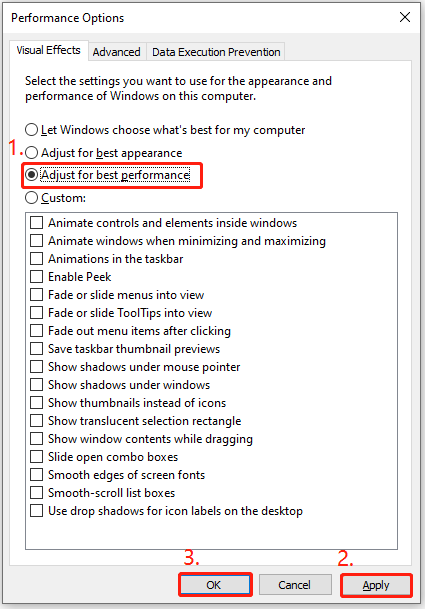
- Search for Adjust the appearance and performance of Windows.
- In the Performance Options window, select Adjust for best performance.
- Click Apply and OK.
Fix 7. Reduce Overheating
Excessive heat can cause the processor to automatically reduce its speed, leading to reduced performance. Here are the signs and solutions for laptop overheating:
| Signs of overheating | To improve cooling |
| 1. Loud cooling fans 2. High surface temperatures 3. Sudden slowdowns 4. Reduced gaming performance | 1. Clean dust from air vents 2. Use the laptop on a hard surface 3. Improve room ventilation 4. Use a cooling pad if necessary |
Fix 8. Upgrade RAM
Low RAM causes older laptops to slow down, especially when multitasking. To check memory usage:
- Open Task Manager.
- Select the Performance tab.
- Click Memory.
If memory usage remains consistently high, consider upgrading the RAM if your HP laptop supports it. Recommended upgrades:
- 4GB to 8GB RAM
- 8GB to 16GB RAM
For more detailed information on adding RAM to a laptop, read this add laptop RAM guide.
Fix 9. Replace HDD With SSD
If your older HP laptop still runs on a traditional HDD, replacing it with an SSD is the single best way to upgrade its performance.
How to upgrade HDD to SSD to fix HP laptop running slow in Windows 10/11? You can migrate the entire system disk to an SSD via disk cloning without reinstalling Windows. To do this work, the professional hard drive cloning software – MiniTool ShadowMaker could help you a lot.
It offers you a feature called Clone Disk that is designed to clone the entire hard drive to another hard drive – everything including system files, settings, apps, registries, personal files, folders, and more is moved to the second disk. After finishing the cloning, you can directly use the cloned hard drive to boot your computer.
To upgrade your hard drive to an SSD via a clone, click the following button to get MiniTool ShadowMaker and then double-click on the downloaded .exe file to install it on your laptop.
MiniTool ShadowMaker TrialClick to Download100%Clean & Safe
Step 1: Connect your SSD to your laptop.
Step 2: After launching MiniTool ShadowMaker Trial Edition, click Keep Trial.
Step 3: Under the Tools tab, click Clone Disk to continue.
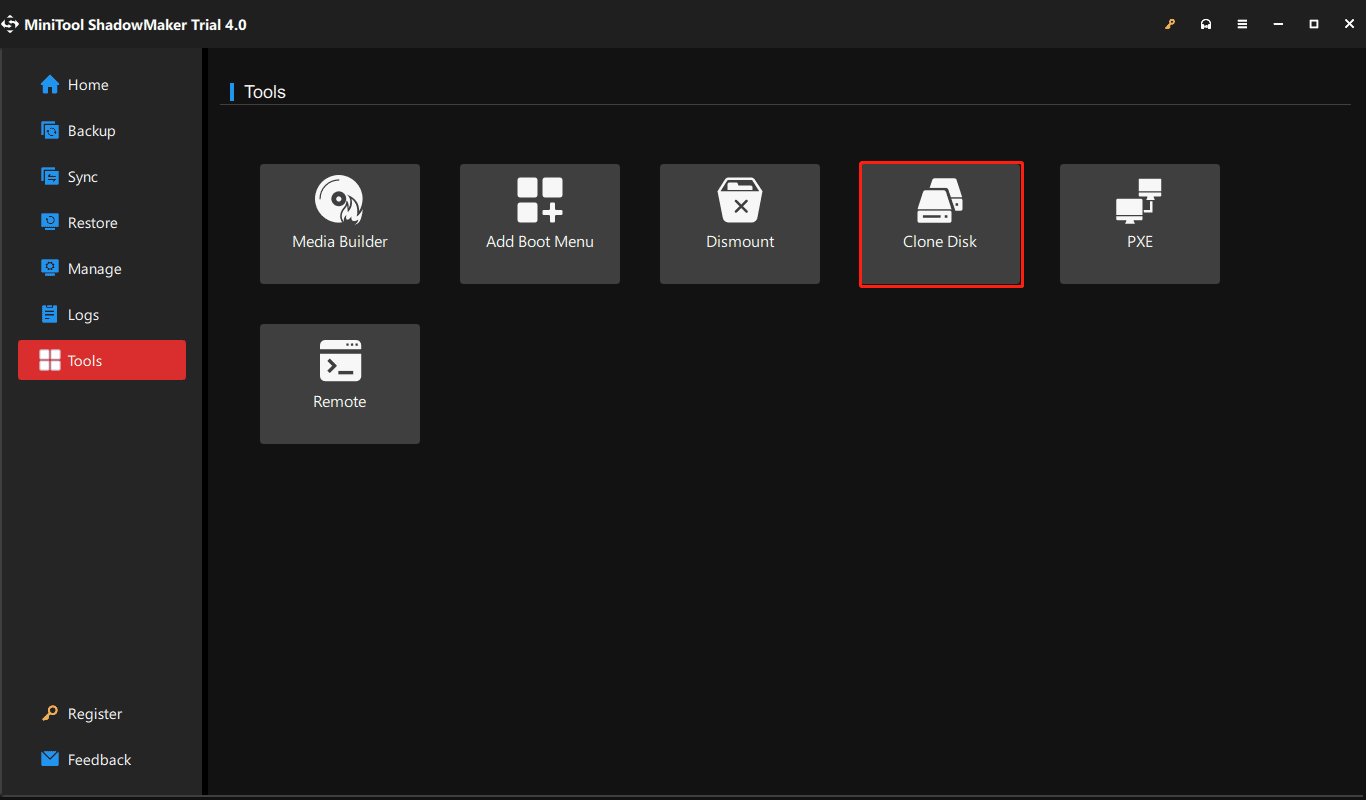
Step 4: Choose the system disk as the source disk and select your SSD as the target disk.
Make sure no important data is saved to the SSD. Otherwise, the cloning process will erase it.
Step 5: After the selection, start the cloning process. This could take some time based on the data size.
Later, shut down your HP laptop, remove the HDD, and put the SSD into its original place. Then, you can boot the machine from the SSD at a fast speed. When running some apps, the speed is also fast.
Related post: How to Clone a Hard Drive to SSD in Windows 11/10/8/7
Other Tips to Fix HP Laptop Running Slow Windows 11/10
- Don’t use too many applications at one time
- Pay attention to websites filled with flash ads
- Maintain good heat dissipation
- Check the system limit before running large third-party programs
In addition, there are some related articles regarding improving PC performance:
- How to Speed up Windows 11 and Improve Its Performance
- How to Make Windows 11 Faster for Good Performance (14 Tips)
- How to Speed up Older Laptop to Make It Run Like New? (9+ Ways)
How Do I Know Which Fix to Try?
If you are not sure which solution applies to your situation, use the table below.
| If You Notice | Try This Fix First |
| Laptop starts slowly | Disable startup programs |
| Programs freeze frequently | Check RAM usage |
| Storage is almost full | Free up disk space |
| Fan runs constantly | Reduce overheating |
| Pop-ups appear unexpectedly | Scan for malware |
| Laptop uses an HDD | Upgrade to SSD |
How Can You Prevent an HP Laptop from Running Slow Again
After improving your laptop’s performance, adopting a few maintenance habits can help prevent future slowdowns.
- Keep 15%–20% of storage free and regularly clean temporary/junk files
- Remove unused software and limit startup/background programs
- Scan for malware and keep Windows and drivers updated
- Restart the laptop regularly to maintain performance
- Prevent overheating by keeping vents clean and using proper ventilation
- Upgrade hardware if needed, such as switching to an SSD or adding more RAM
HP Laptop Running Slow FAQ
When free space falls below 10%, Windows may struggle to handle updates, temporary files, and virtual memory efficiently, resulting in slower performance and potential system issues.
However, keep essential core utilities like HP Support Assistant (for drivers), HP Command Center (for cooling), and HP Audio Control, which are required for system stability and hardware management.
However, if you frequently multitask, keep many browser tabs open, edit videos, or play games, 16GB of RAM is recommended for smoother performance and better responsiveness.
Conclusion
Slow performance on HP laptops is usually caused by too many startup programs, malware, low storage, or hardware limits like insufficient RAM or an old hard drive.
Basic fixes can help, but upgrading to an SSD or adding more memory provides the biggest performance boost. Before upgrading, you can use MiniTool ShadowMaker’s disk cloning feature to safely migrate your data. For support, contact [email protected].
About The Author

Position: Columnist
Charlotte is a technology columnist with a strong focus on the Windows operating system, specializing in disk management, backup, and data recovery. She is passionate about analyzing computer errors, identifying root causes, and delivering practical solutions. In her free time, she stays updated on the latest developments in computer systems and hardware while continuously learning new technologies to broaden her expertise. Her writing style is clear and easy to understand, making complex technical topics accessible even to users with limited computer knowledge.
User Comments :